Define the pre-finished pulp feed
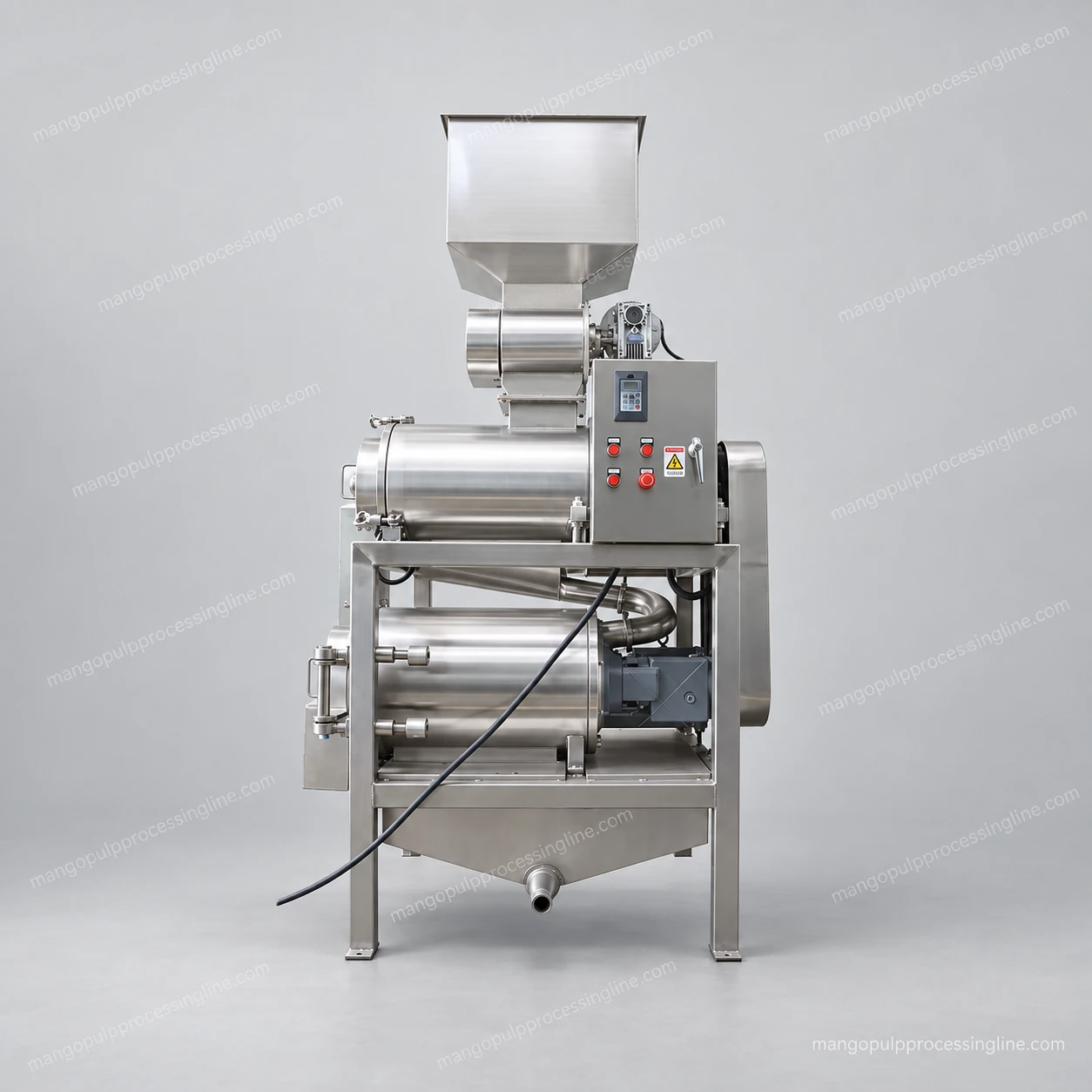
A finisher trial starts with pre-finished pulp from the destoner, not with whole fruit. Record the lot, the feed mass or flow, the pulp temperature and the elapsed time since extraction. Note visible peel, stone fragments, coarse fibre or any unusual consistency. If the feed changes during the run, the screen result changes with it.
FAO describes mango as a fruit with soft, inedible skin and a stone, requiring gentle pulp separation rather than crushing everything together. That is why the feed boundary matters. A finisher is not asked to repair a destoner problem or to grind stones into the product stream.
Hold the upstream settings as steady as the trial allows. If the destoner is adjusted halfway through, record it. Otherwise a difference in accepted pulp may be attributed to the screen when the feed was the real variable.
Take a small feed sample at the start, middle and end of the run if the machine can be sampled safely without interrupting flow. Record whether the finisher is being fed continuously or in batches, because a starved inlet and a flooded inlet are different operating conditions. The screen trial should describe the feed it actually received, not a laboratory sample presented as if it were the whole run.
Track stone protection and fibre reject separately
Inspect the finisher feed and the reject outlet for stone material. Intact stones belong to an upstream separation duty; a finisher is not a safe place to discover that stones are arriving. If stone fragments appear, stop the trial and investigate the destoner, its settings and the fruit lot before continuing.
Collect fibre reject separately from peel and stone material. Weighing two different outlets into one “waste” number hides the information the trial needs. Record the wet mass, the collection period, the appearance of the reject and any product carried with it. A high reject mass is not automatically a failure, and a low reject mass is not automatically a success.
The same discipline applies to samples retained for later inspection. Label them by stream, lot and time. A reject photograph without a scale, time or stream label is difficult to use in a review.
Agree before the run how the reject will be collected and how long it will be drained before weighing. Product that continues to drain from an open reject chute can change the measured mass. Use a clean, tared container and record the collection interval rather than presenting an unqualified total from an unknown period.
| Stream | Record at the trial |
|---|---|
| Finisher feed | Lot, mass or flow, temperature, time since extraction and visible condition |
| Accepted pulp | Collection period, mass or volume, temperature and texture observations |
| Fibre reject | Wet mass, appearance, estimated product carryover and collection point |
| Stone check | Presence or absence of intact stones or fragments; action taken |
Compare texture and reject carryover
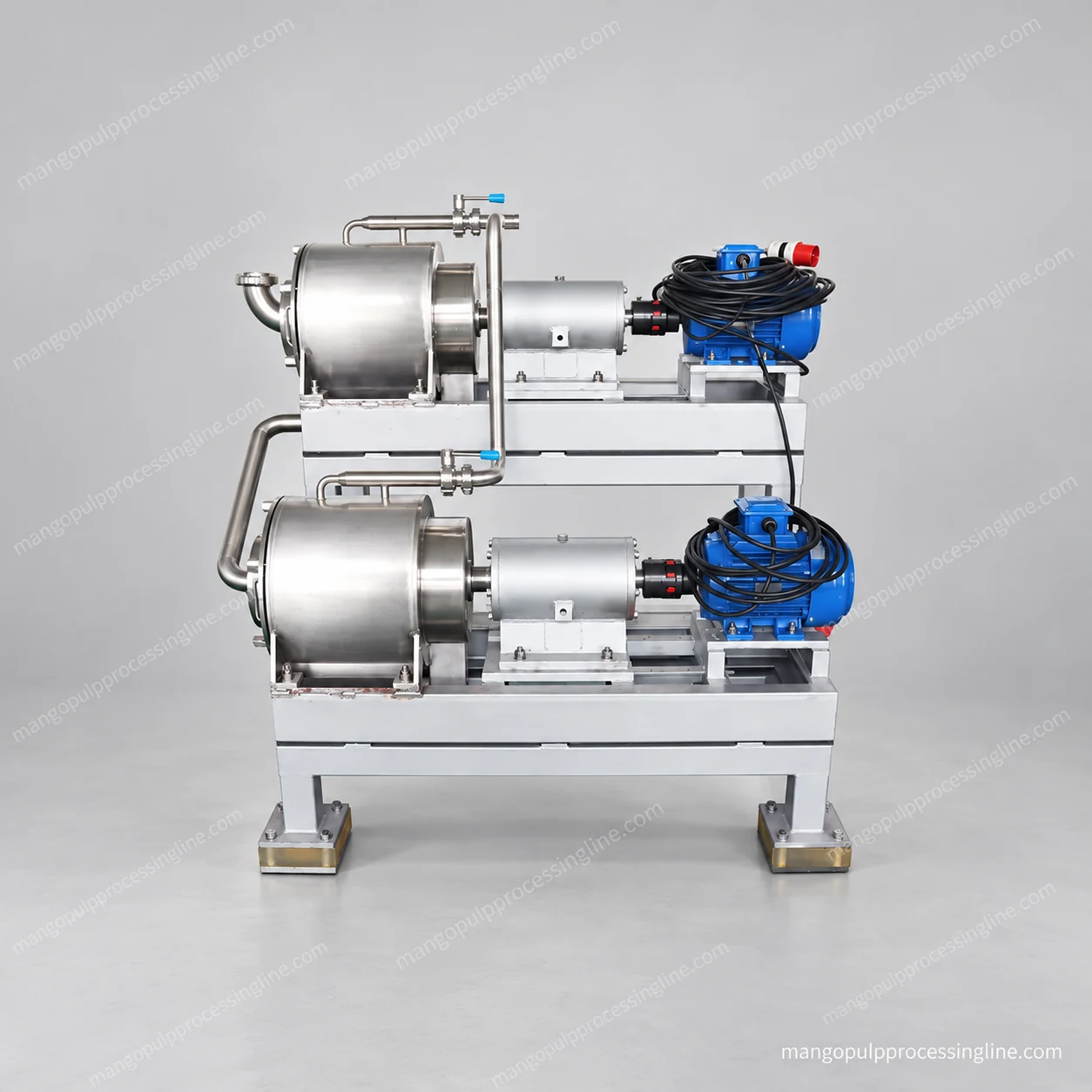
Texture is a product property, not a screen size. Record how the accepted pulp looks, flows and feels at a stated temperature, and use the same method for each run. A visual smoothness note can be useful, but it cannot replace a measured consistency where the product specification requires one. The measurement method belongs in the record.
Screen aperture is only one variable. Feed rate, pulp temperature, paddle or blade condition, screen wear and the way the machine is assembled all affect what passes. FAO’s general discussion of pulpers and finishers supports the idea of staged separation; it does not provide a universal aperture or extraction ratio for mango.
Compare accepted pulp and reject carryover together. A finer screen may change texture while sending more material to reject, and a coarser screen may increase acceptance while leaving fibre in the product. The right balance depends on the finished product and the downstream process, not on a single recovery figure.
If the product specification uses a particular texture or consistency test, perform it at the same product temperature for every candidate screen. If no such test exists yet, agree on a simple descriptive scale and a sample photograph for the trial, then treat it as provisional. The goal is to compare runs fairly, not to declare a universal mango texture.
- Describe texture with a consistent method and stated product temperature.
- Record reject appearance and any visible product carryover.
- Do not quote a guaranteed recovery percentage from one trial or one screen.
Capture cleaning access and repeatability
A trial result is not commercially useful if the machine cannot be opened, inspected and cleaned in the time the production schedule allows. Record the steps to isolate the finisher, remove the screens, inspect the seals and surfaces, clean the reject path and reassemble the machine. Note tools, access space and any part that was difficult to reach.
Repeat the trial with the same lot and settings where possible. Record the sequence, any adjustments and the reason for them. Two runs that appear similar can differ because the first run was still filling the line or because cleaning changed the screen condition. State those facts instead of presenting one number as a guarantee.
The final record should let another engineer understand what was tested and what remains open. That is more valuable than a page of recovery figures without a feed definition, reject destination or cleaning note.
Include the cleaning time and any access constraint in the equipment decision. A finisher that is difficult to open may still perform well in a short trial, yet create a repeatable production problem. The trial review should therefore include operations and sanitation representatives, not only the person recording pulp recovery.
Sources and scope
The article uses the following published sources for context. It does not turn their general or grouped material into a project-specific guarantee.