An indirect heating path for pulp and puree
The equipment catalogue describes this family as a concentric tube arrangement for viscous fruit and vegetable products. Product and the heating medium travel through separate passages. The selected assembly provides the heating area and flow path required by the pulp duty.
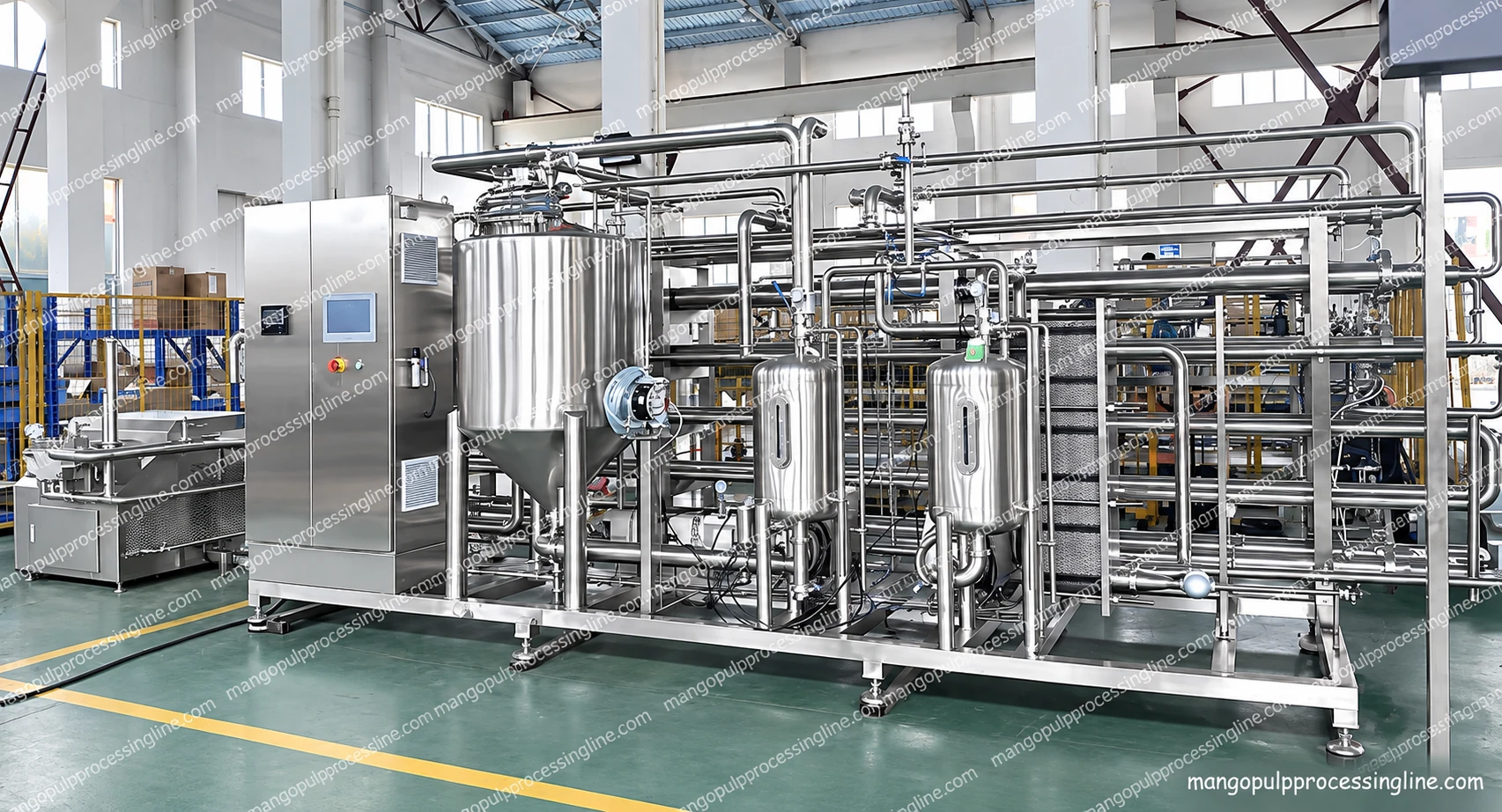
The supplied product route begins at a balance vessel and pump, passes through heating and holding sections, then cools towards the specified filling condition. The pictured skid belongs to the manufacturer’s tube-in-tube product family; its exact installed capacity is set by its own specification.
Equipment range and product process are separate
The 2026 industrial equipment catalogue gives the following tube-in-tube family references. They are equipment-selection ranges, not a ready-to-use mango processing schedule or the nameplate of the photographed machine.
Actual temperature, time, flow and cooling conditions are established for the product and packaging process. Pulp composition, particle or fibre characteristics, equipment configuration and the validated process must agree. A maximum temperature does not by itself establish a shelf life or commercial-sterility result.
| Catalogue item | Reference or option |
|---|---|
| Processing capacity | Selected for the project |
| Treatment temperature | 72–150 °C, adjustable family reference |
| Holding time | 15–120 s, adjustable family reference |
| Heating medium | Hot water or steam configuration |
| Cooling medium | Cooling water or ice-water configuration |
| Product-contact material | SUS304 or SUS316L selection |
| Control | PLC automatic control |
Keep feed, holding and the filler coordinated
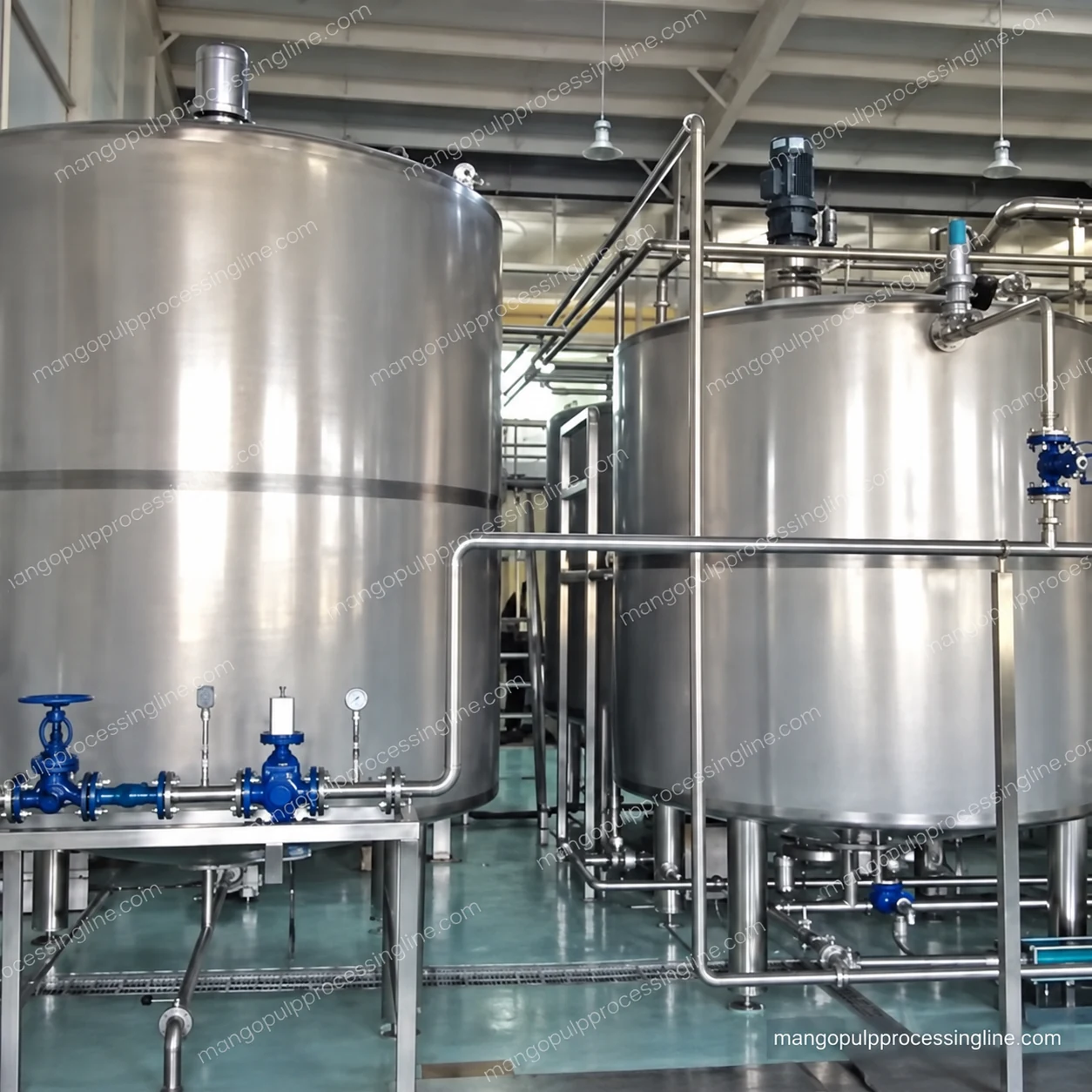
The balance vessel and product pump supply the thermal circuit. Product flow is coordinated with the selected holding section; changing flow can change the time spent in that section.
The equipment family scope includes temperature recording, PLC/HMI control and a return arrangement when the required treatment condition is not met. The specific sensors, valve sequence and permissives are defined for the supplied process. Their operation needs to be checked as a connected system before product is sent to the filling interface.
Product treatment, CIP and SIP have different jobs
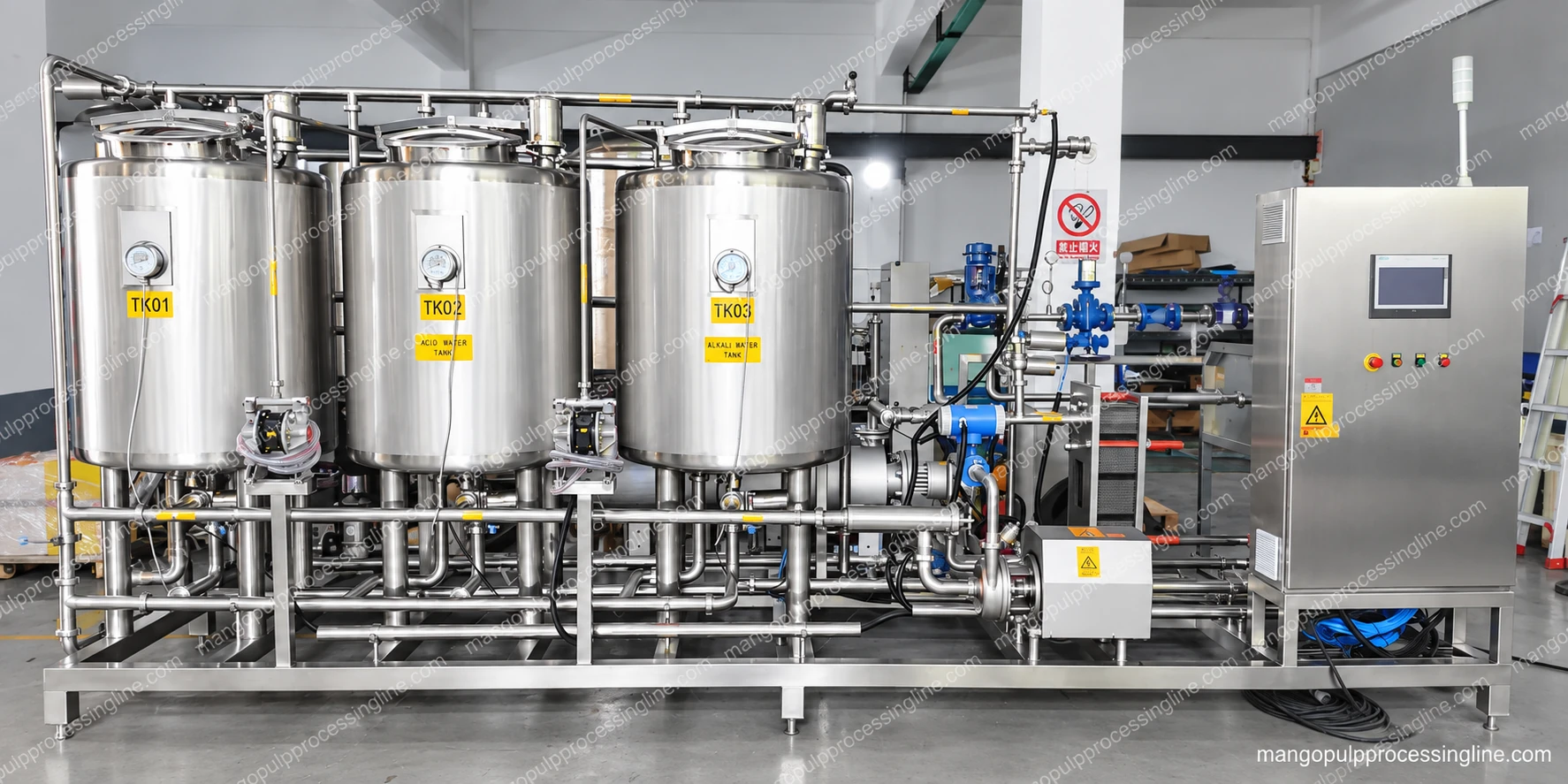
The product route performs the chosen thermal treatment. CIP cleans the configured internal circuit; SIP prepares equipment for the required hygienic operating state. The manufacturer offers CIP/SIP functions for this family, with the cycle and circuit selected as part of the line.
Cleaning and sterilization interfaces must extend through the intended downstream connection. A clean thermal skid alone does not establish the condition of a separate transfer pipe, valve group or filling head.
Supply the thermal section as part of a defined downstream package
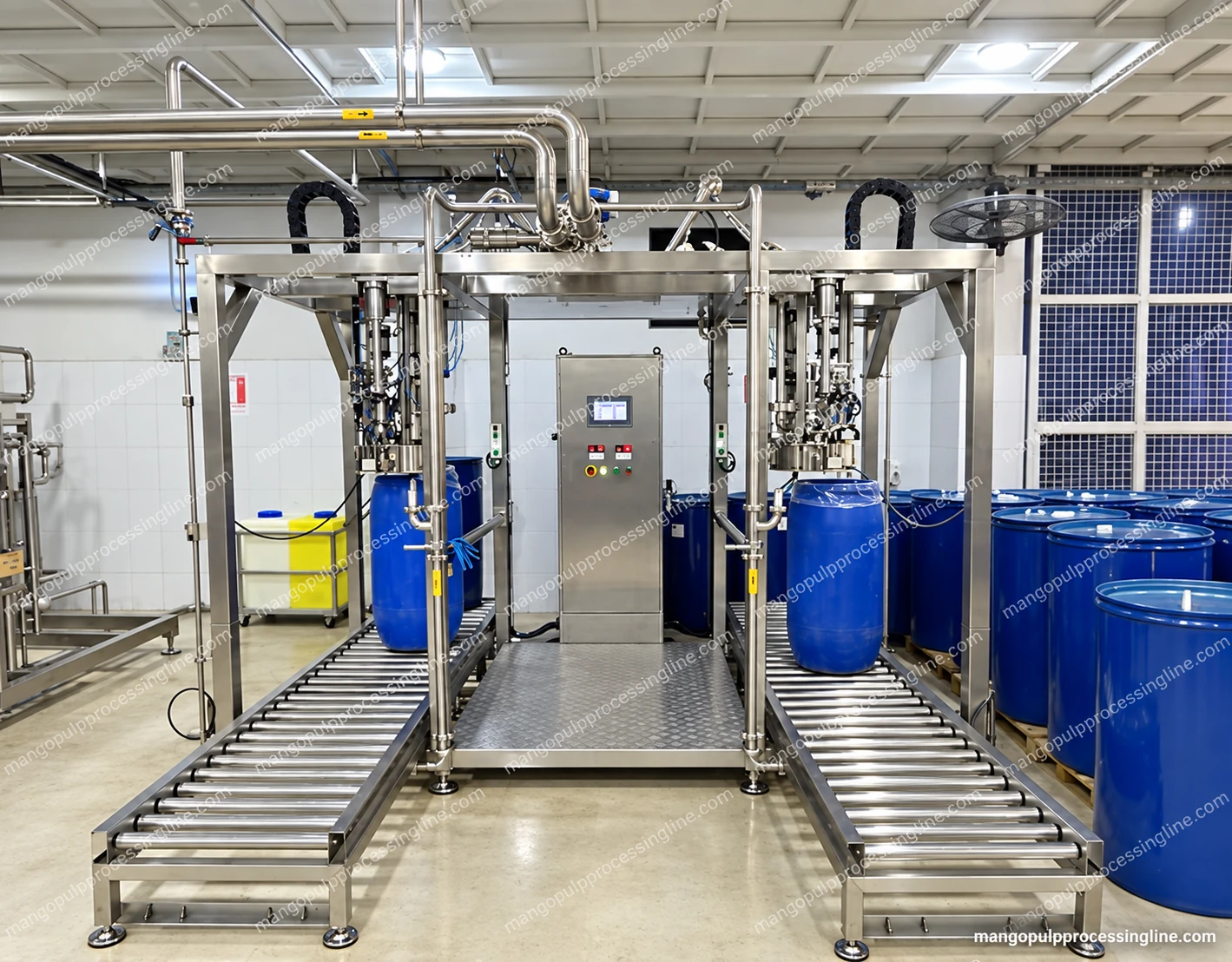
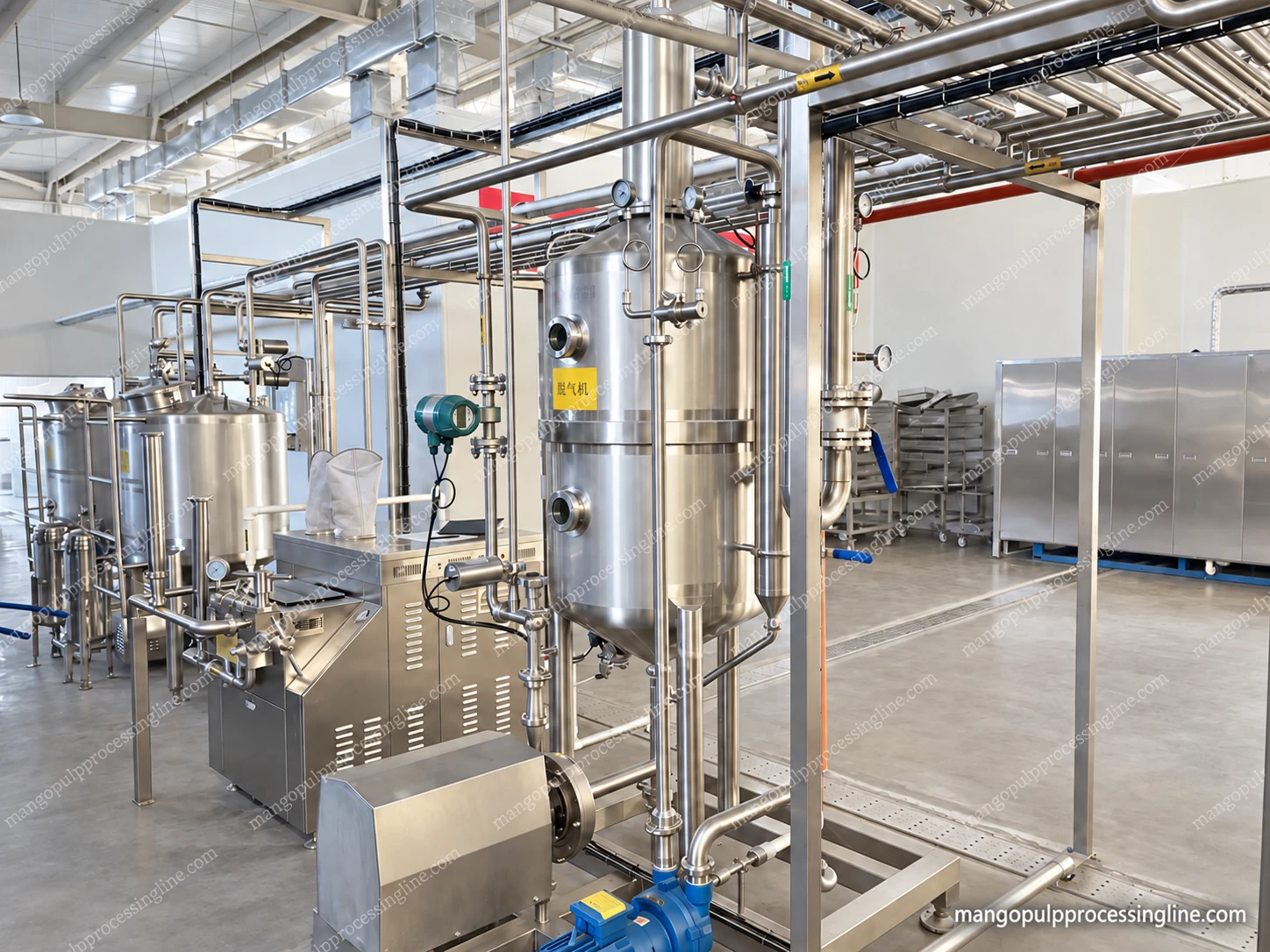
For a plant with an existing pulp front end, the package can be organised around the inlet condition, thermal duty and aseptic-filler interface. Where deaeration or homogenization is selected, its position and flow are coordinated with the thermal route.
The installation layout allows access to tube connections, the feed equipment, instruments and utility valves. The agreed equipment specification and process checks define the delivered configuration.
Common questions
Can the catalogue temperature and time be used directly as a mango recipe?
No. They describe family equipment-selection ranges. A suitable product process depends on the pulp, its condition, the installed flow path and the intended packaging, with the appropriate process validation.