Name where the balance starts and ends
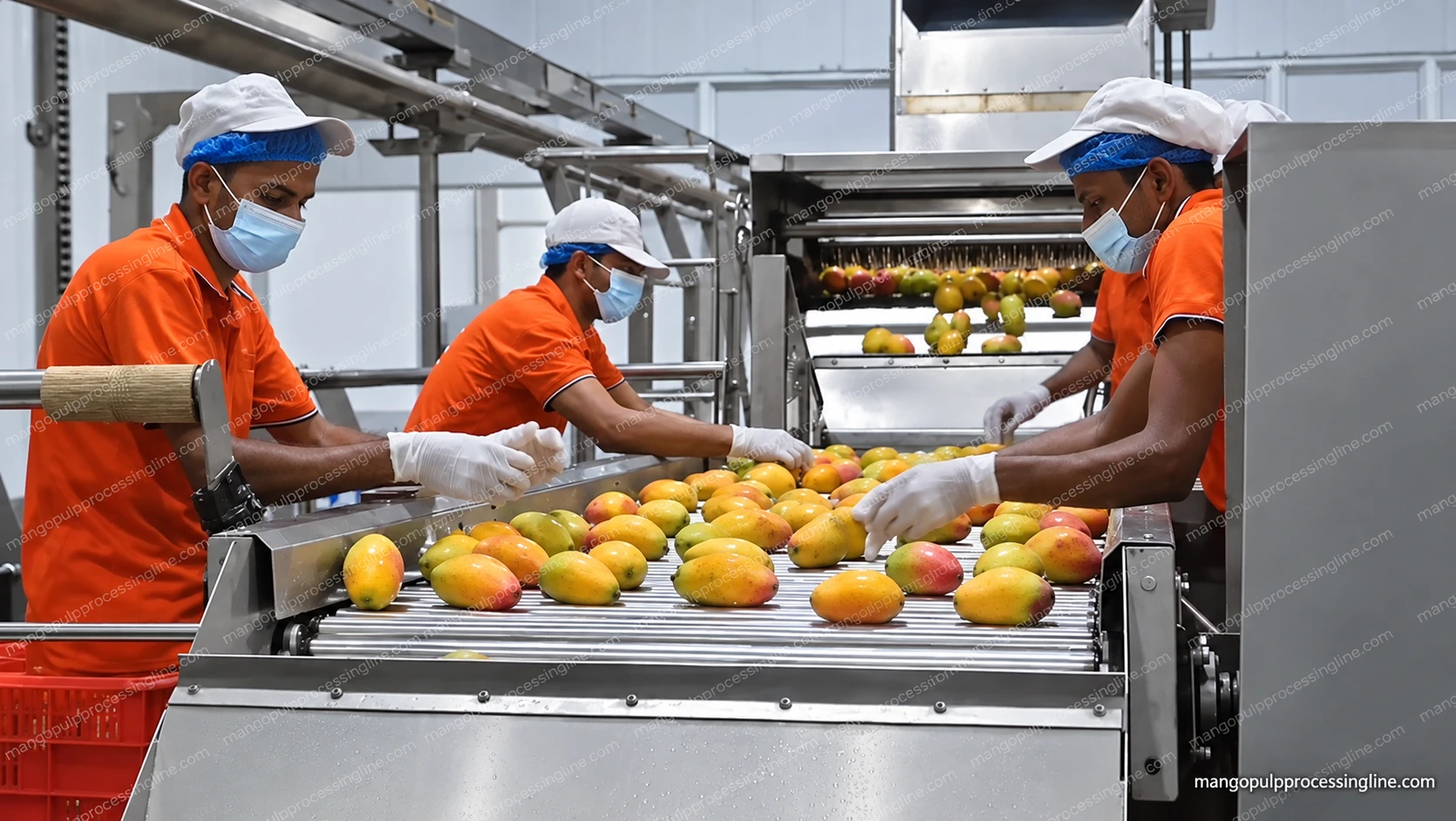
A receiving-yard balance includes fruit rejected before processing. An accepted-fruit extraction balance starts after that rejection. State which boundary is used before comparing recovery. Keep washing water, added water and any other additions separate from mango mass; wet residues can otherwise make a misleading comparison.
Use one period and one mass unit for the feed, product and residues. Empty or record the change in tanks and machine hold-up. A calculated difference is unaccounted mass until sampling, retention, spills and measurement uncertainty explain it.
Keep the residue streams identifiable
Peel and stones carry different amounts of attached flesh, while finisher residue comes from a later separation duty. Combine them only after their individual observations are recorded. This preserves the distinction between fruit anatomy, destoner separation and a tighter screen cut.
| Balance item | Treatment in the record |
|---|---|
| Accepted mango + measured additions | Total material entering the chosen boundary |
| Accepted pulp + peel + stones + finisher residue | Separate measured outputs; avoid double-counting combined outlets |
| Samples + spills + change in retained mass | Other measured exits or inventory change |
| Input minus all accounted material | Unreconciled difference; not a claimed loss mechanism |
Pulp mass is not the same as recovered mango solids
Pulp output divided by accepted fruit is a mass ratio under the recorded conditions. Added water or a changed product specification can raise that ratio without recovering more flesh. A useful recovery comparison holds the fruit basis and product target constant and includes solids measurements when they are part of the agreed method.
No peel fraction, stone fraction, recovery target or coproduct revenue is asserted here. Disposal and any separate use of residues need their own specification and responsibility.