Dedicated liquids, a controlled route and a return path
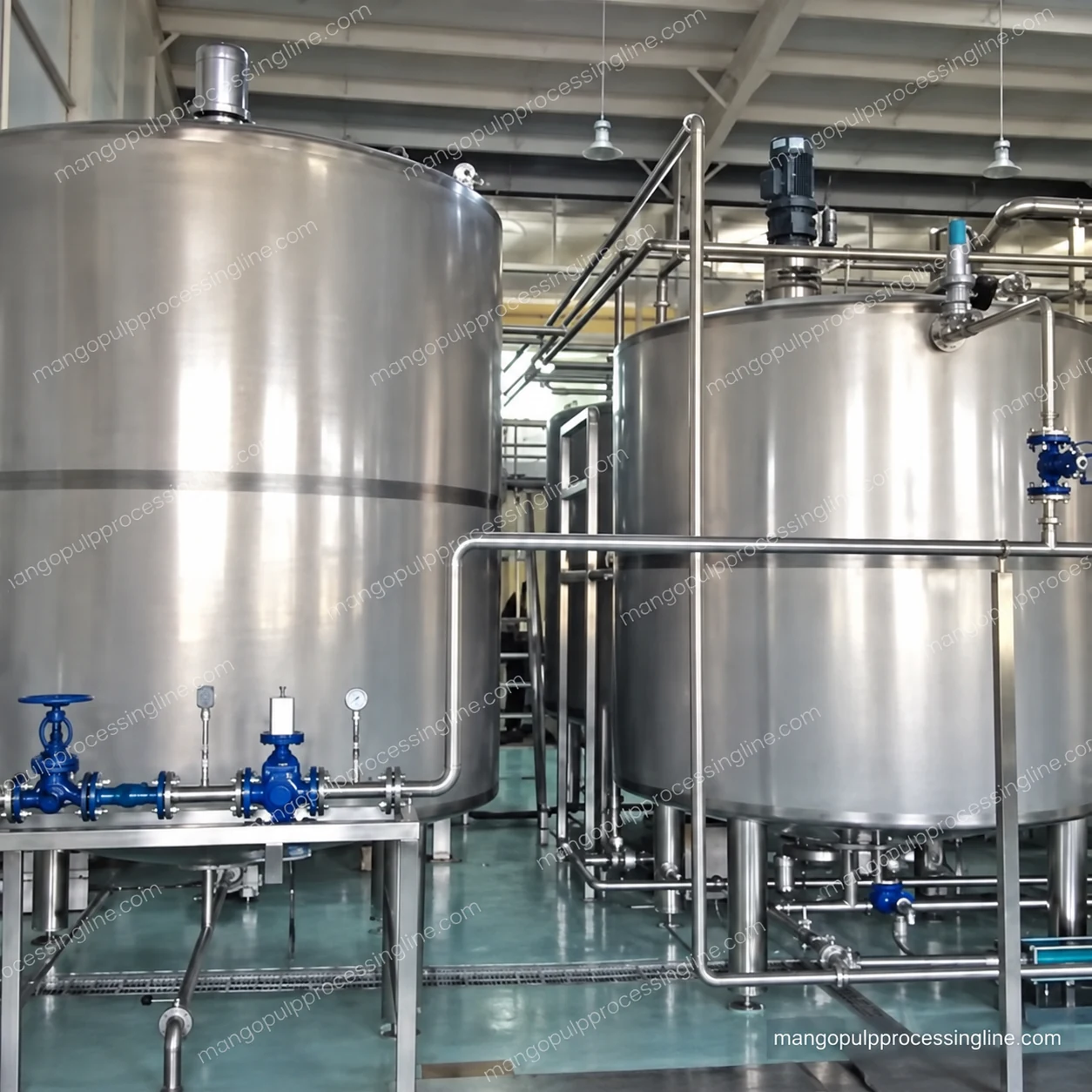
The tanks store the liquids required by the selected cleaning sequence. Pumps move them through the circuit, heating equipment establishes the required condition, and valves direct supply and return between the cleaning skid and the process equipment.
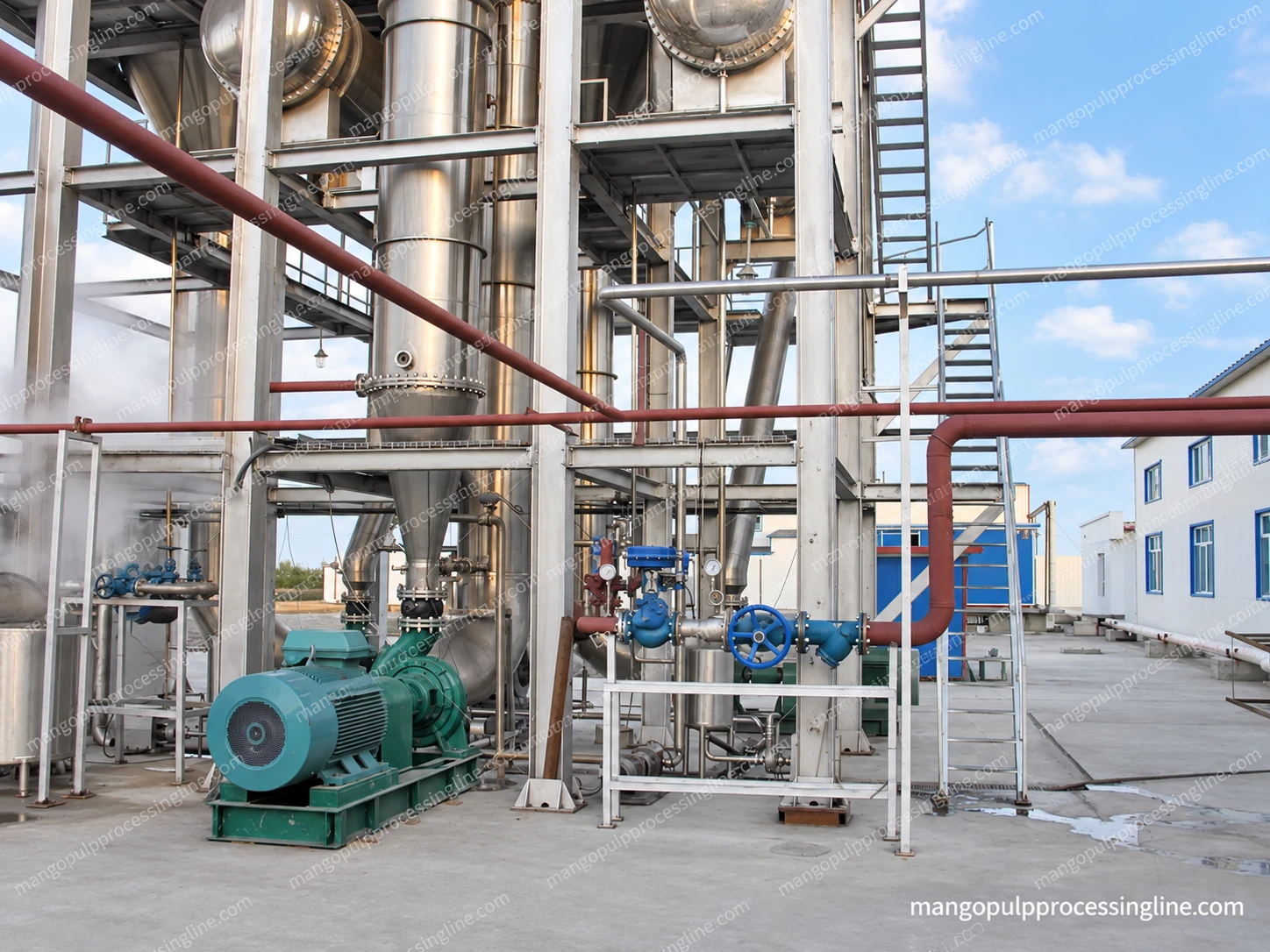
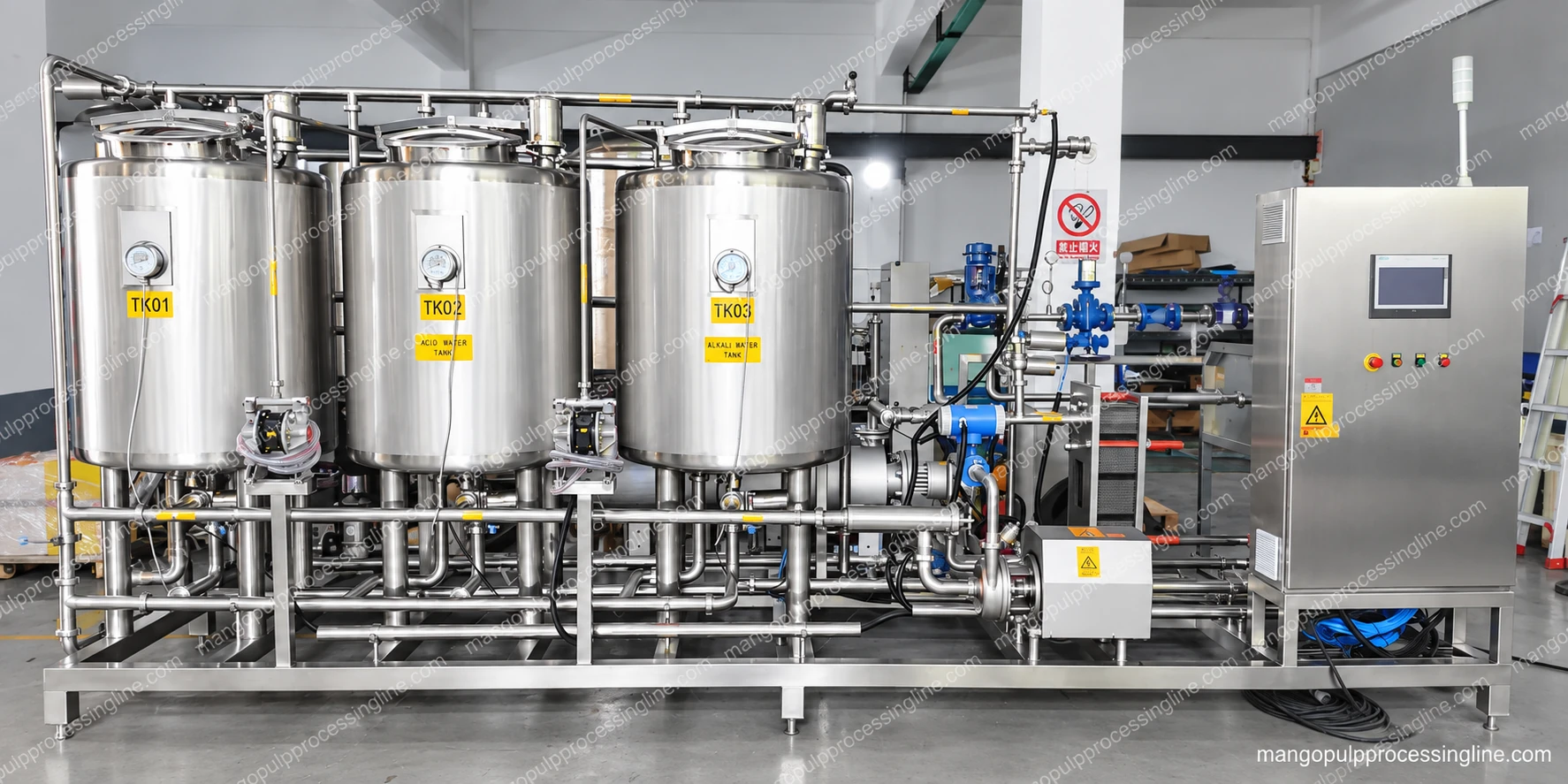
The photographed unit includes three tanks, pump assemblies, connected pipework and a touchscreen cabinet. The tank labels identify acid and alkali duties. The number of tanks and their functions are selected for the intended cleaning arrangement rather than assumed from a generic plant size.
Configure the cleaning supply to the circuit
The pictured three-tank skid does not contain every optional tank function at once. Tank working volume, supply and return flow, heat duty and the number of circuits are specified for the selected assembly.
| Item | Manufacturer catalogue options |
|---|---|
| Tank functions | Water, alkali, acid and recovery configurations |
| Heating | Steam or electric arrangement |
| Cleaning capacity | Selected for the project circuits |
| Operating temperature | Adjusted for the cleaning process |
| Circulation | Automatic cleaning circulation |
| Contact material | SUS304 or SUS316L selection |
| Control | PLC automatic control |
Define what the liquid actually reaches
A cleaning circuit is a real route through vessels, valves, pumps, pipes and heat-transfer surfaces. Each included section needs the intended supply condition and a suitable return or drain route. Branches and isolated components must be considered when the circuit is configured.
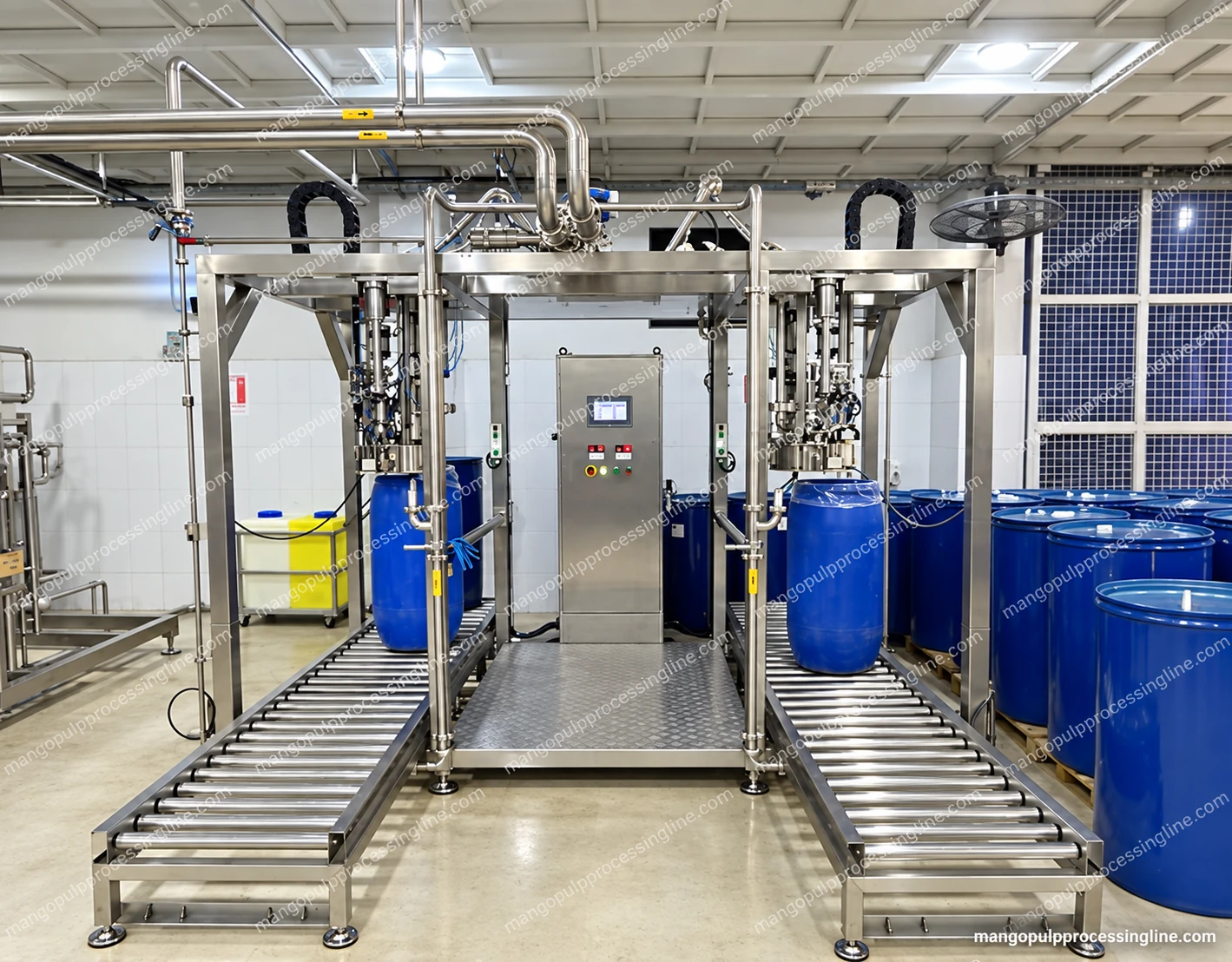
For a mango line, CIP can serve suitable buffer vessels, product-transfer piping, the thermal system and the selected filling circuit. The actual cleaning programme follows the product residue and the equipment design. Chemical concentration, temperature and duration are established for that programme rather than taken from one universal schedule.
Open fruit-handling machines need a different cleaning route
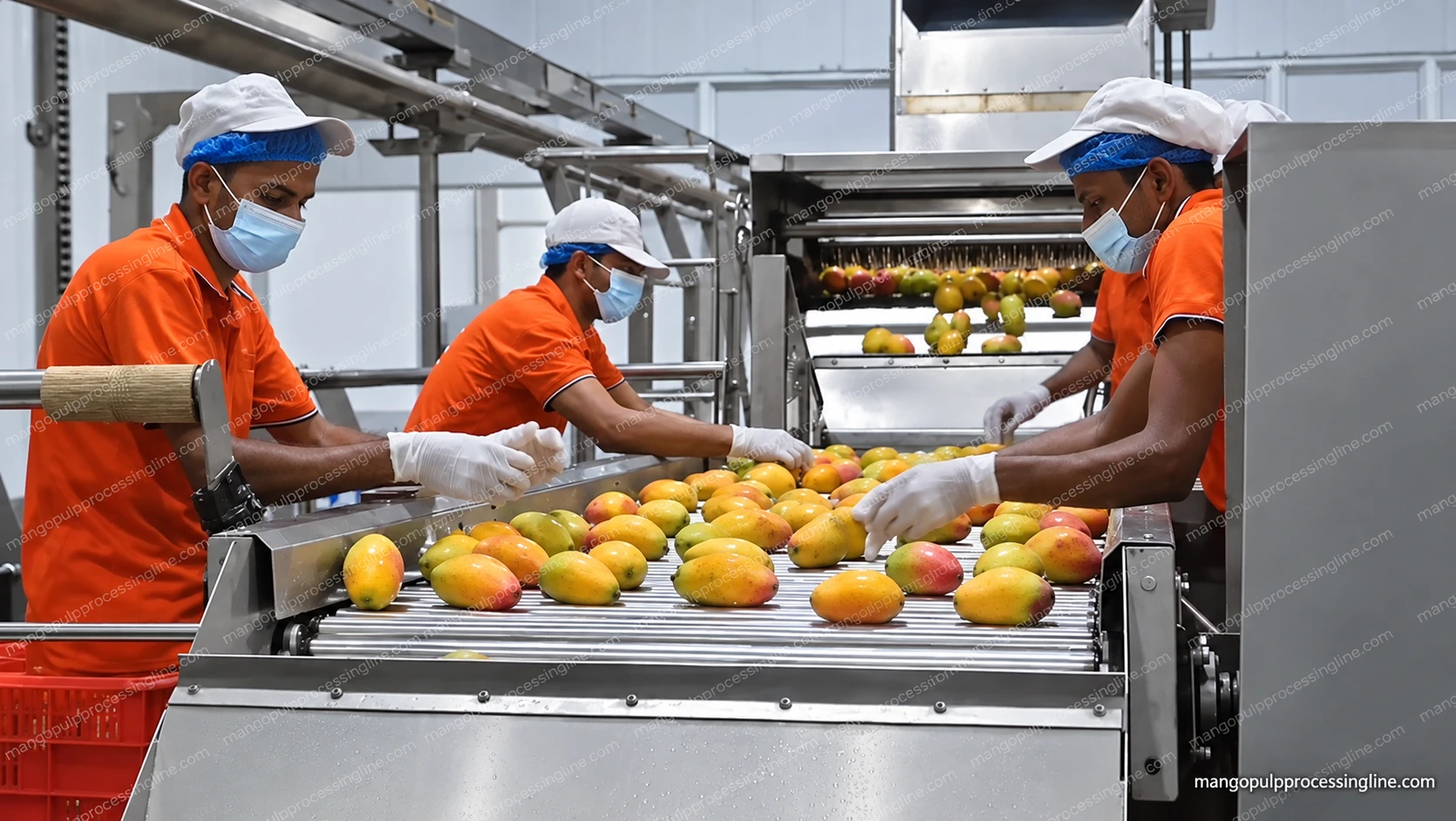
Elevators, sorting conveyors and brush beds expose surfaces that a closed-pipe cycle does not reach. Destoner and finisher parts may also require access or removal under the supplied cleaning procedure.
The line cleaning plan therefore identifies open-machine cleaning alongside the closed circuits. Calling the whole line CIP-equipped should never conceal those manual cleaning and inspection tasks.
Inspect the skid and the process return
Routine inspection includes tank levels and condition, pump seals, valve operation, the heating arrangement and the return route. The fitted instruments and controls provide the operating information defined for that skid.
Cleaning effectiveness is assessed against the chosen programme and the equipment being cleaned. A completed control sequence alone is not evidence that every disconnected or bypassed component has received the intended treatment.
Common questions
Are cleaning and sterilization the same operation?
No. Cleaning removes the residues addressed by the cleaning programme. Equipment sterilization, where required, is a separate preparation step with its own defined conditions and circuit scope.