Screening follows extraction; it does not replace it
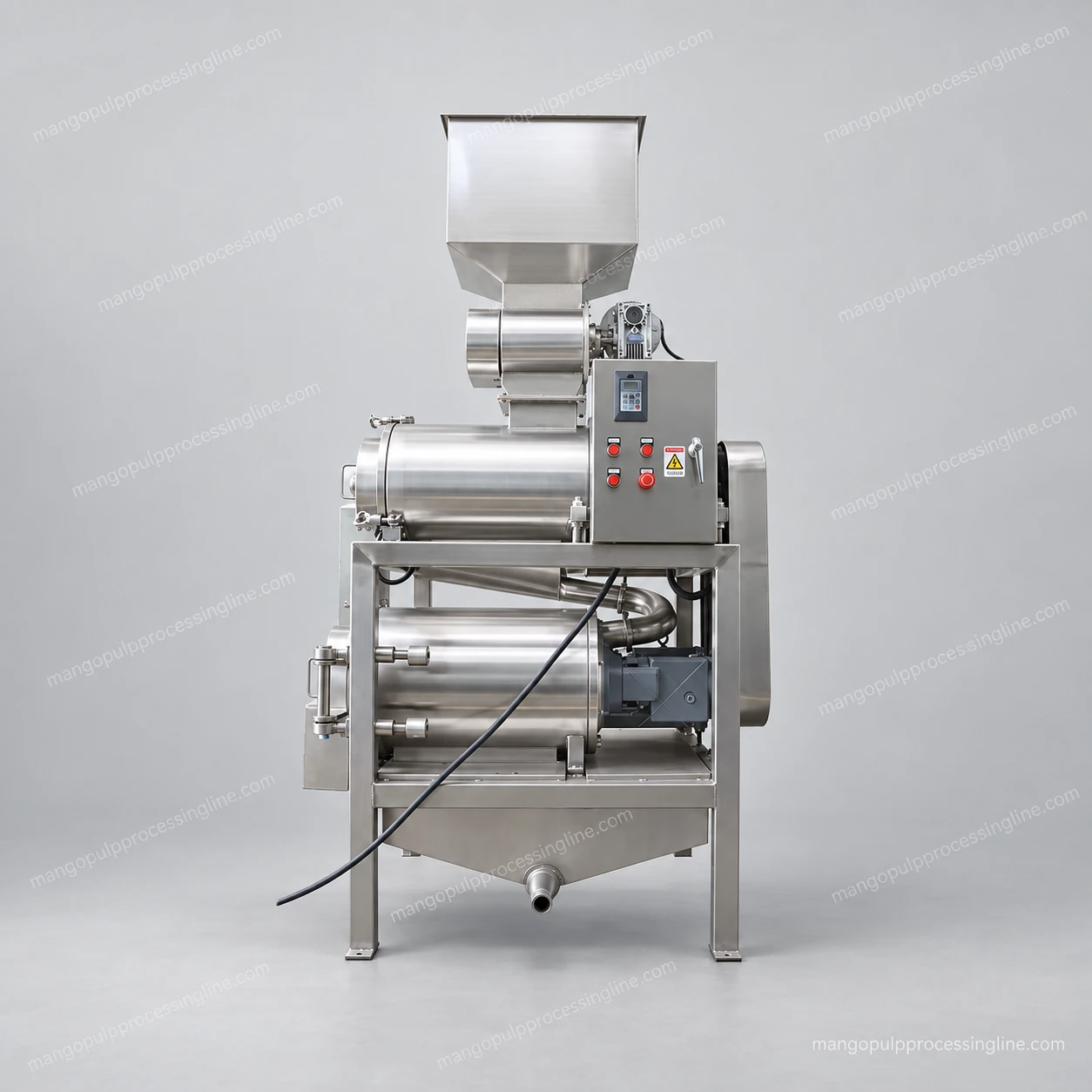
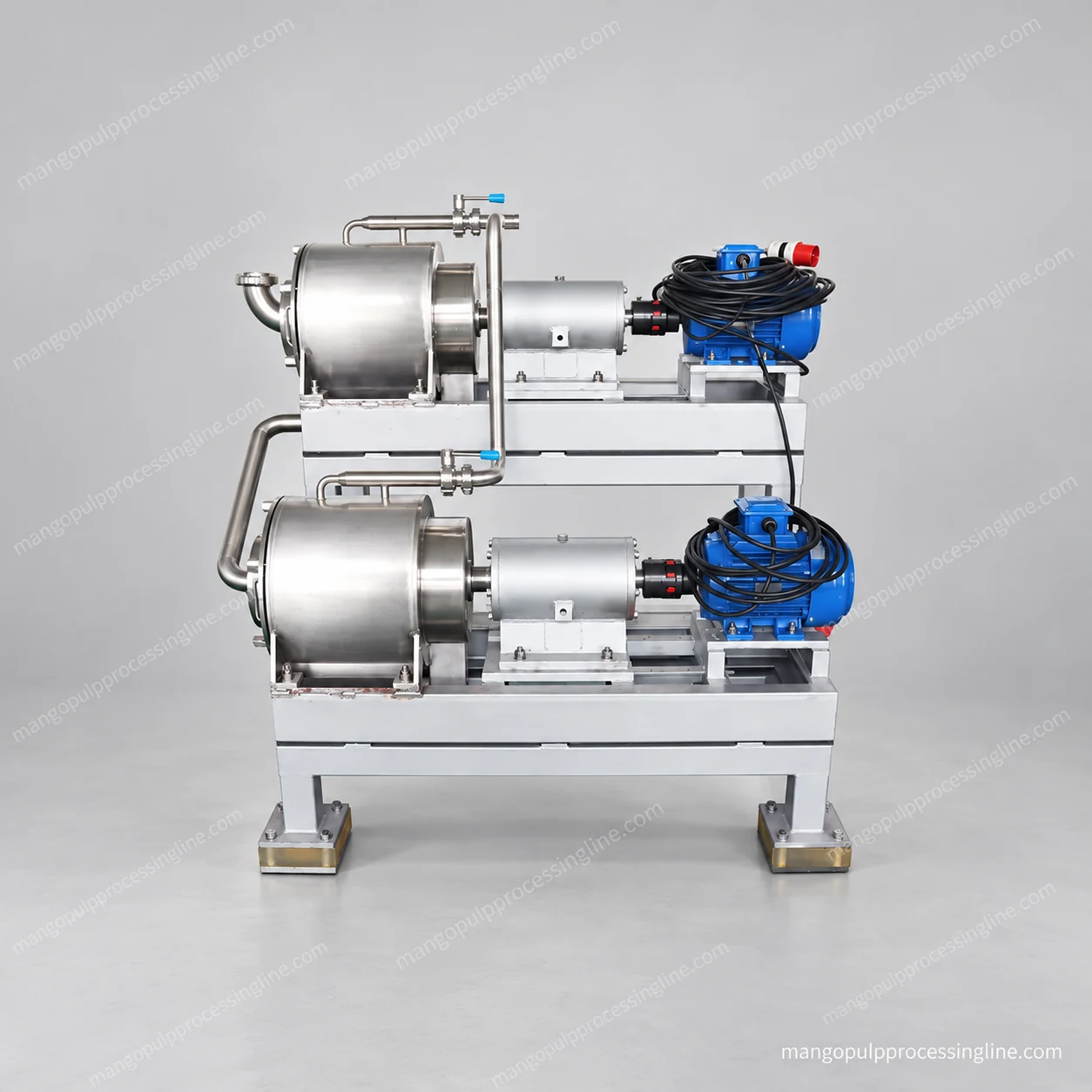
The destoner separates flesh from whole mangoes. A finisher receives the extracted pulp and separates material by the selected screens. Define this incoming pulp before comparing a first and second stage; whole-fruit intake is not the same measurement as finisher feed.
Keep cultivar, maturity, feed temperature and any prior separation constant during a comparison. Record both screen stages and machine setup as tested. The reference catalogue options are a starting point for selection, not a pre-approved mango recipe.
A finer screen changes more than appearance
Compare product texture and visible fibre with residue from each stage. A smaller opening can change the separation boundary; its effect on useful product and flow must be observed rather than assumed. Retain labelled samples, including the residue, and state the temperature and method used to judge texture.
| Keep together | Comparison evidence |
|---|---|
| Incoming pulp and screen identity | Lot, sample point, first/second-stage configuration |
| Accepted product | Mass, texture/fibre assessment and assessment method |
| Each stage residue | Mass and observations of retained material |
| Run and cleaning condition | Operating period, screen integrity and access observations |
Choose the finish the downstream process can use
The agreed pulp must suit its intended product, transfer pump and treatment or concentration route. Compare screen results on that common specification. No public trial data, screen-test video or customer acceptance limits are supplied here; proposed criteria need project confirmation.