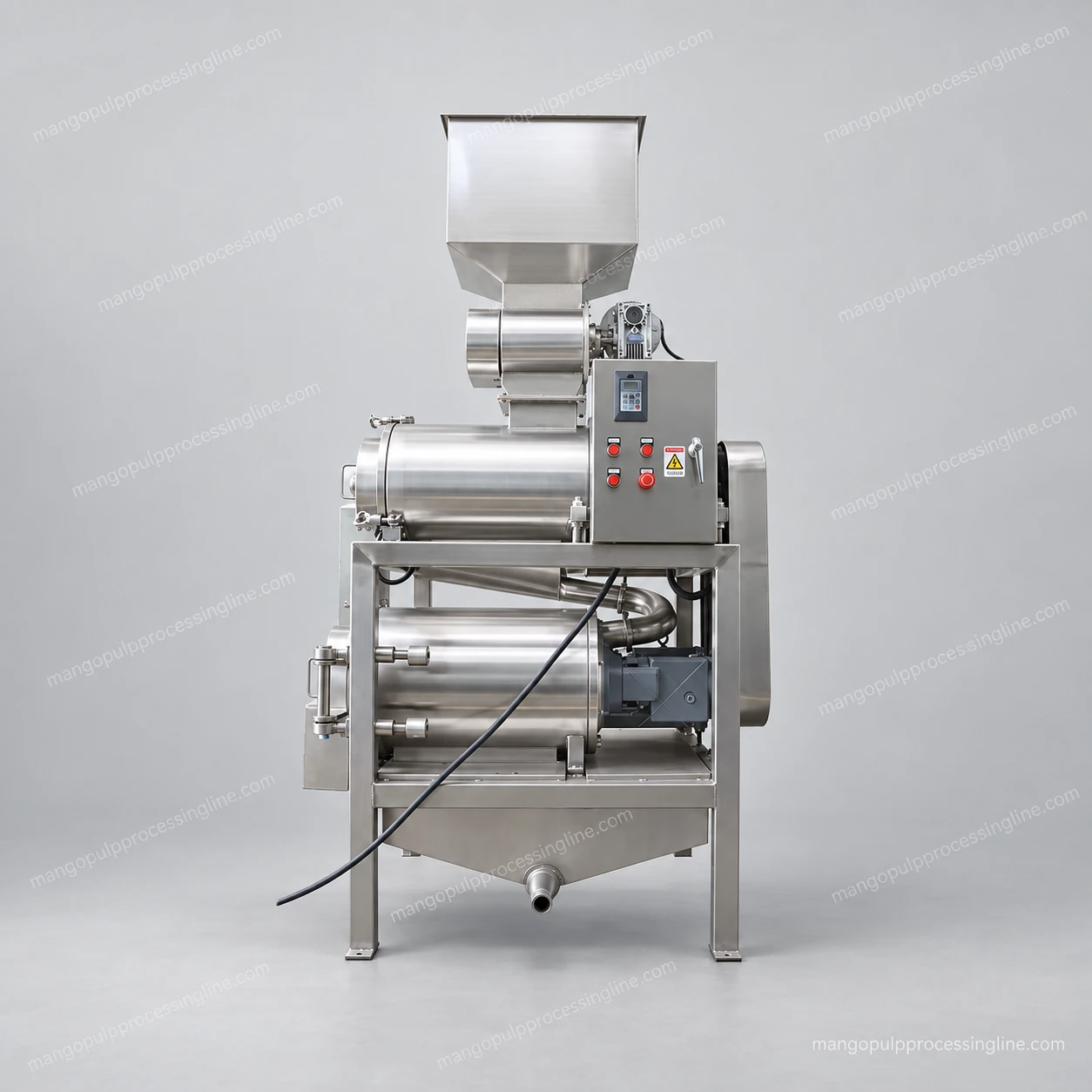
One assembly between sorted fruit and pulp
Washed, accepted mangoes enter the upper feed assembly. The machine separates the recoverable flesh from the peel and stone fraction within its working sections. The pulp stream then feeds the next refining stage, while separated material is collected on its own handling route.
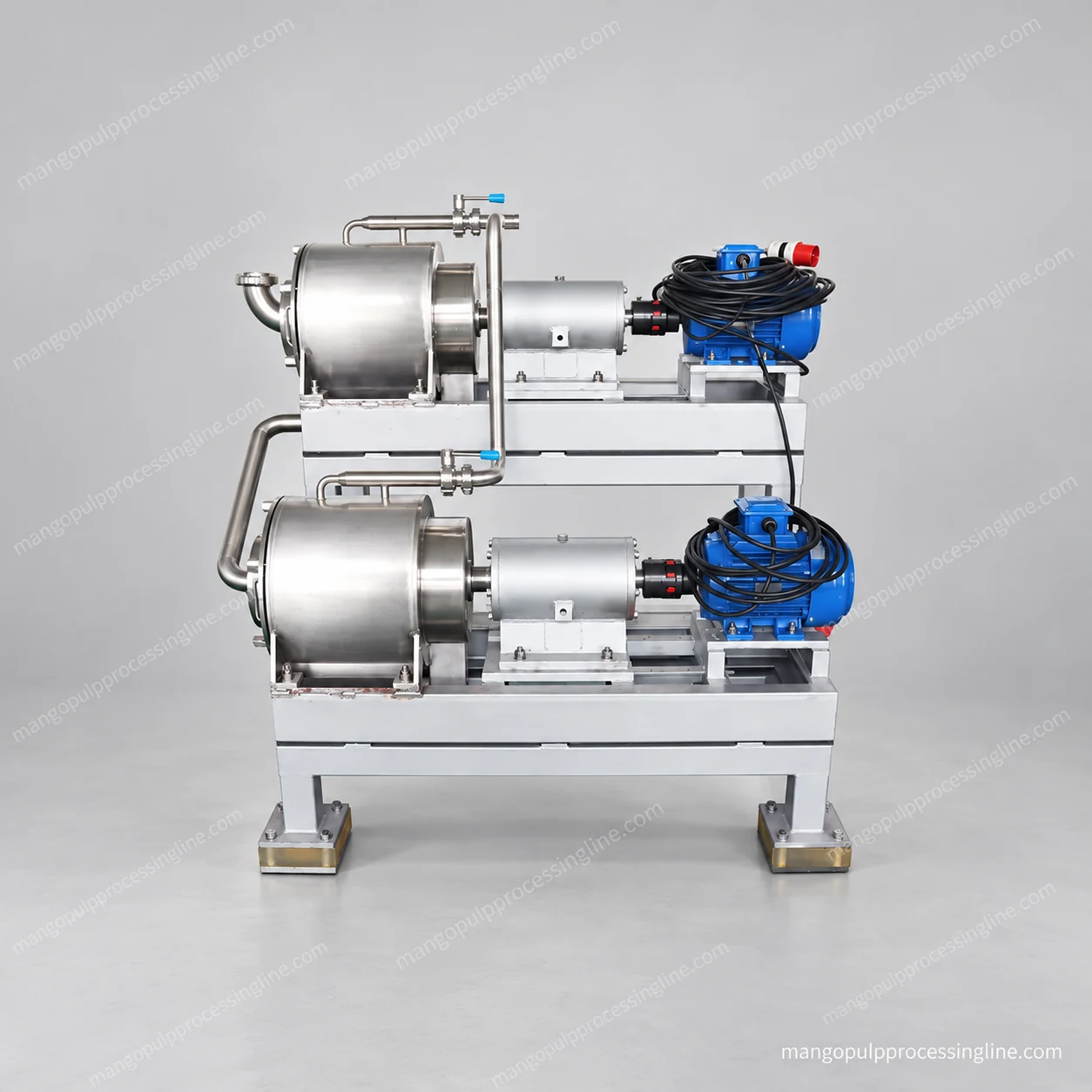
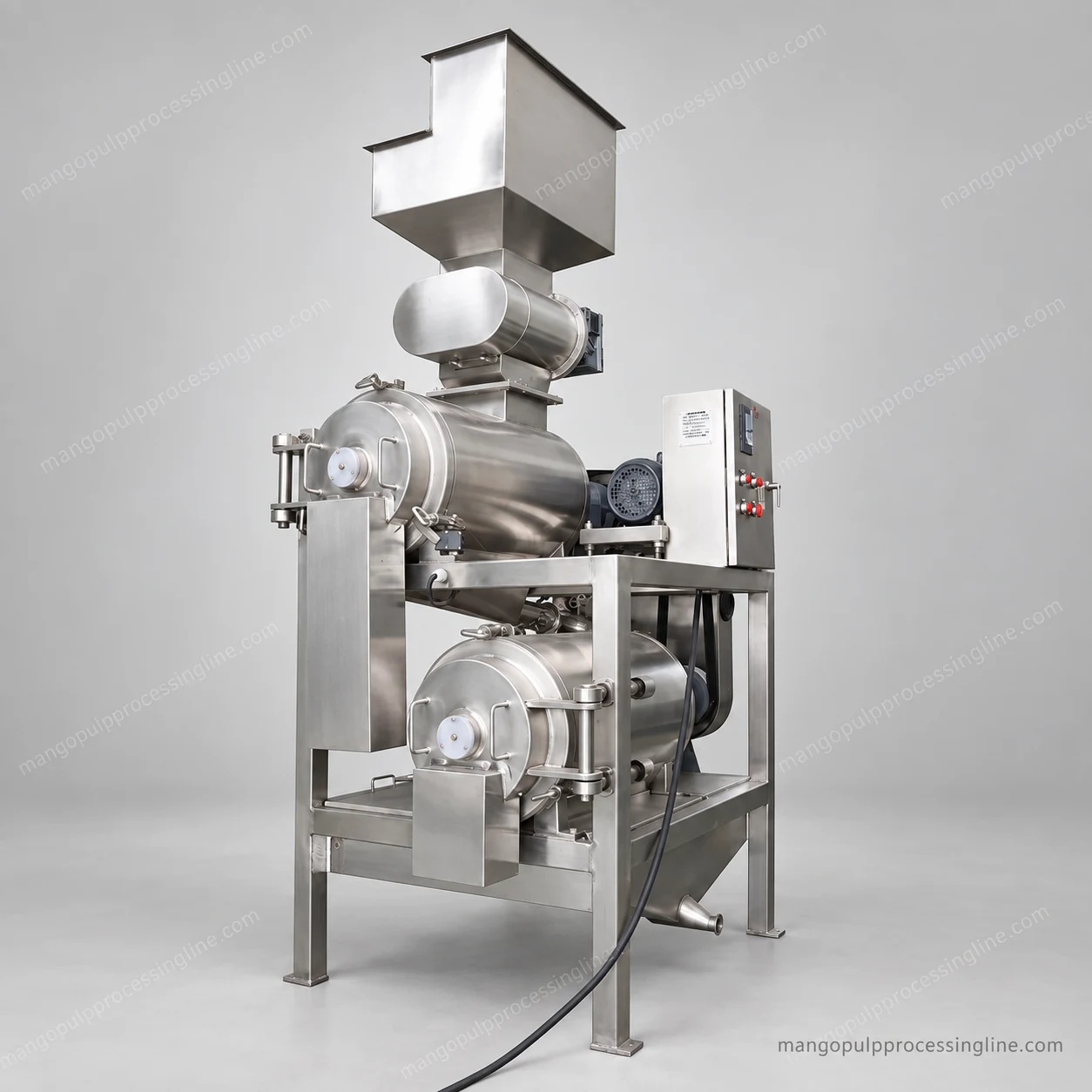
The photographed configuration has a rectangular feed hopper, an upper processing housing and two lower chambers. Its motors and drive covers sit alongside the process body. This is a combined machine, so an additional standalone peeler is not automatically required in the line.
Ripeness affects the separation task
The feed specification describes the mango variety, fruit size, ripeness and condition after washing and sorting. Those conditions affect how readily flesh separates from the stone and peel, and how much fibrous material reaches the finisher.
Set up the pulp and waste transfers as separate routes with sufficient access for inspection. The actual outlet arrangement follows the chosen machine configuration. Recovery, stone breakage and retained fibre are evaluated against the intended raw fruit; a catalogue capacity alone does not establish those outcomes.
MQ series reference capacities
The manufacturer publishes the following series table. These are nominal processing capacities, not finished-pulp output or guaranteed recovery. The gallery identifies the machine family but does not identify the pictured unit as a particular MQ size.
| Manufacturer model | Processing capacity | Listed power |
|---|---|---|
| MQ5 | 5 t/h | 7.5 kW |
| MQ10 | 10 t/h | 11 kW |
| MQ20 | 20 t/h | 15 kW |
Allow access to the separation sections
The feed hopper, chamber access points and both material routes must remain accessible after installation. Peel and fibre accumulation can affect the separation path, so cleaning access is considered together with the waste collection arrangement.
Isolate the drive before opening the machine or clearing trapped material. Inspection of working parts, seals and drive guarding follows the supplied machine instructions. Cleaning of removable or exposed separation parts is distinct from cleaning the closed pulp-transfer piping.
Coordinate the destoner with the finisher
Select the destoner for its incoming fruit duty and the finisher for the pulp it will actually receive. A large whole-fruit intake figure should not simply be copied onto every downstream pump and thermal machine.
Common questions
Is destoning the same as final pulp finishing?
They are different duties. The combined mango machine separates pulp from peel and stones; the downstream finisher controls the screening step and separates remaining coarse fibre or residue.