Circulation keeps the heating and separation stages connected
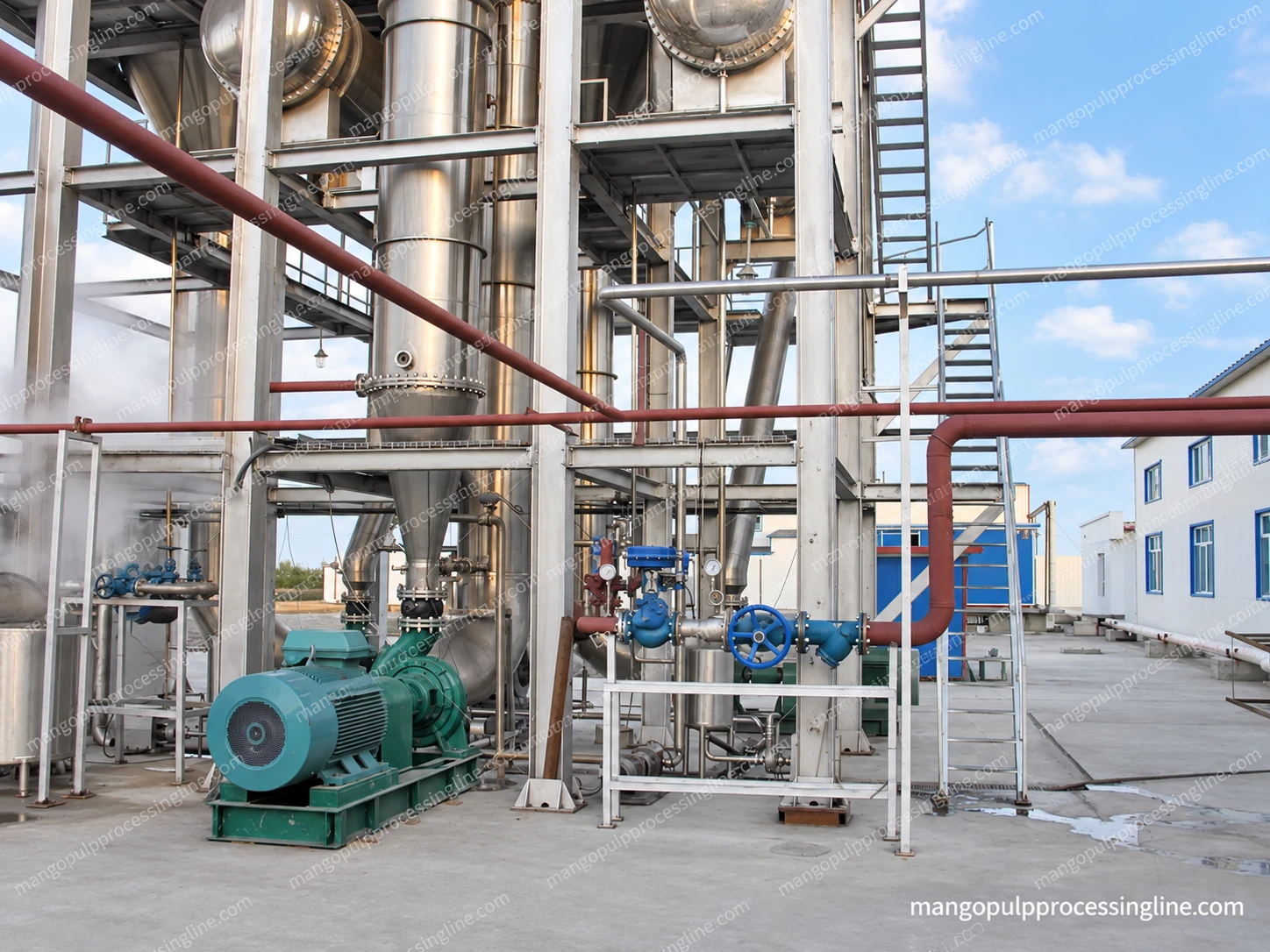
In a forced-circulation configuration, a pump circulates product through the heating and separation circuit. Heat supplies the evaporation duty, water leaves as vapour, and concentrated product continues through its discharge route.
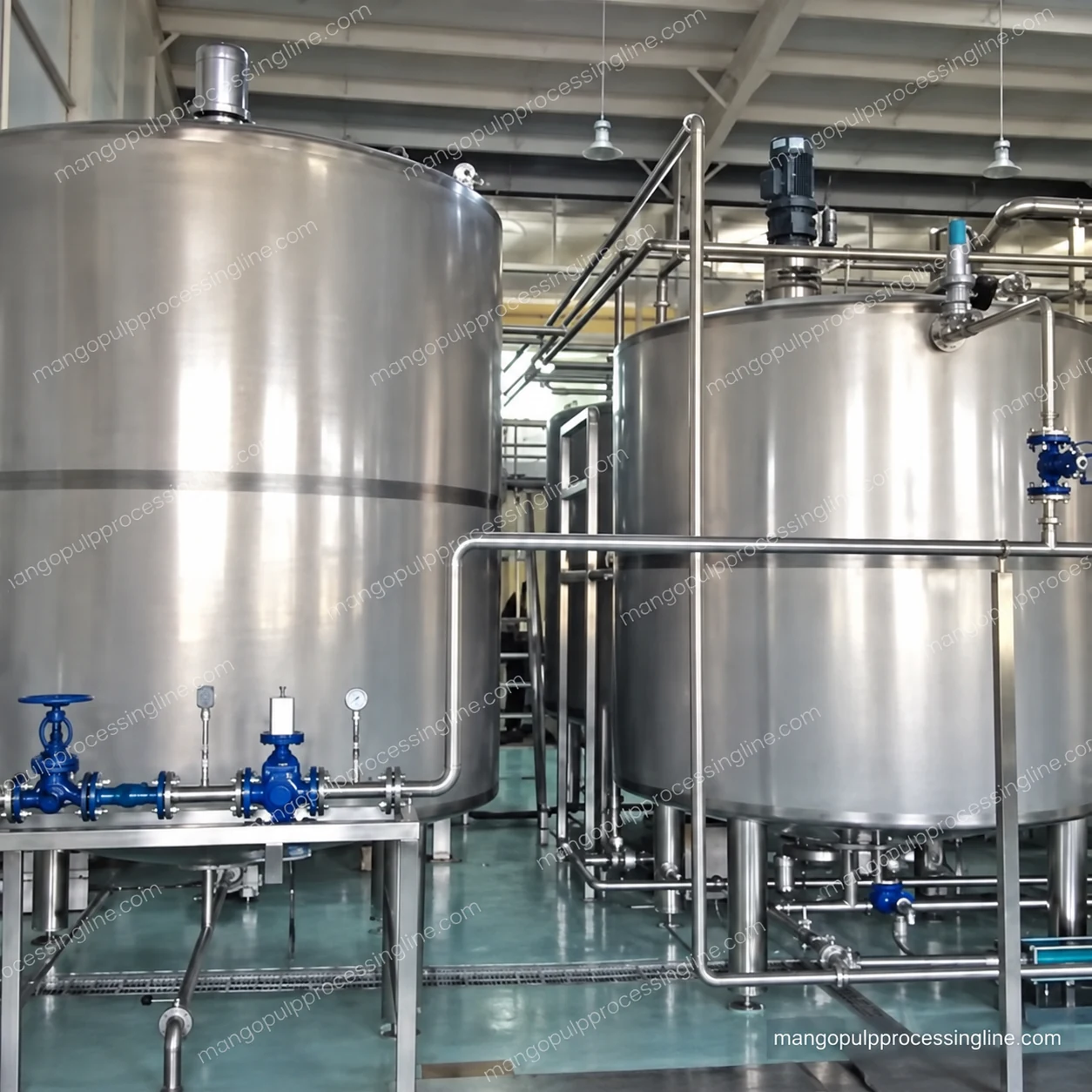
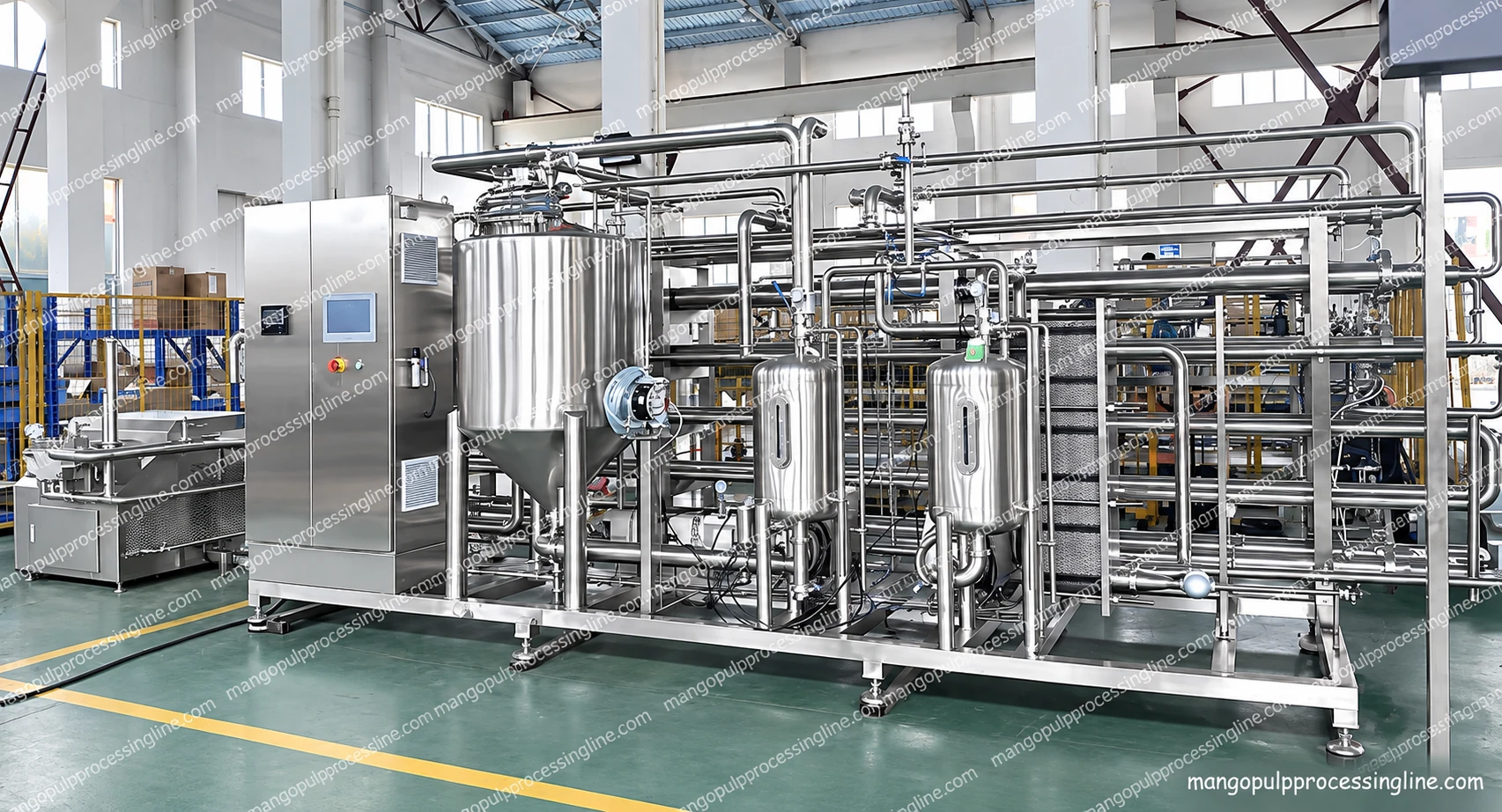
The pictured installation includes a substantial external circulation pump, vessels and an access platform. These components illustrate the equipment arrangement. The process duty and effect count are selected for the particular concentrate, rather than read from the number of visible vessels.
Manufacturer configuration options
These are catalogue options for the forced-circulation family. They describe available configurations, not the installed specification of every machine. The evaporation layout is distinct from the falling-film arrangement also offered by the manufacturer.
| Item | Catalogue configuration |
|---|---|
| Evaporation capacity | Selected for the project duty |
| Heating supply | Steam or a specified thermal-energy system |
| Effect arrangement | Single, double or multiple effects |
| Product-contact material | SUS304 or SUS316L selection |
| Circulation | Forced circulation |
| Control and cleaning | PLC control and a configured CIP circuit |
Start with the solids balance
The useful sizing inputs are the incoming pulp quantity, its measured solids and the target concentrated product. Those inputs define how much water must be removed. Raw mango tonnes per hour, pulp litres per hour and evaporated water kilograms per hour describe different parts of the line.
Viscosity and flow can change as concentration progresses. The heat-transfer duty, circulation and discharge are considered across that operating range. A product target is not established by assigning the same Brix figure to every mango variety or recipe.
The utility boundary extends beyond the product skid
The configuration identifies the heating supply, vapour and condensate handling, cooling duties where needed and the product-transfer connections. Platform access, service clearances and pipe routing belong in the same layout.
Steam consumption and other utilities are calculated for the selected duty and energy arrangement. An effect count by itself does not establish a fixed energy-saving percentage.
Plan the discharge and cleaning for concentrated pulp
The concentrate outlet and transfer assembly must handle the product at its discharge condition. The buffer and thermal-processing stages are then selected for that concentrated stream.
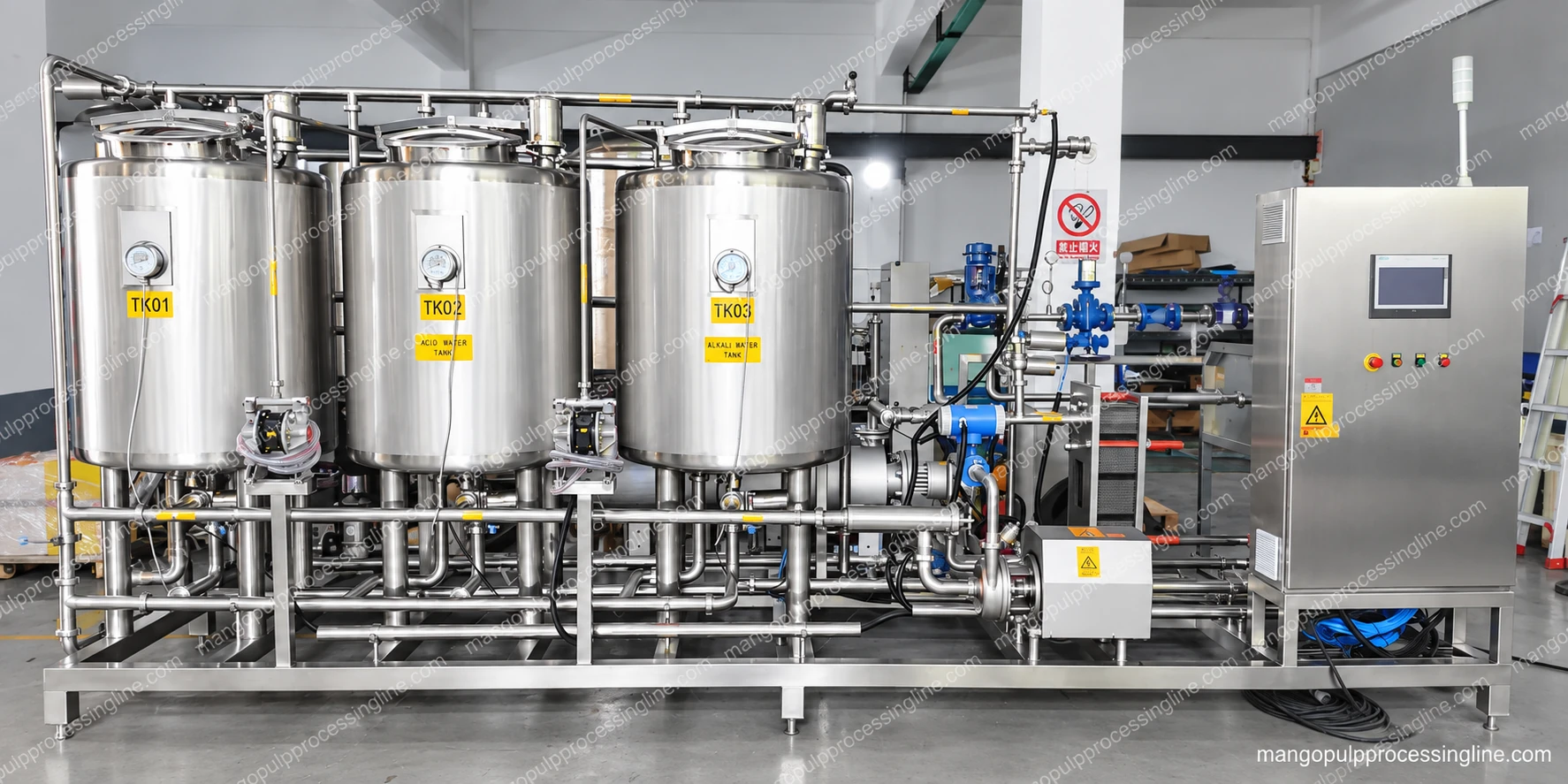
Cleaning includes the circulation route, heating surfaces, vessels and the concentrate outlet. The cleaning programme is set for the actual product and equipment circuit; residue and fouling inspection are part of maintaining the selected duty.
Common questions
Can concentration be added to a single-strength pulp line?
It can be evaluated as a connected configuration. The incoming pulp condition, evaporation duty, available utilities and downstream handling of the concentrate determine the added equipment scope.