Establish one material balance for the selected scope
A whole-fruit line starts with received mangoes, while a downstream extension starts with prepared pulp. The equipment schedule should use that starting boundary consistently. Peel, stones, sorting rejects and refining residues are distinct streams; they cannot be carried forward as finished product when sizing the thermal and filling sections.
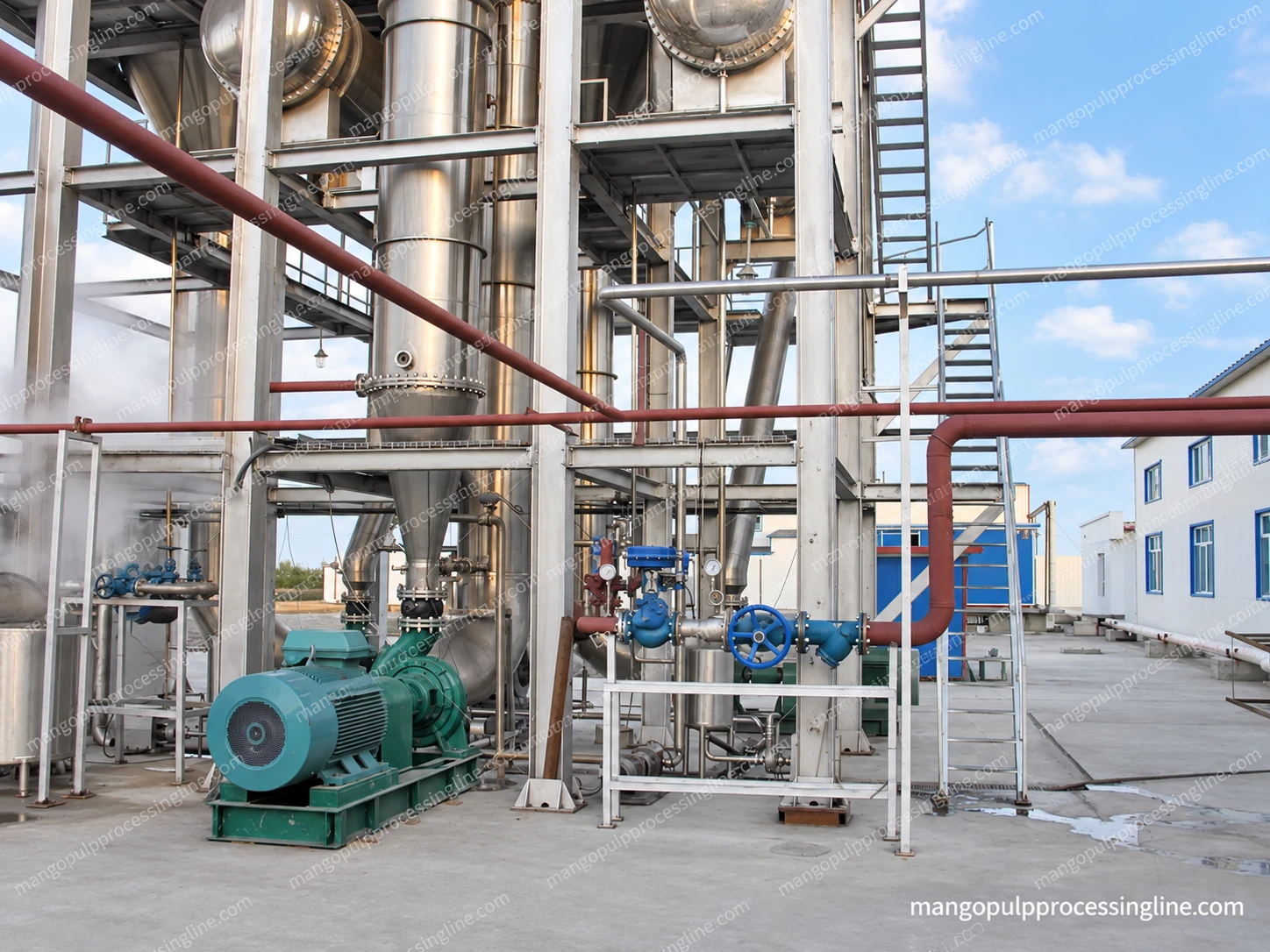
For concentration, add incoming pulp, concentrated product and evaporated water as separate quantities. If one supplier states mass flow and another states volume flow, conversion needs the product density under the relevant conditions. Line capacity is an operating duty across the connected process, not the largest number in the machine catalogue.
Allow fruit, people, product and waste to move
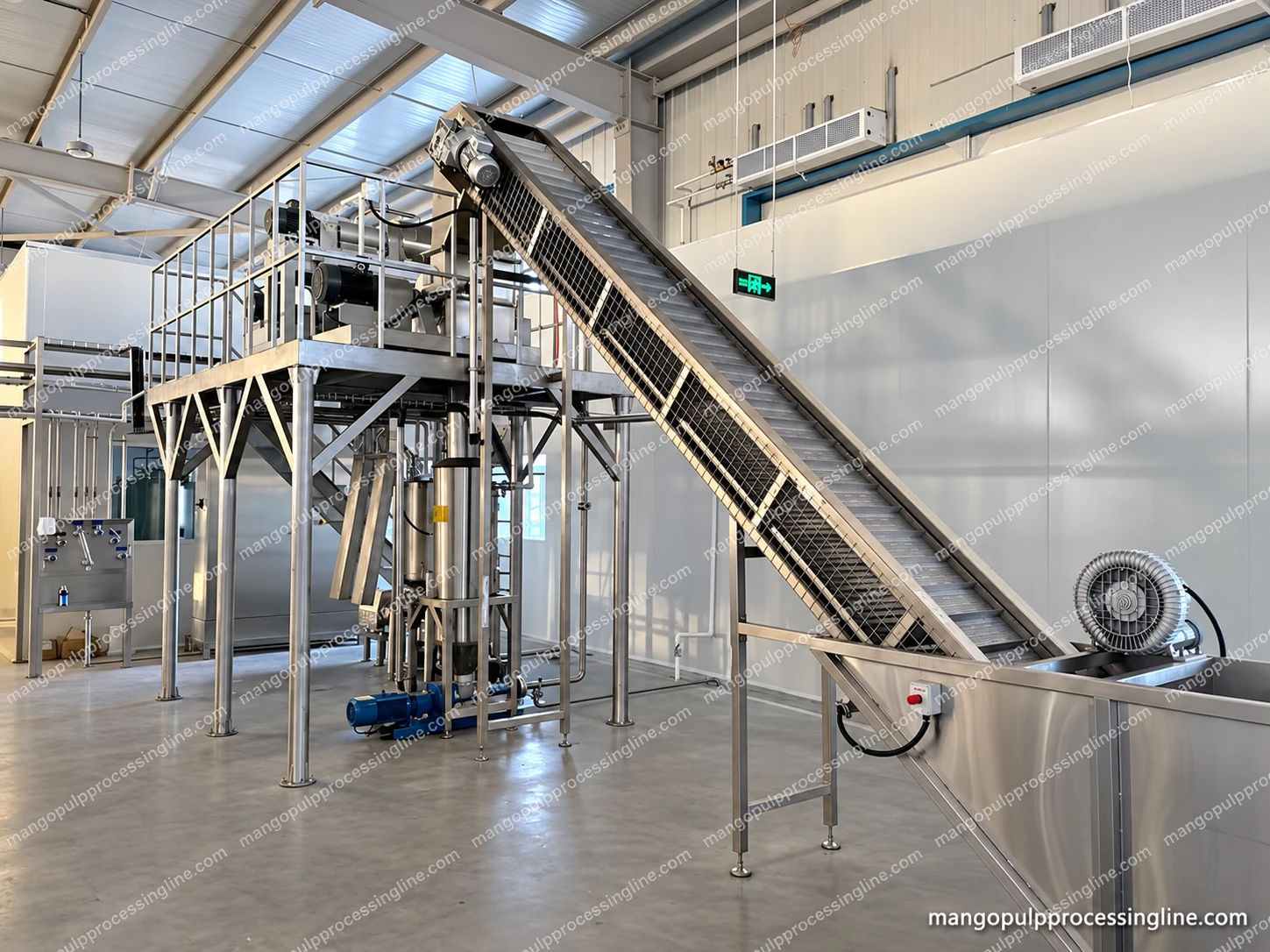
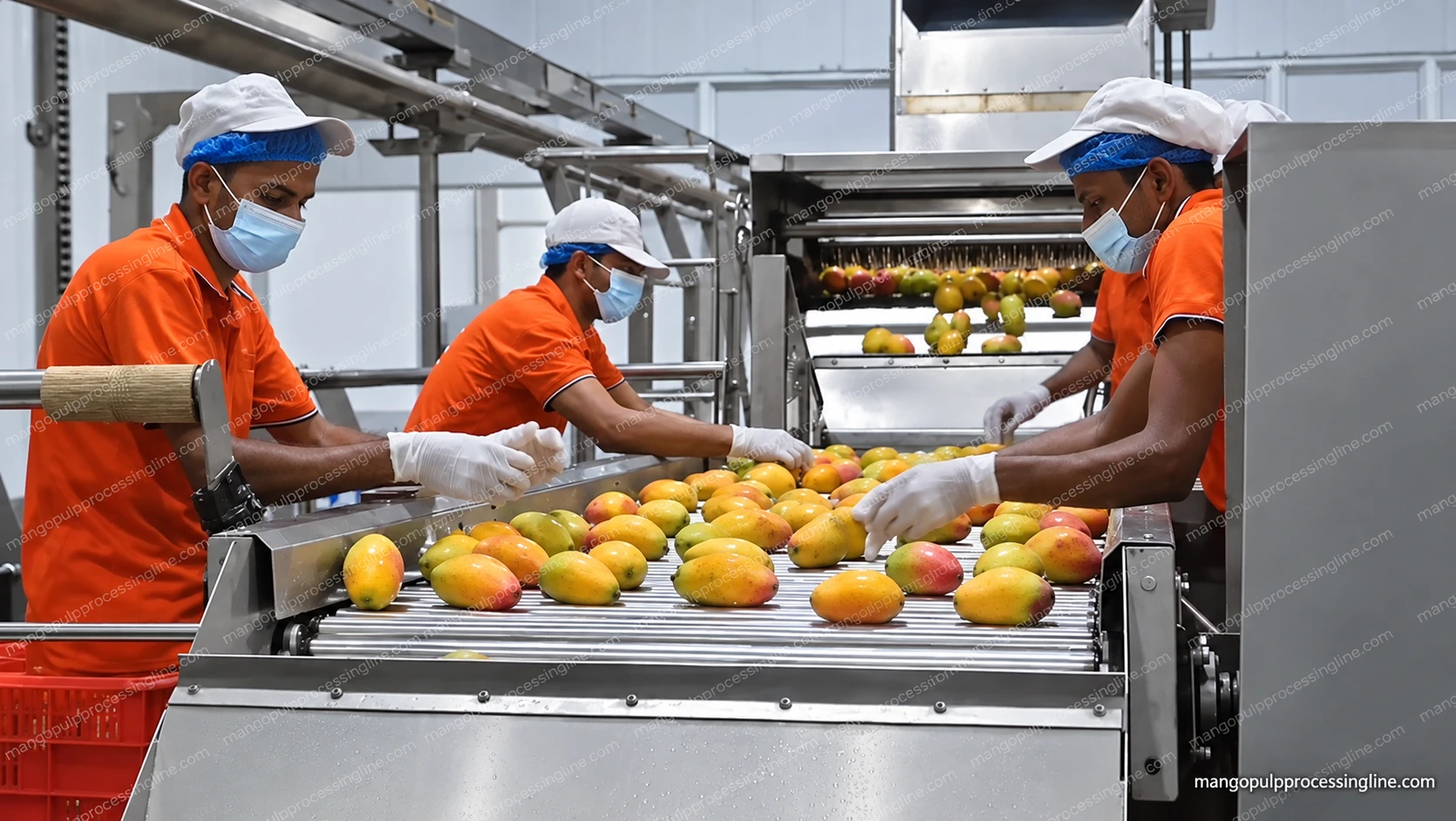
The front-end arrangement needs clear fruit discharge heights, operator positions and routes for rejected fruit and stone waste. Extraction and finishing also need room to withdraw or access service parts. A compact drawing is not useful if a screen cannot be removed or a cleaning operator cannot reach the underside of a conveyor.
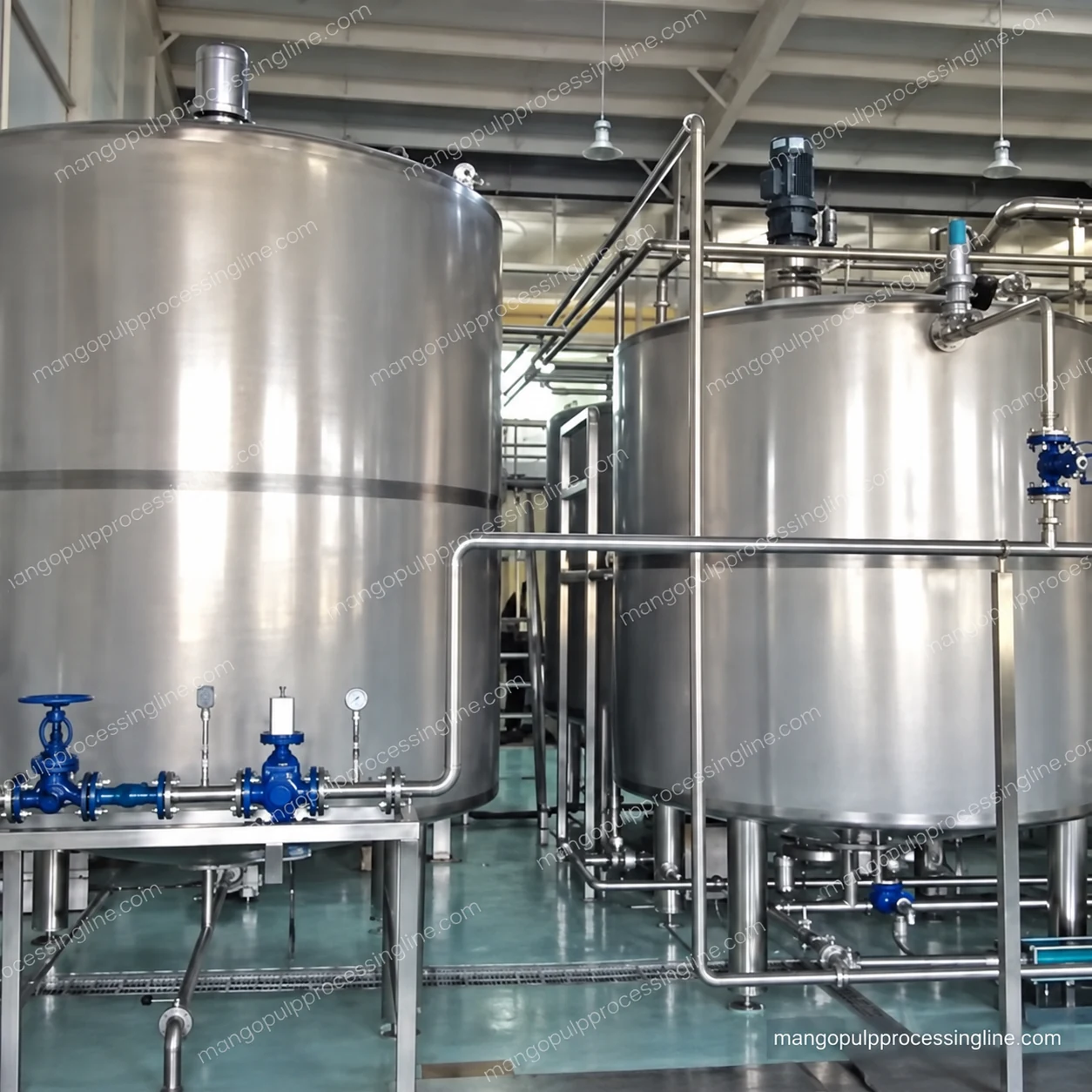
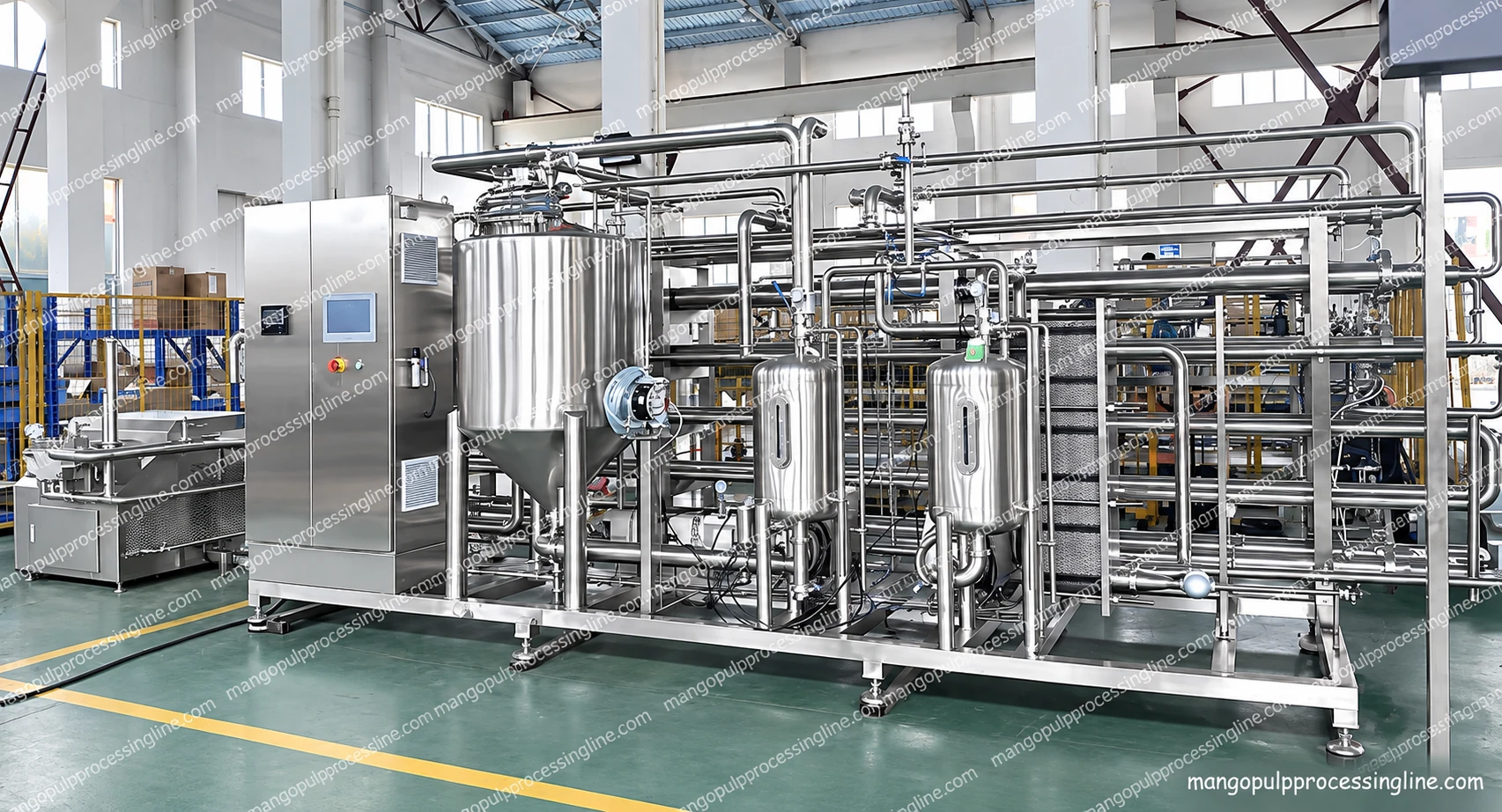
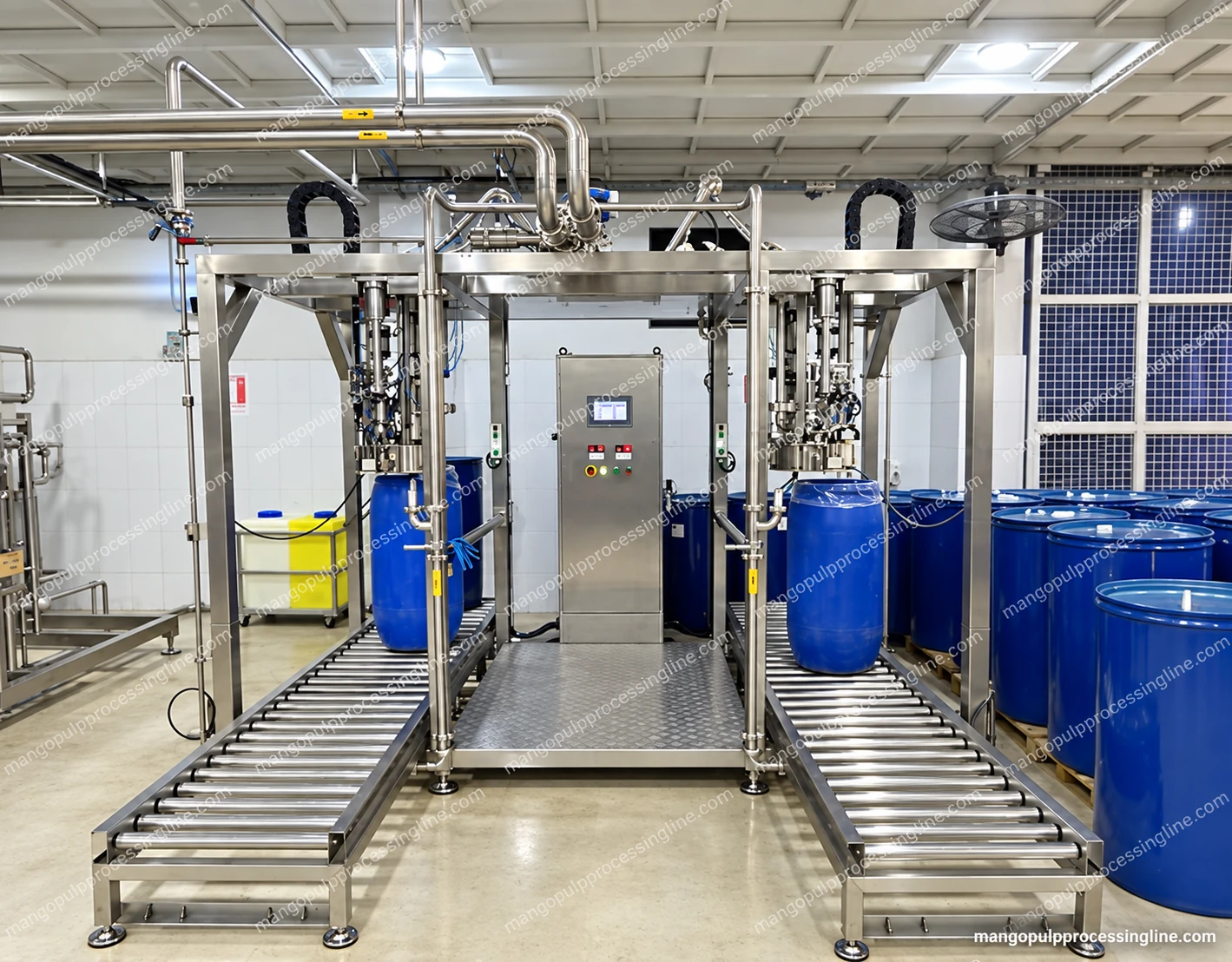
Around the liquid section, plan pipe routes and valve access together with tank connections, maintenance clearance and drainage. The packaging area must accommodate empty containers, filled-container movement and the utilities at each filling position.
Use buffering with a defined operating response
The buffer tank links upstream availability to downstream demand. Its useful operating range is the volume between control limits, not the vessel’s gross capacity. The pump duty must account for the product, receiving pressure and pipe resistance. Controls should define the response to low feed, a full receiving vessel, downstream interruption and loss of a required utility.
Match utilities to the selected machines
The engineering catalogue includes utility integration, equipment layout and installation/commissioning within its available project services. The final engineering package should identify the supplied assemblies, connecting work and site services for the selected scope.
| Connection | Equipment relationship | Engineering information |
|---|---|---|
| Water and drainage | Washer, cleaning equipment and relevant process services | Water quality, available supply, discharge paths and local drainage |
| Steam or specified heating service | Thermal unit, evaporator and selected CIP heater | Operating conditions, simultaneous demand and condensate arrangements |
| Cooling service | Thermal cooling and applicable evaporation services | Supply and return conditions at the selected production duty |
| Electricity and compressed air | Drives, controls and specified actuators or filling equipment | Supply standard, connected loads and device-specific service requirements |
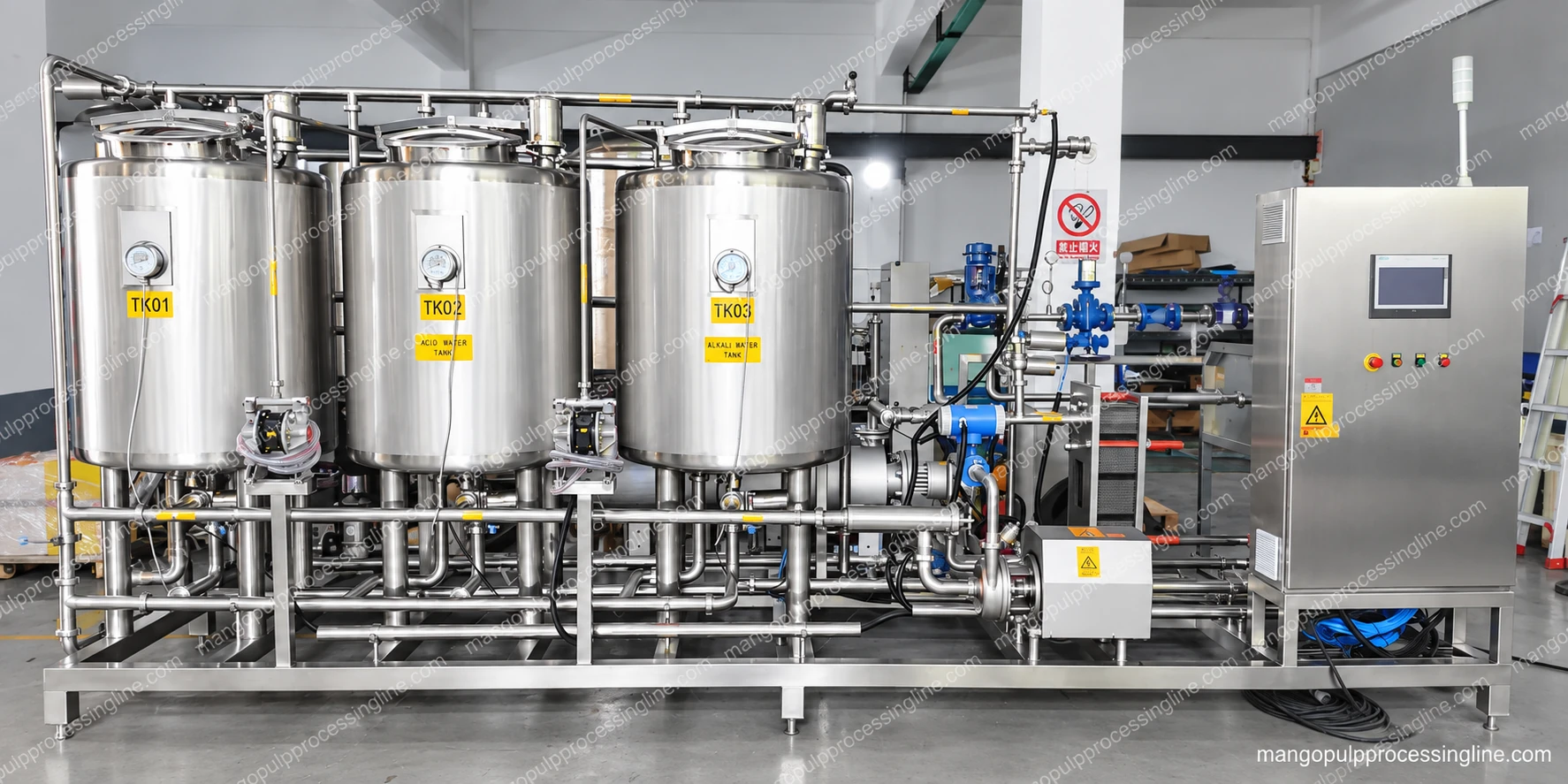
| CIP supply and return | Defined closed product circuits | Circuit separation, supply/return duties, drainage and cleaning sequence |
Extend from the actual condition of the existing plant
An evaporation addition needs the measured feed and an onward route for concentrate. A thermal-and-filling addition needs a stable pulp handover and compatible cleaning connections. Record the installed equipment, connection sizes, available utilities and operating limits before treating an existing machine as part of the new line’s capacity.