A front end that feeds extraction evenly
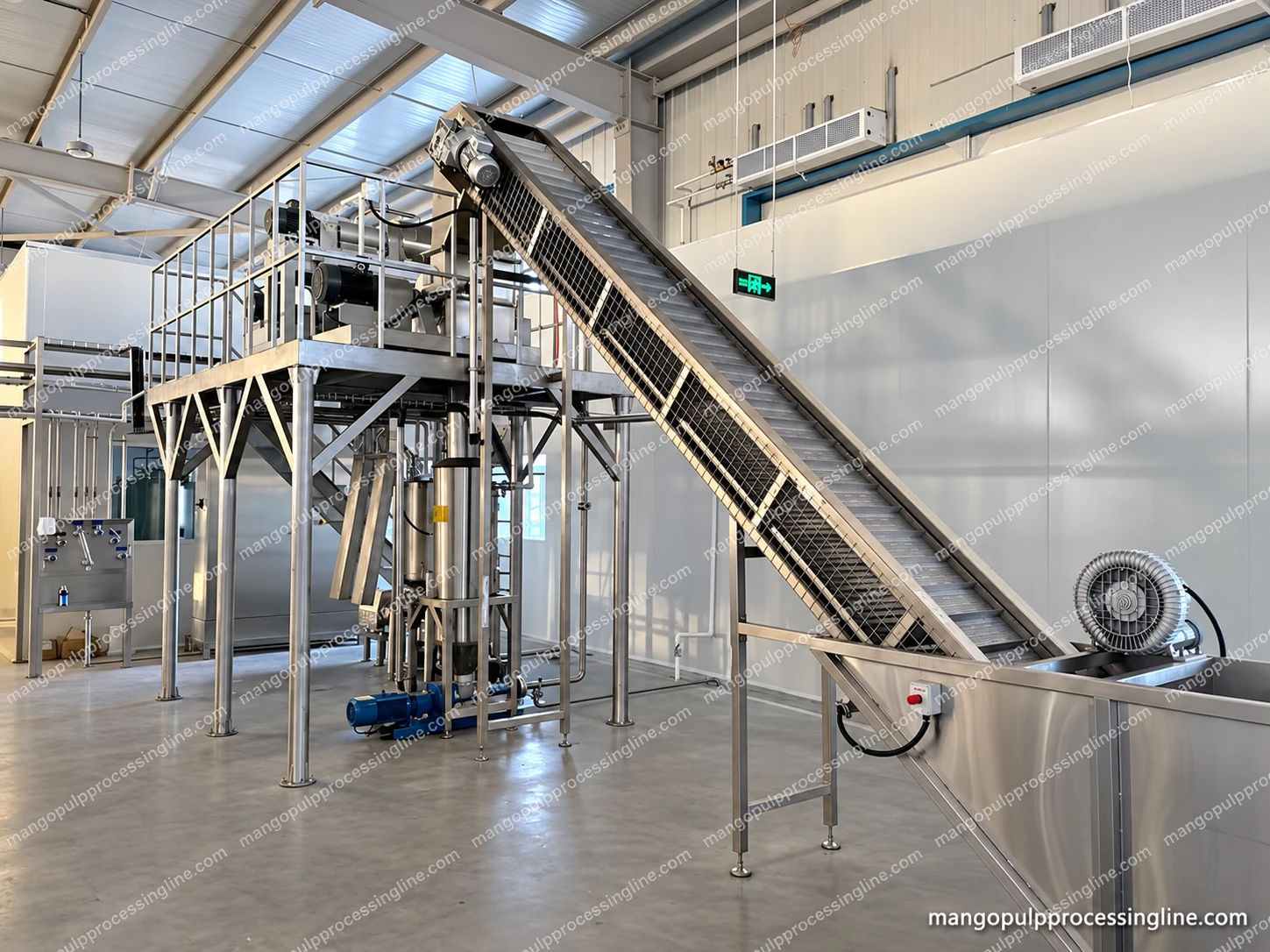
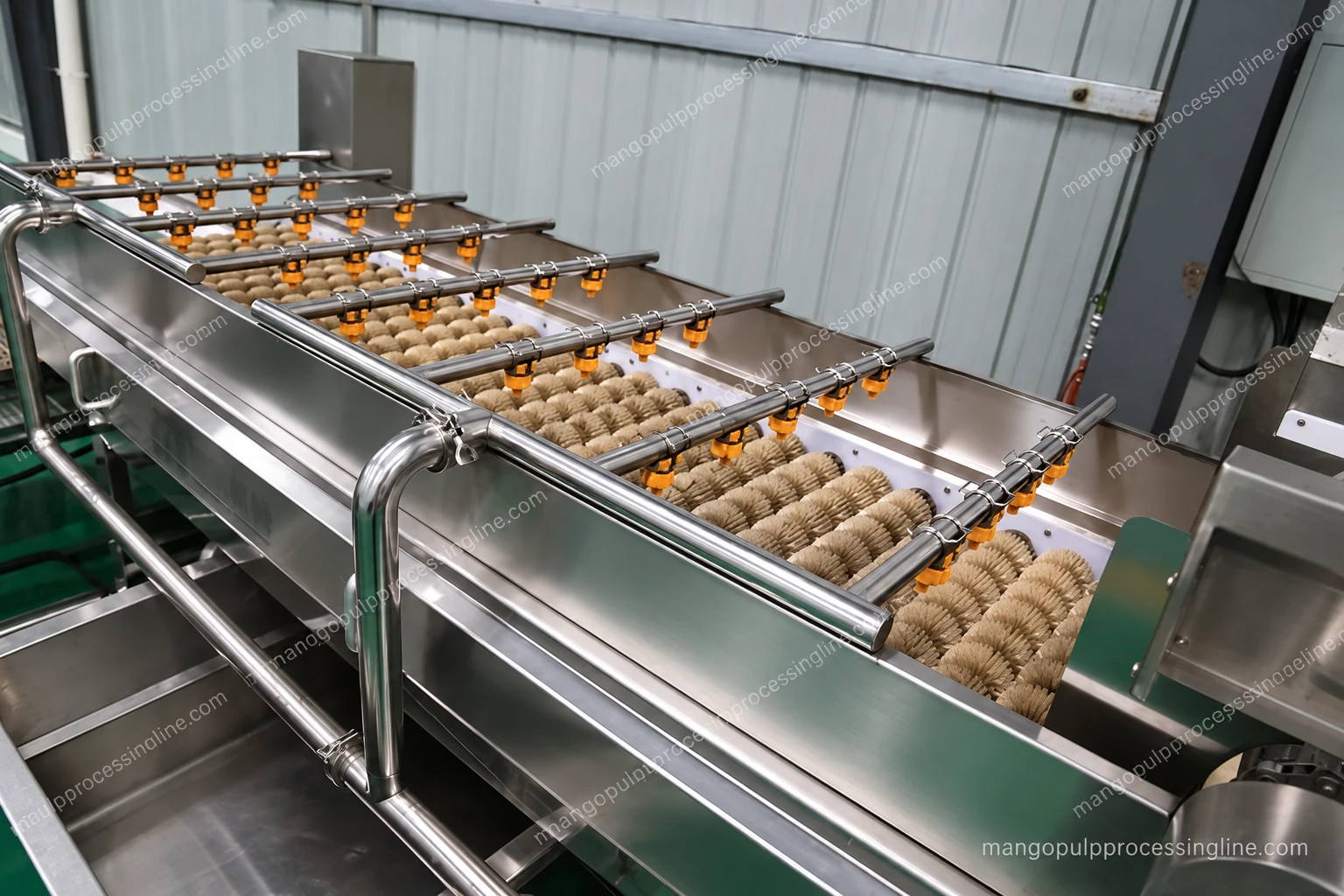
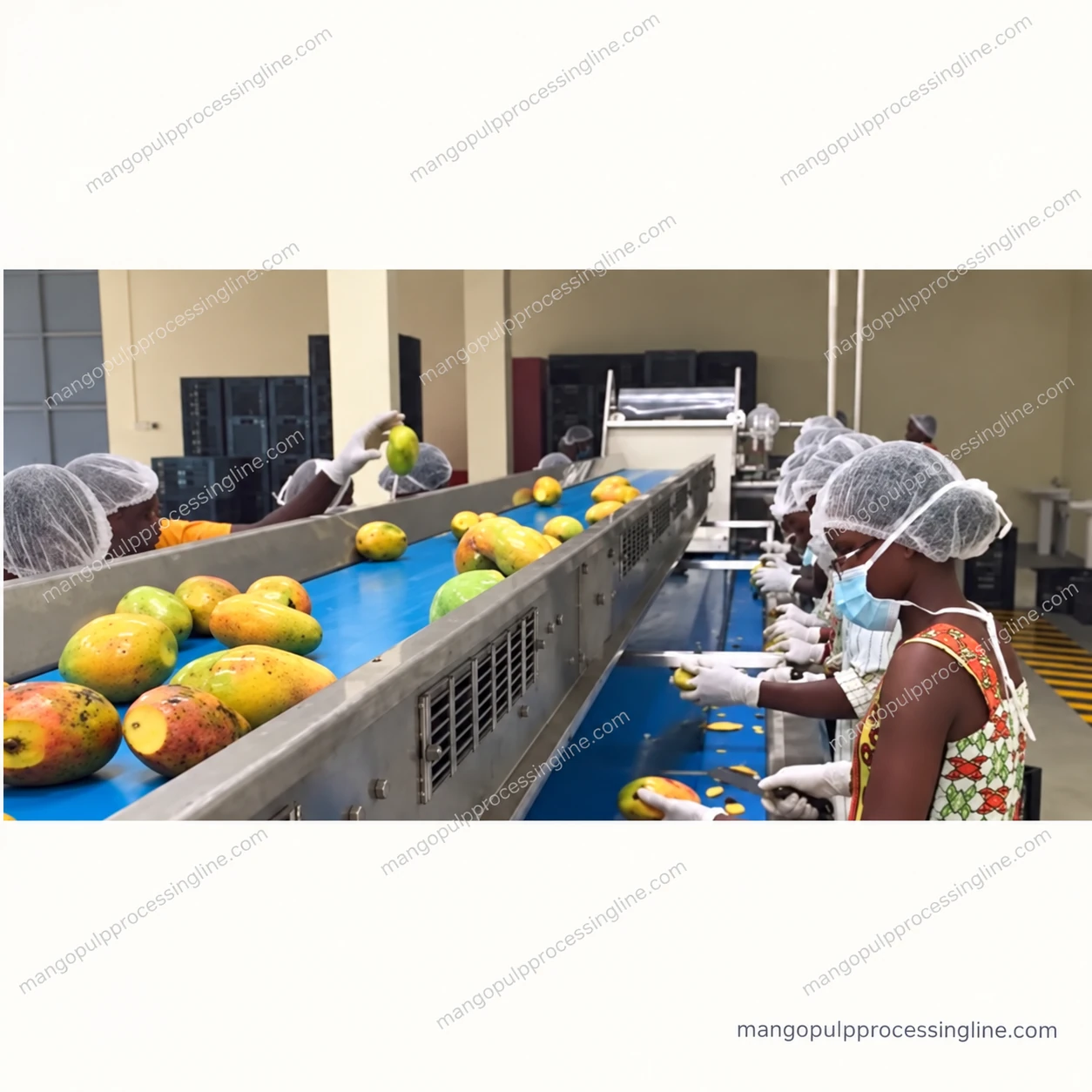
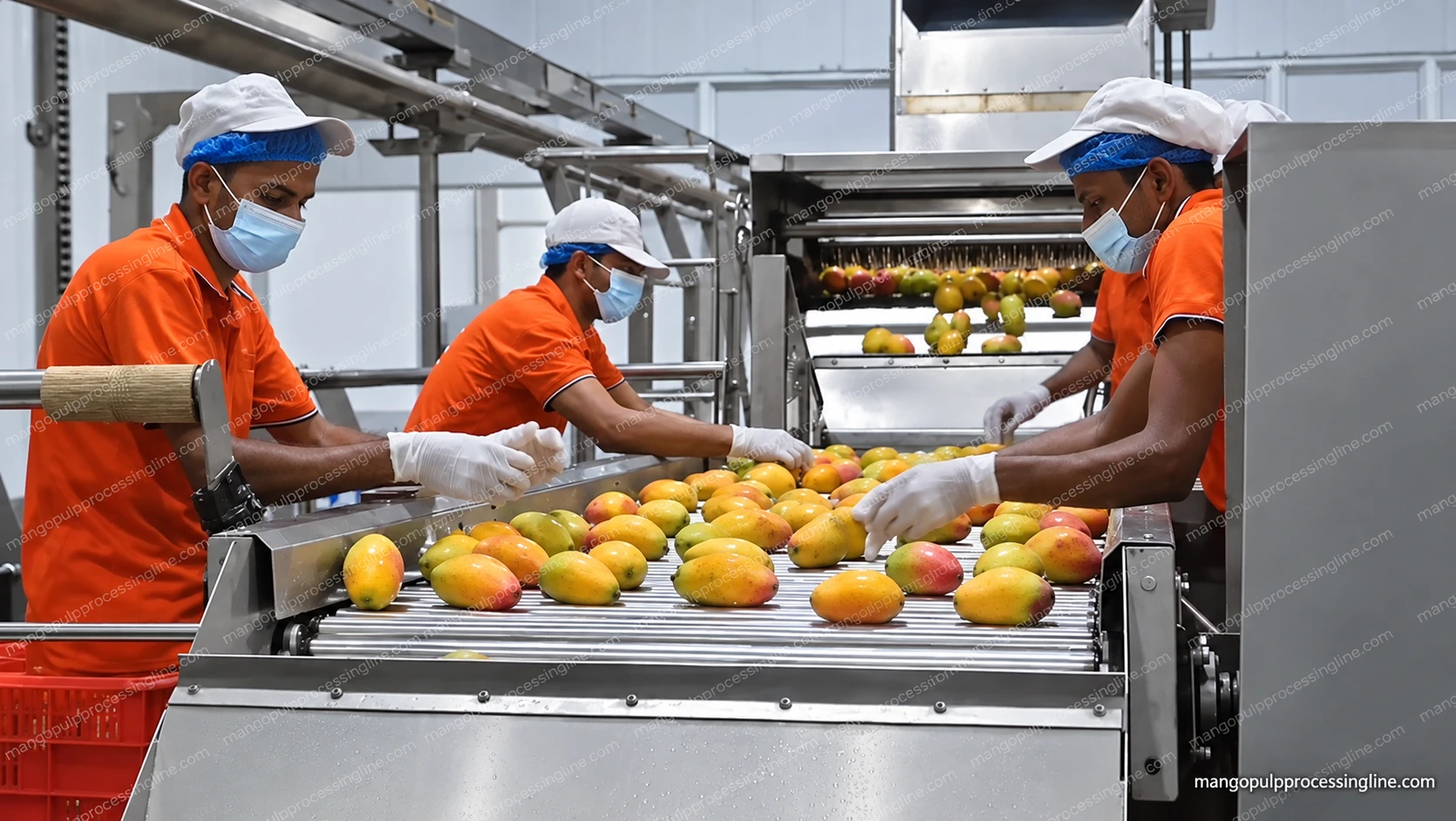
An elevator connects the receiving or washing position to the next machine at the required discharge height. The brush-and-spray washer combines contact with the fruit surface and overhead water application. Manual sorting gives operators access to remove unsuitable fruit and foreign material before it enters the destoner.
These machines must work as one feeding section. The conveyor speed, inspection space, fruit presentation and destoner inlet determine how evenly the extraction stage receives mangoes. Wash-water drainage and reject removal need their own routes alongside the product path.
Separate the stone, then finish the pulp
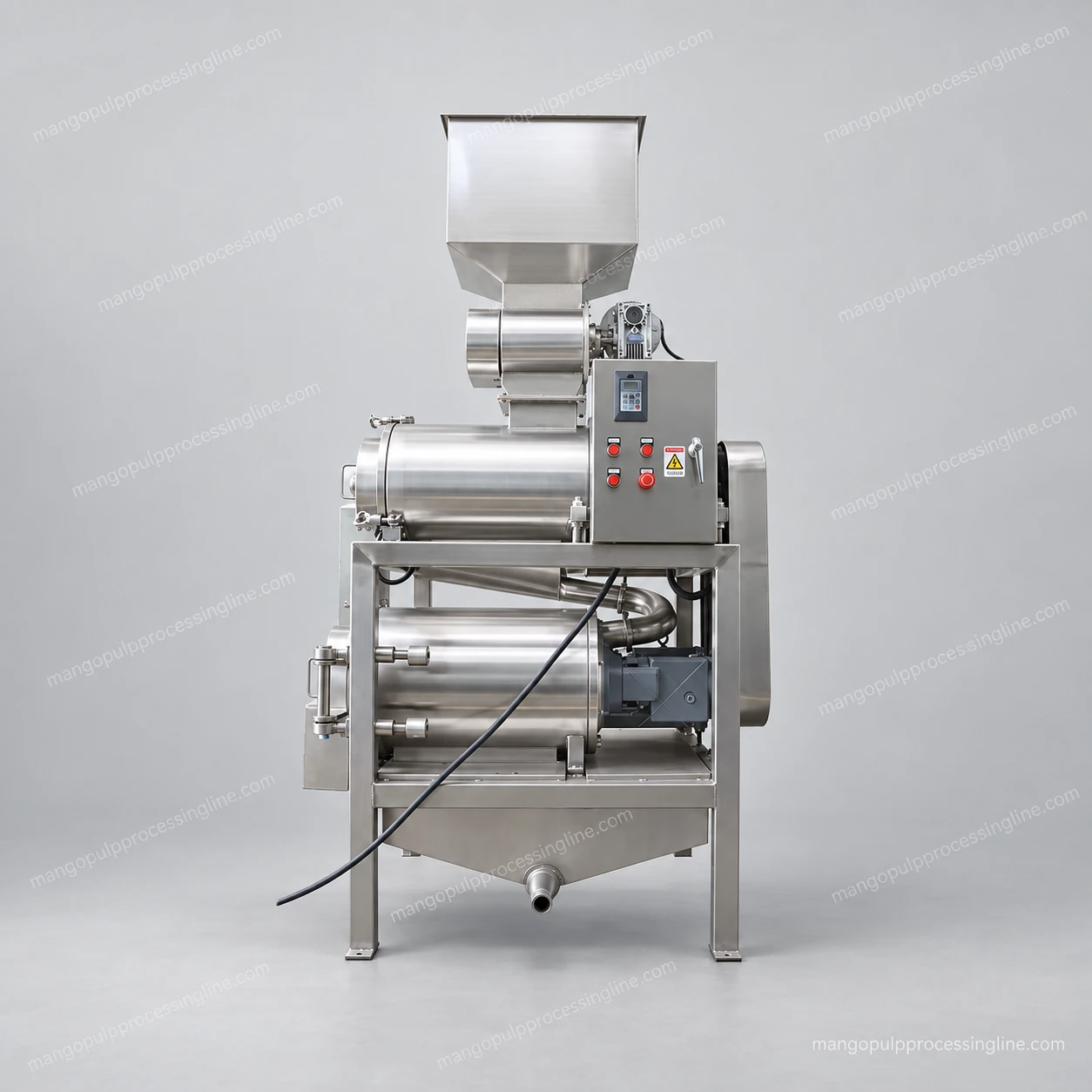
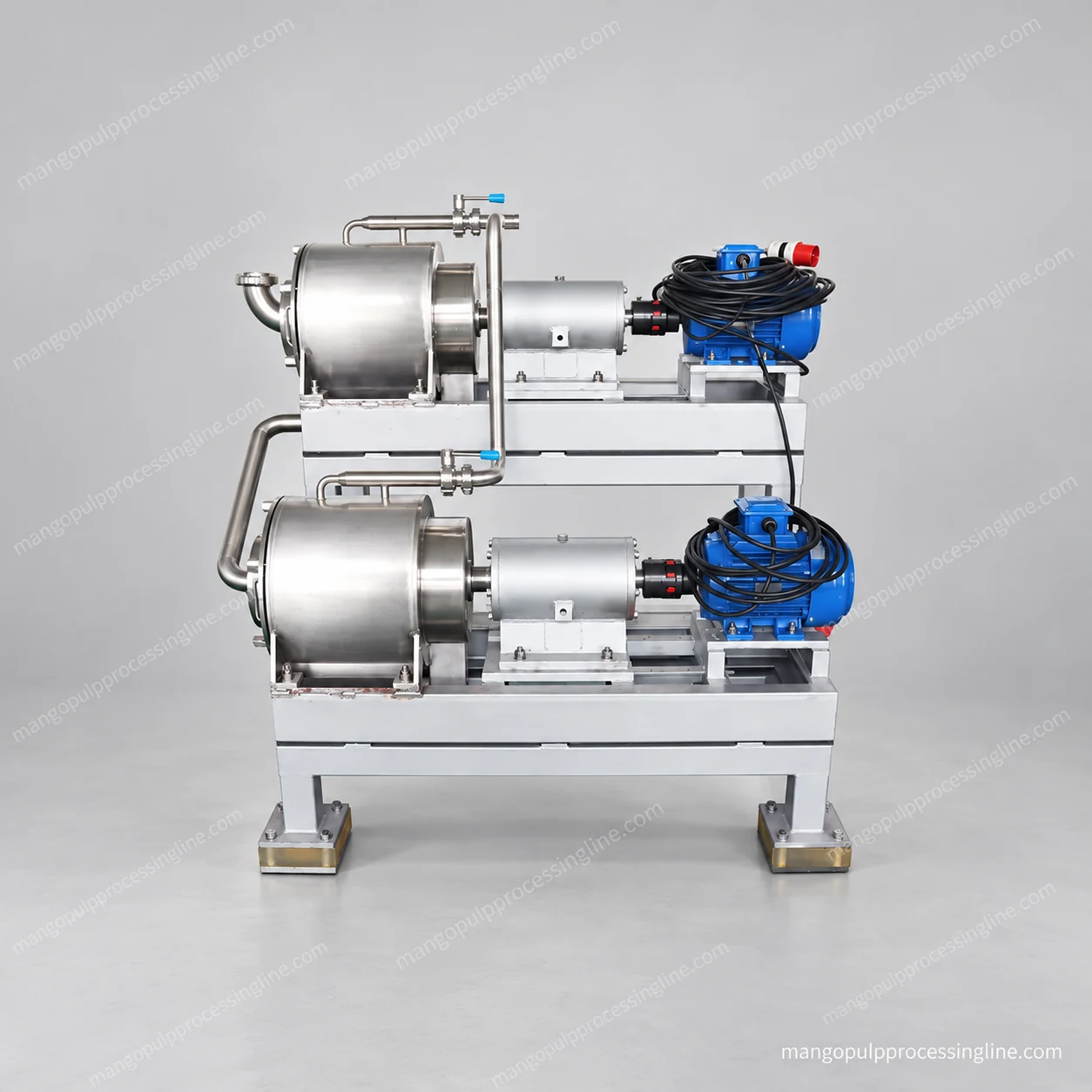
The combined mango machine carries out peel and stone separation with pulp extraction. It is followed by a finisher when the product requires further removal of coarse fibre and residual fragments. The photographed finisher has two working stages with separate drives and an interstage product connection.
A finer finished texture is a product decision, not simply a reason to fit the smallest screen. Screen choice and feed behaviour affect both the accepted pulp and the material leaving the reject outlet. Representative fruit and the intended texture should guide the extraction and finishing configuration together.
Connect variable fruit feeding to steady liquid processing
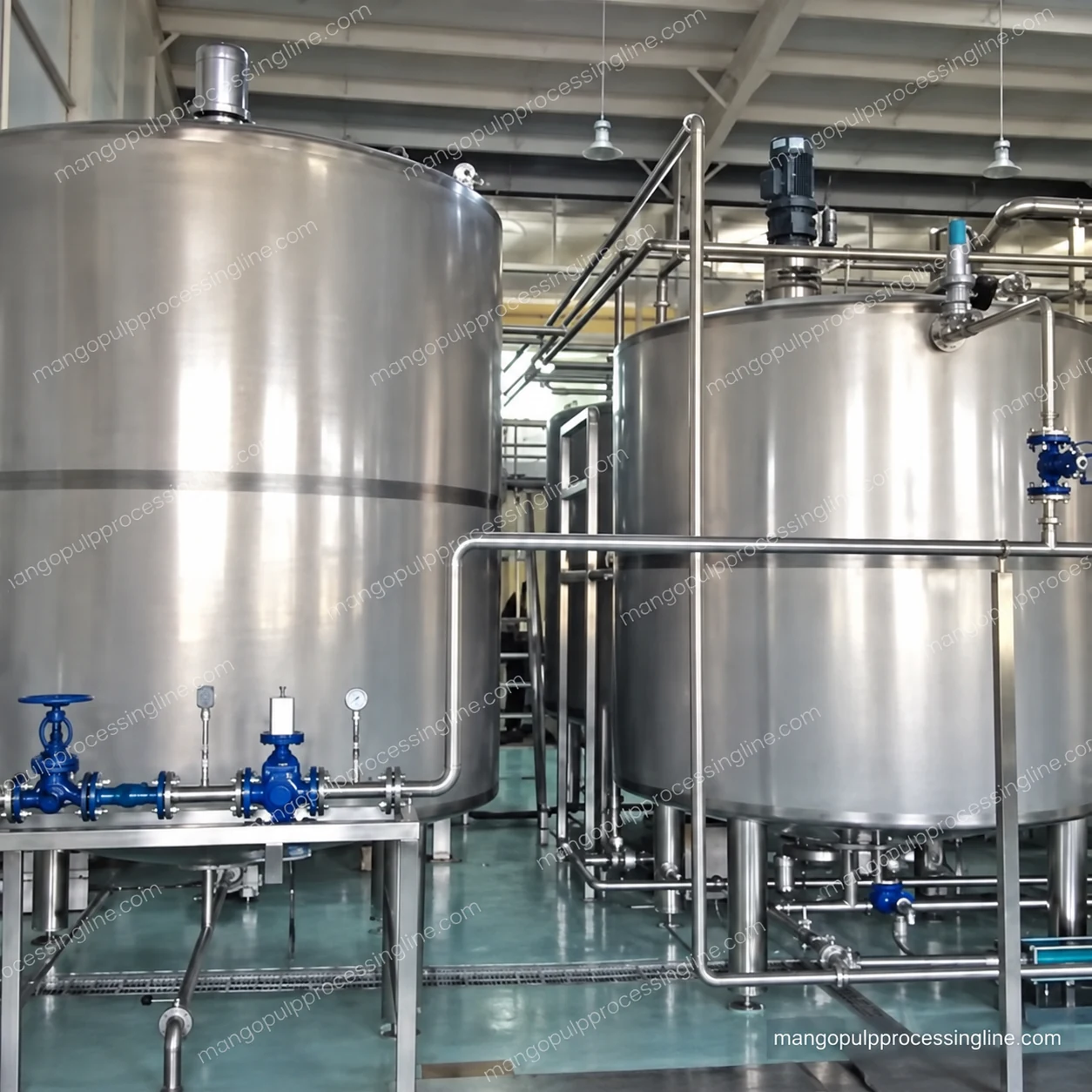
A buffer vessel and transfer pump connect extraction to the downstream process. The working volume provides operating headroom while the pump is selected for the pulp temperature, viscosity, line resistance and receiving machine. The tank is not a substitute for matching the sustained production rates of the two sections.
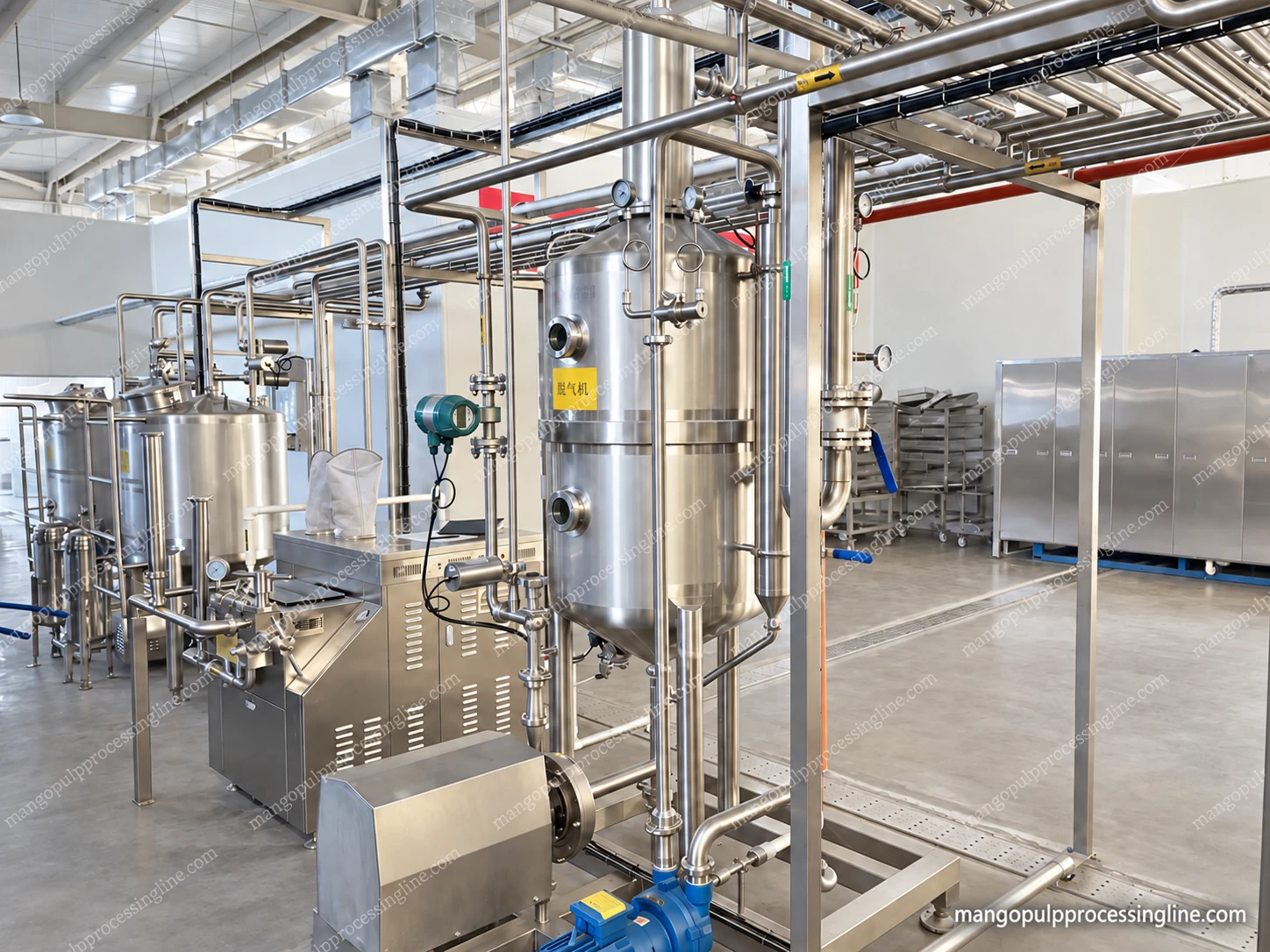
Deaeration can be included where air removal is part of the product specification. Concentration is a separate option for buyers selling a concentrated ingredient; a single-strength pulp line does not require an evaporator simply because it uses aseptic packaging.
Complete the line around the intended product and pack
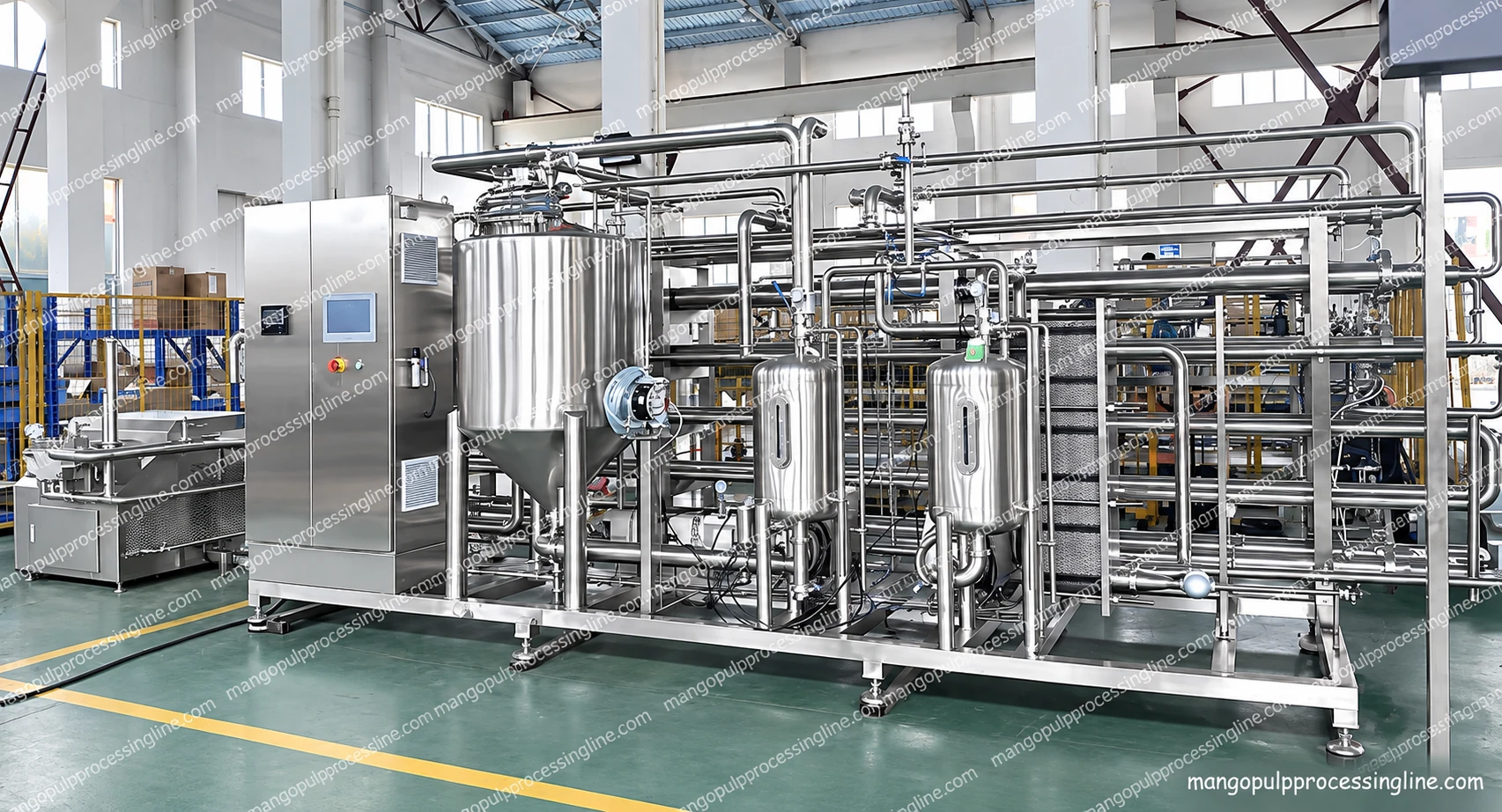
For aseptic bulk pulp, the thermal unit, holding section, cooling section, product pipework and bag filler form a connected downstream system. A tube-in-tube exchanger is available for viscous pulp duties; its configured flow and processing conditions must suit the actual product.
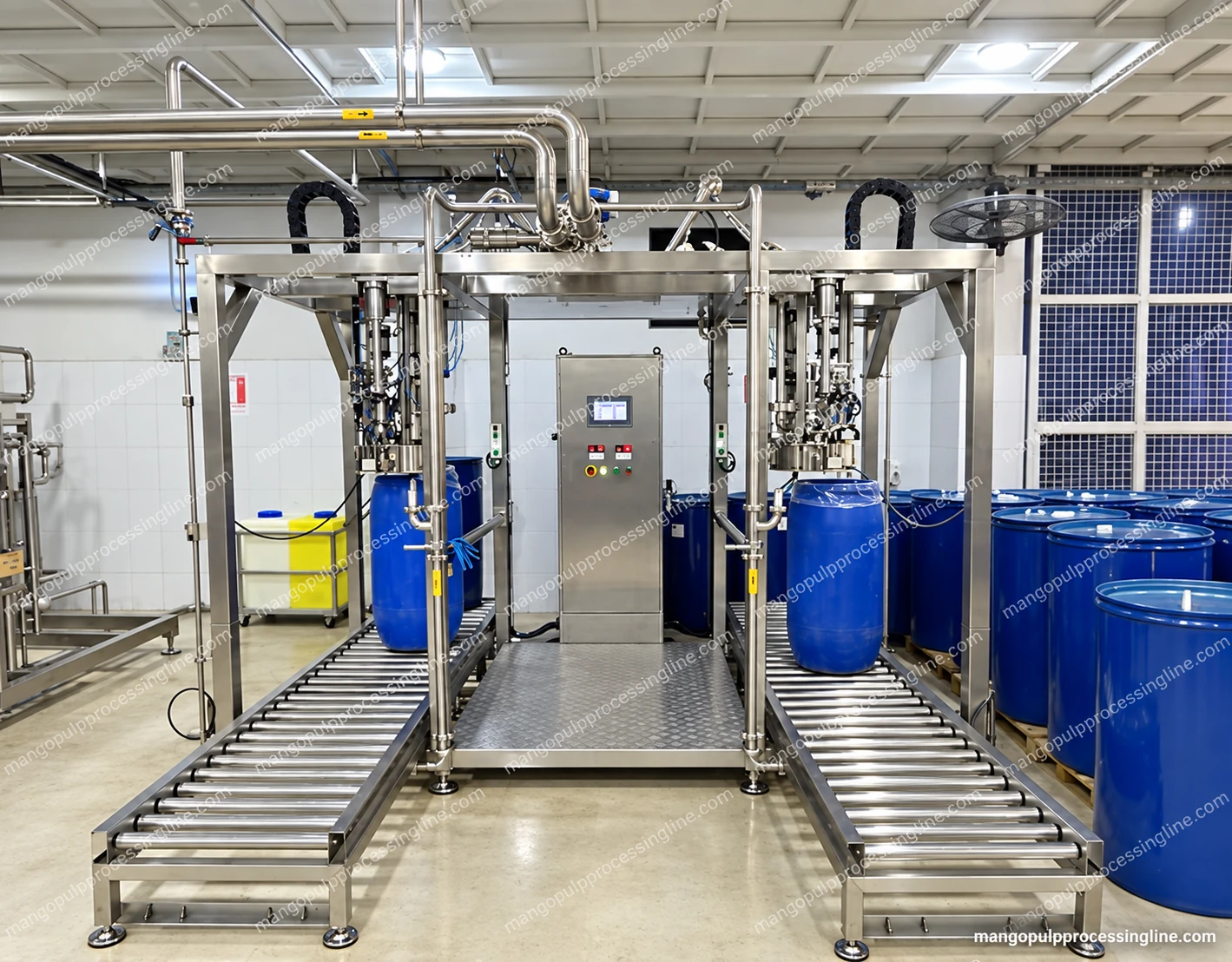
Packaging is selected alongside the receiving customer’s handling needs. Bag size, fitment, fill quantity and drum or box handling affect the filler arrangement. The thermal process and package system must be assessed together before a storage-life claim is made.
Size the line at the correct material boundaries
| Section | Capacity basis | Connection to establish |
|---|---|---|
| Fruit preparation and destoning | Fresh whole-fruit mass per hour | Feed consistency, receiving height and reject discharge |
| Refining and transfer | Pulp mass or volume per hour at stated conditions | Fibre specification, temperature and available inlet pressure |
| Heat treatment and filling | Finished product duty and pack cycle | Validated product process, filler demand and utility supply |
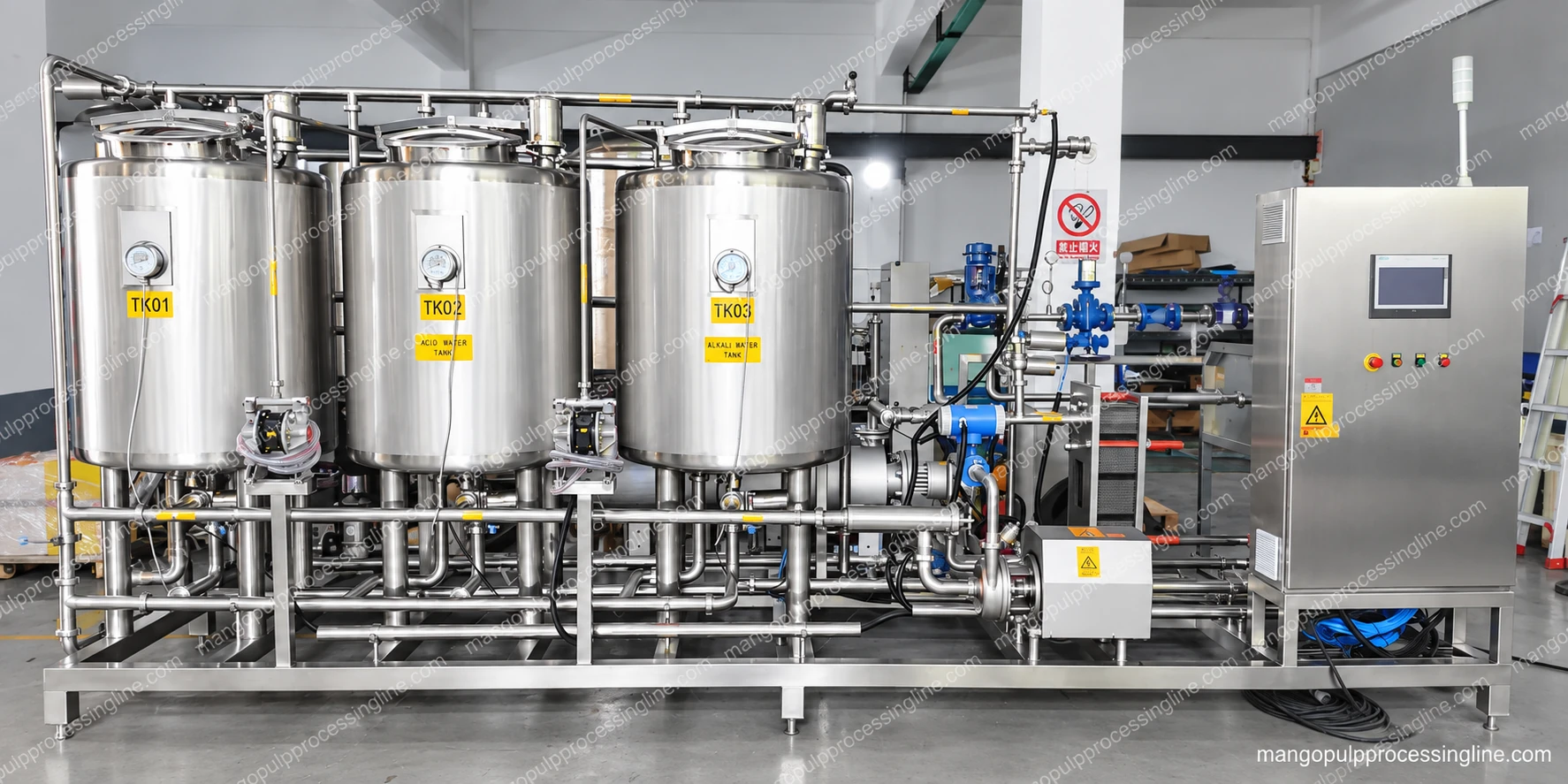
| Cleaning | Defined equipment circuits | Open-equipment access, closed-loop supply and return |
From a complete fruit front end to your supply scope
The manufacturer’s Watani project report gives a practical example of a mango front end connected to refining, thermal processing and aseptic bags. For a new line, start with the fruit source, intended product and approximate production requirement. An existing layout or sample specification can follow as the equipment configuration develops.