Judge the fruit before judging the extractor
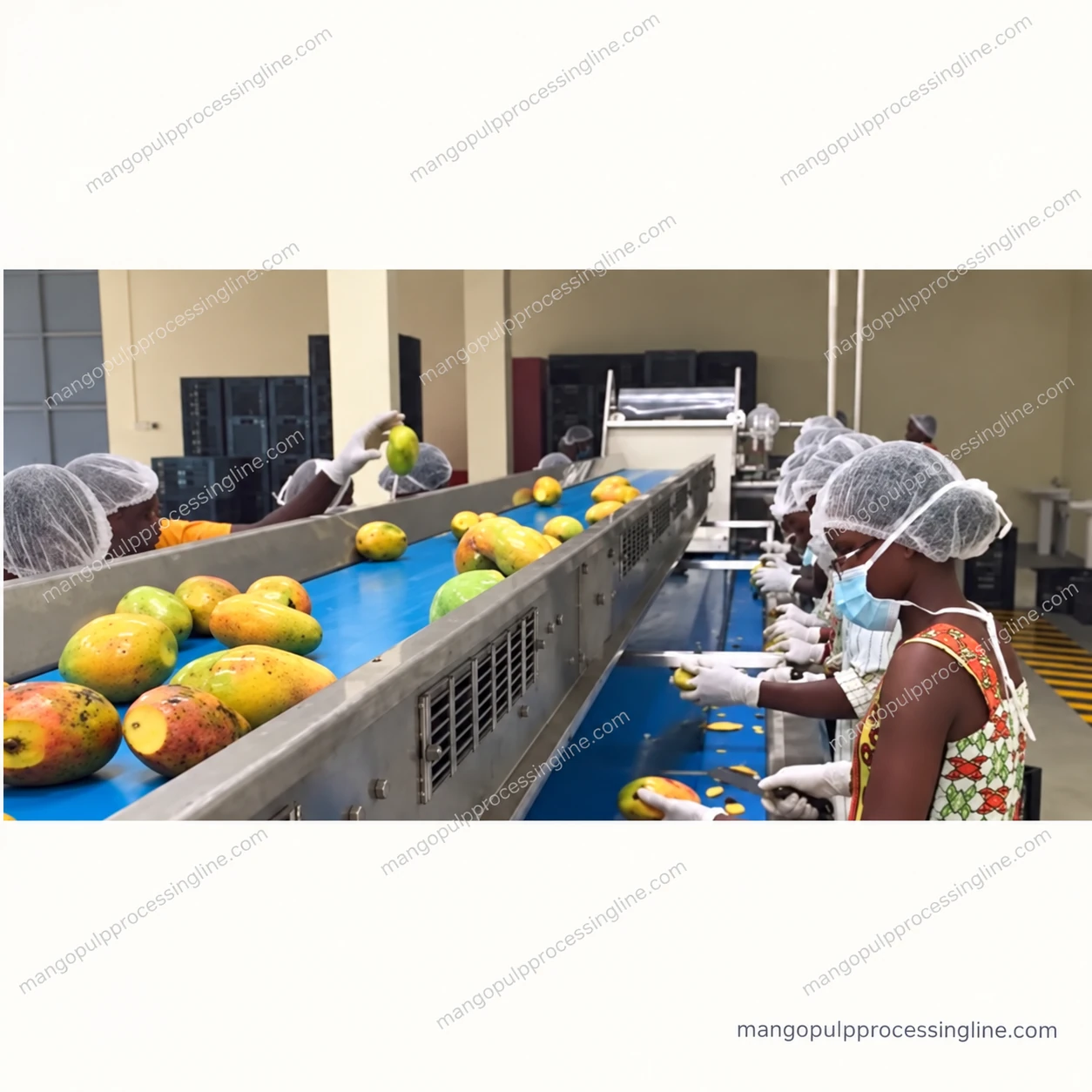
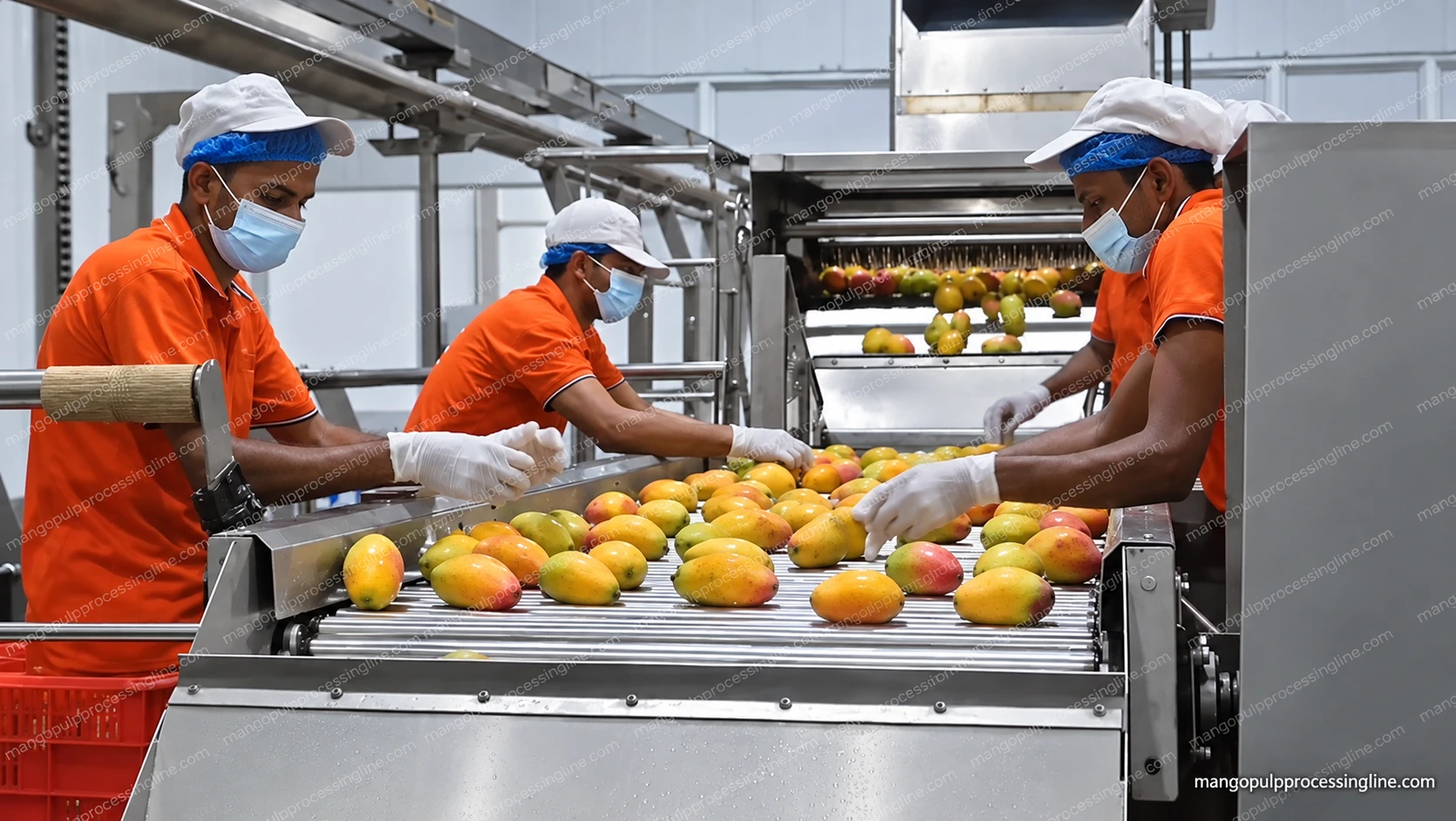
FAO’s fruit-processing guidance describes mature, sound mangoes as the basis for puree and notes that handling differs with variety. Soft fruit is not automatically acceptable fruit: the inspection stage still needs to remove deteriorated or otherwise unsuitable material.
For a machine evaluation, record the variety, condition and preparation of the mangoes rather than identifying the sample only as “mango”. A narrow sample from one part of the harvest may not represent the fruit that the line must handle through the season.
Pulp texture includes more than visible fibres
Mango puree contains suspended fruit material within a liquid phase. Cell-wall particles, pectin and the surrounding liquid contribute to its texture. A published study of Kent mangoes found changes in particle size and gel structure during ripening; its particular storage timeline is not a ripening schedule for every factory or variety.
The practical implication for a pulp line is to examine the actual feed and finished sample together. Visual smoothness alone does not describe flow through a transfer pump or thermal unit. Temperature, concentration and processing history should accompany any viscosity measurement used for equipment selection.
Keep extraction and texture adjustment distinct
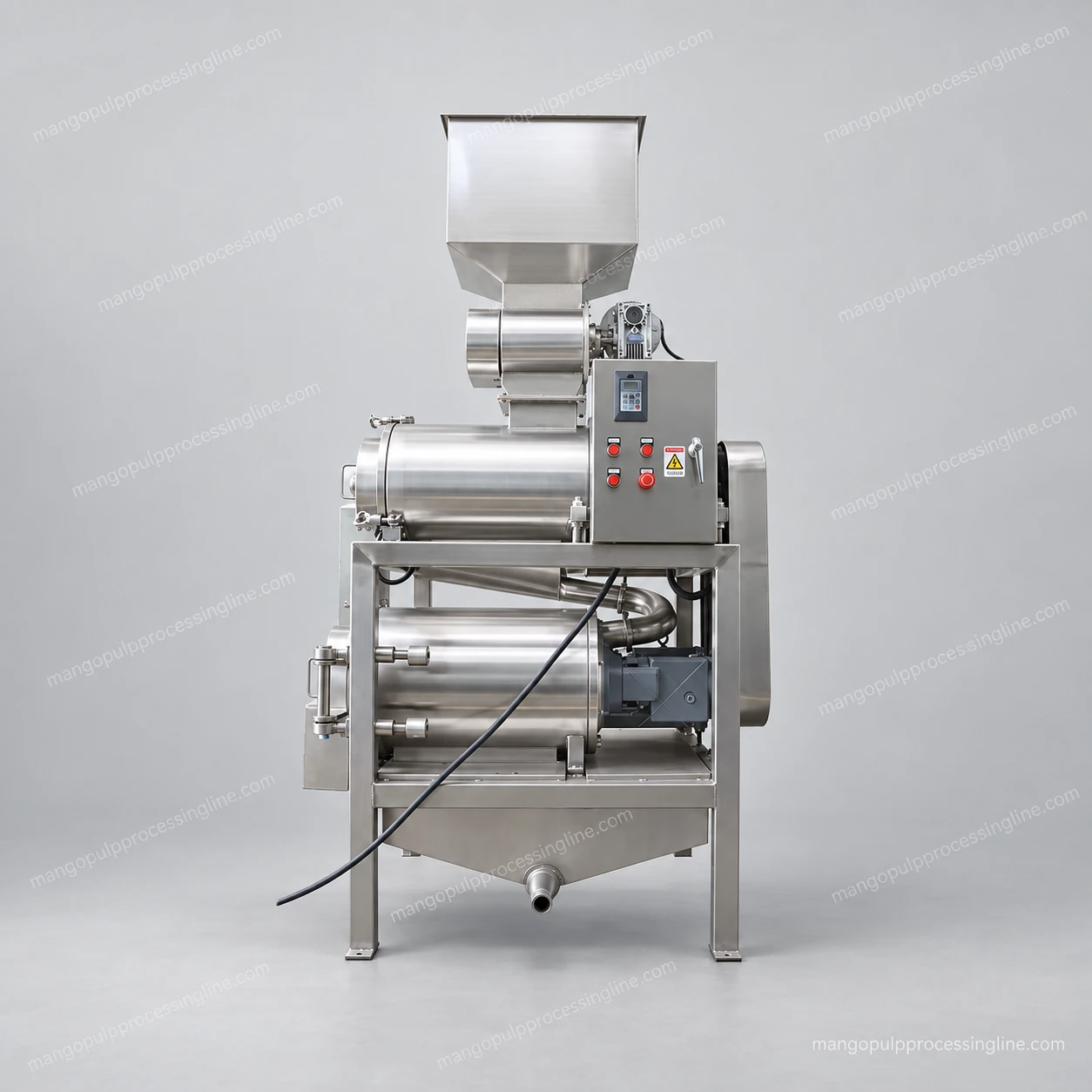
The combined destoner separates peel and stones while recovering pulp. The finisher then divides the extracted material between the accepted stream and the screen reject. Coarse residual material at the finisher is a different issue from the fruit-feed behaviour at the destoner.
A screen aperture identifies an opening, not a guaranteed finished particle-size distribution. Fibre shape, feed condition and the working arrangement influence what passes. Compare the accepted pulp and rejects when changing a screen, so that texture and recovered product remain visible in the same assessment.
Make sample comparisons repeatable
The comparison should use the product you intend to sell. A smooth beverage base, an ingredient puree and a concentrate feed can lead to different finishing decisions even when they begin with the same mangoes.
| Record | What it helps explain |
|---|---|
| Fruit variety, condition and batch identity | Differences originating in the raw material |
| Accepted feed mass and collection period | The quantity actually entering the tested machine |
| Screen arrangement and operating configuration | The treatment applied to that sample |
| Accepted pulp and separately collected rejects | The balance between product texture and material separation |
| Pulp temperature and stated measurement method | Whether flow and texture results are comparable |