Judge the three outlets together
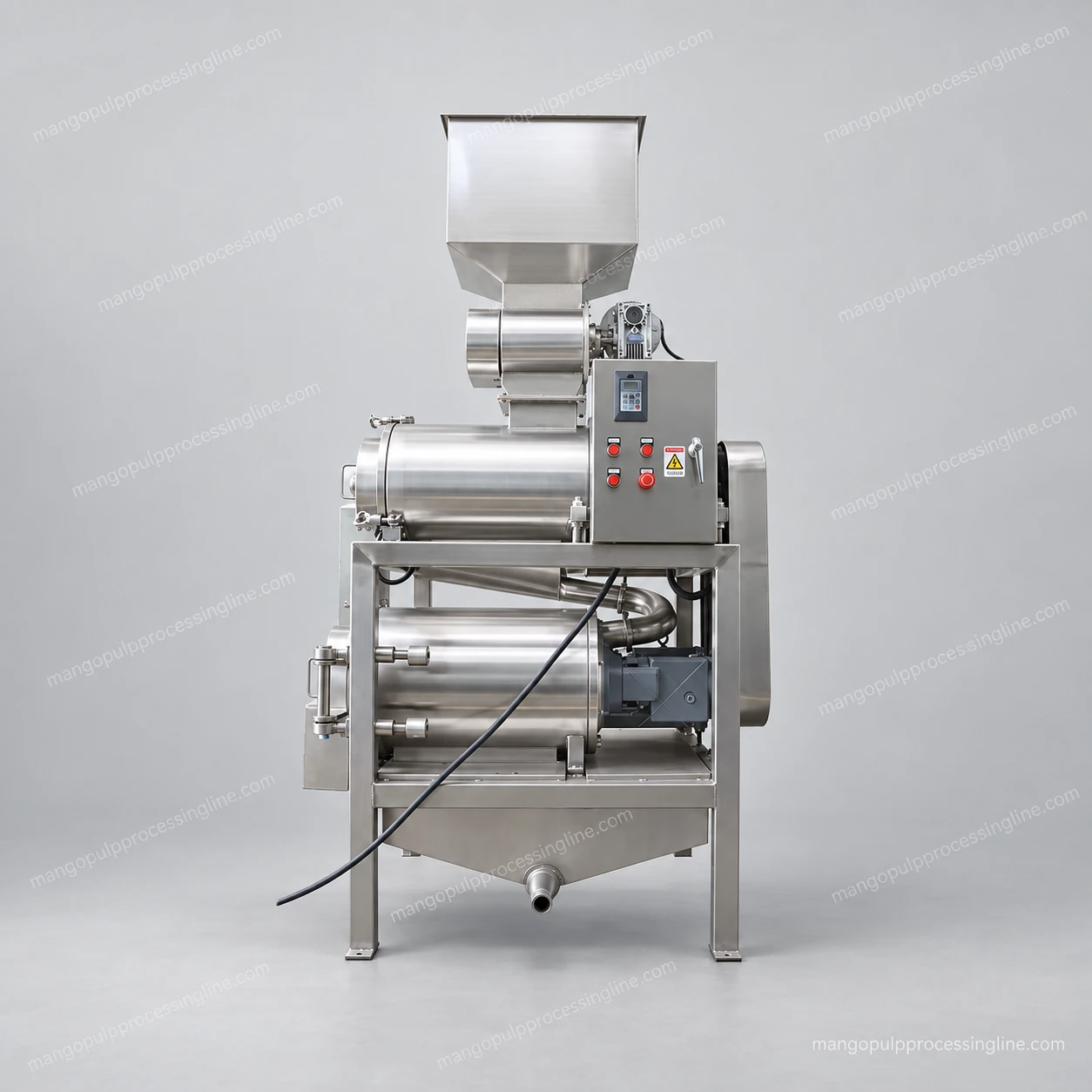
The useful question is how this fruit separates into extracted pulp, peel and stones. A clean-looking pulp sample does not show how much flesh remains attached to the stone; a wet reject stream does not by itself establish high recovery. Inspect and weigh the outlets from the same timed run.
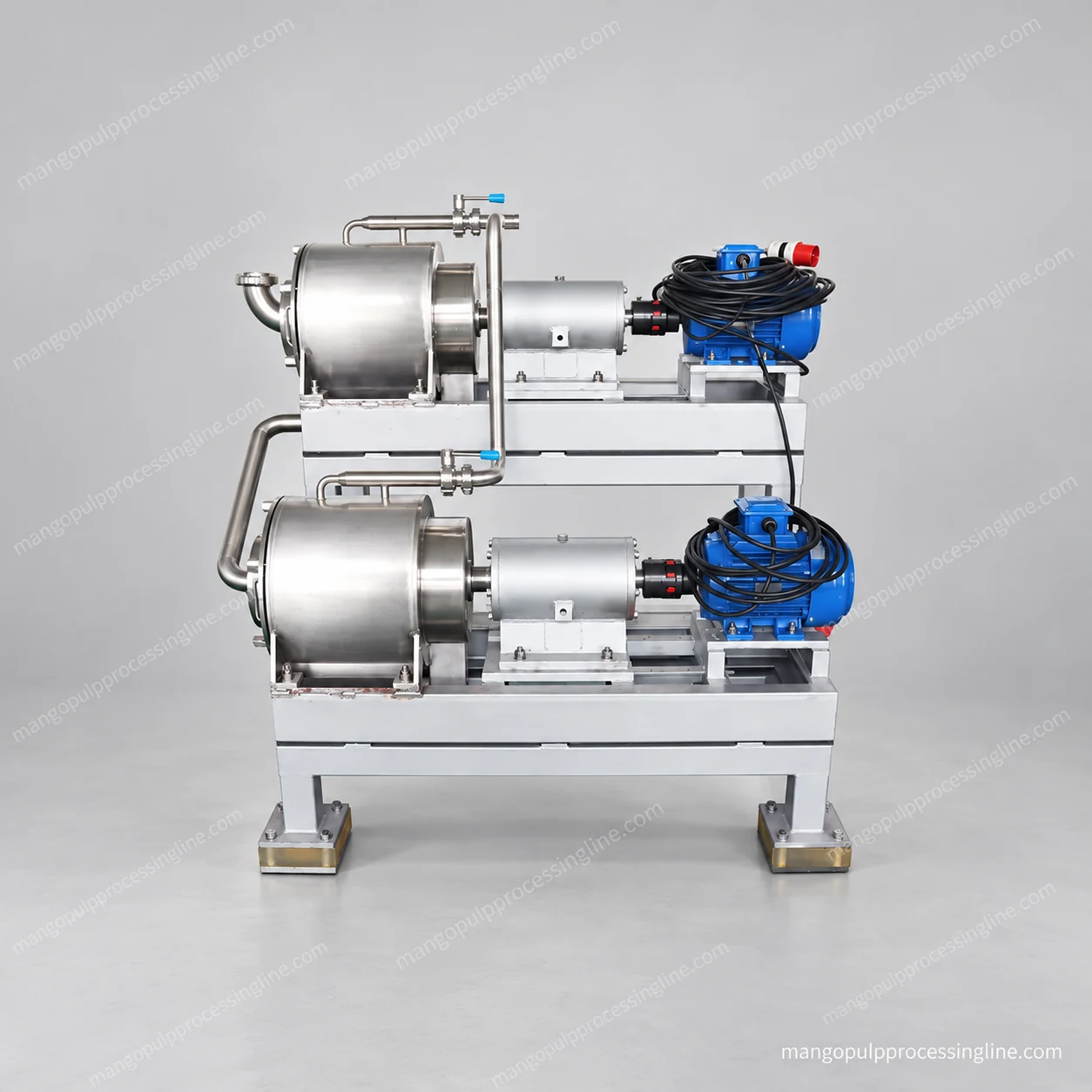
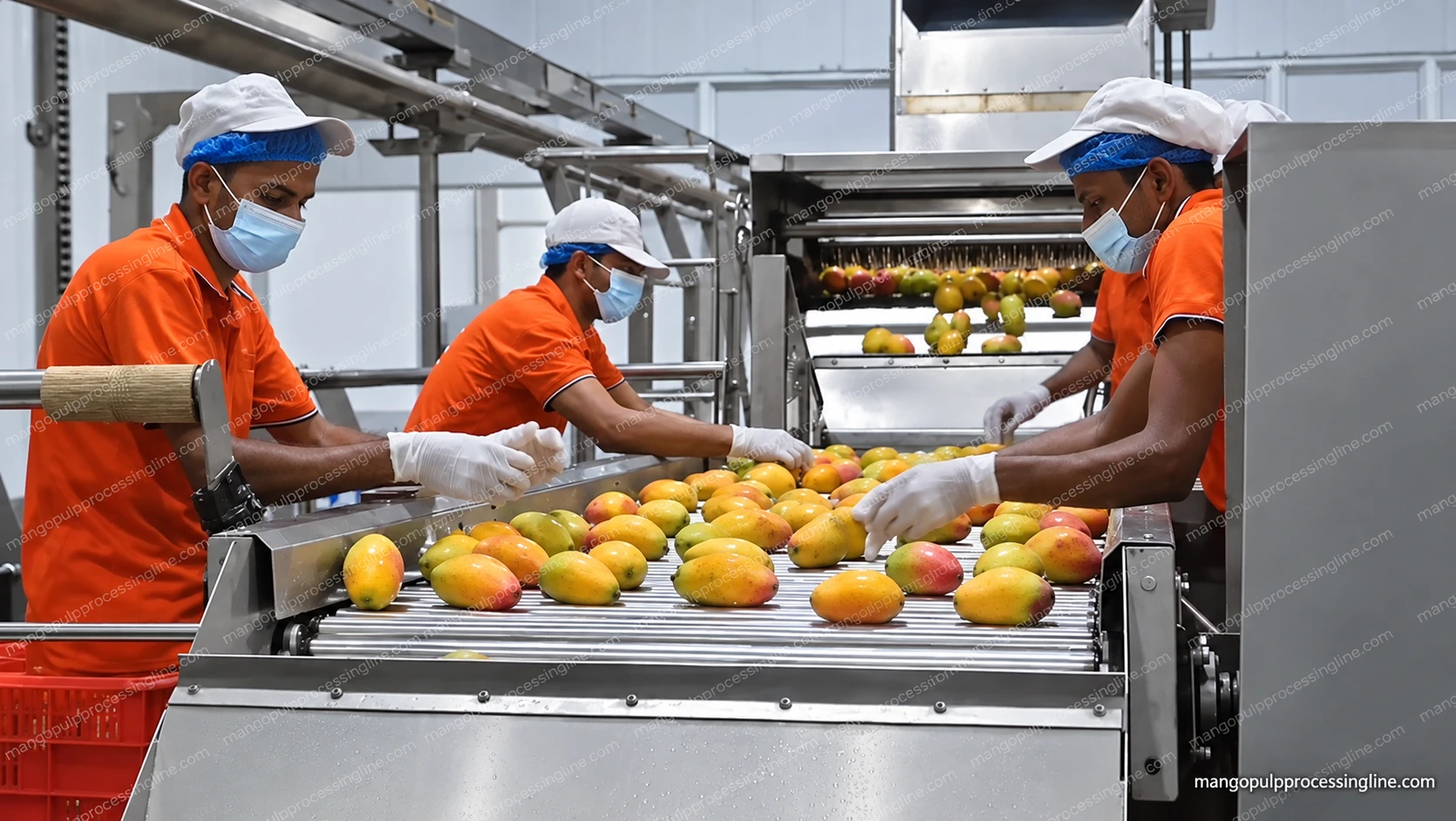
Record fruit lot, accepted-feed mass, operating period and the machine configuration actually tested. Screens, loading and any adjustable settings need a traceable record. No universal setting or recovery percentage is implied by the reference equipment photograph.
Look at attached flesh and hard fragments separately
Keep representative stones and peel for inspection. Note attached flesh, broken stones and any fragments found in the extracted pulp. Distinguish a fragment observation from a proven downstream removal result: the next finisher still needs its own product and residue samples.
| Trial stream | Record without inference |
|---|---|
| Accepted whole mango | Lot, weighed mass and trial start/end |
| Extracted pulp | Mass, visible peel/fragment observations and sample point |
| Stones and peel | Separate mass where practical; attached flesh observations |
| Retained product, spills and samples | Account for material outside the main outlets |
Agree the comparison before quoting a guaranteed result
The trial protocol should name sampling, weighing accuracy, accepted fruit conditions and how the observed pulp and residues will be judged. If the offered machine differs from the trial configuration, identify what must be confirmed again. A trial on one lot is evidence for that lot and setup, rather than all mango seasons.