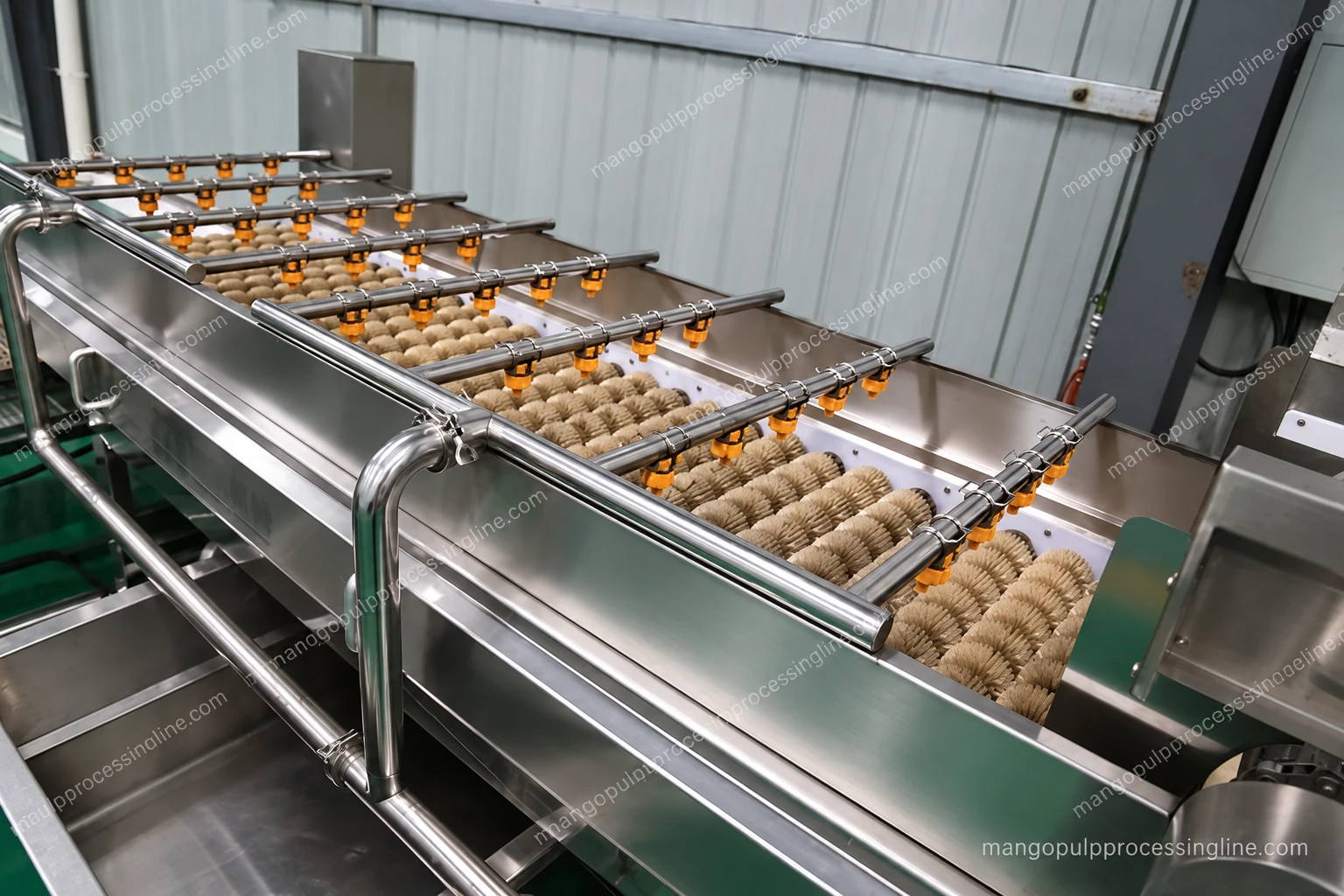
Two actions at the fruit surface
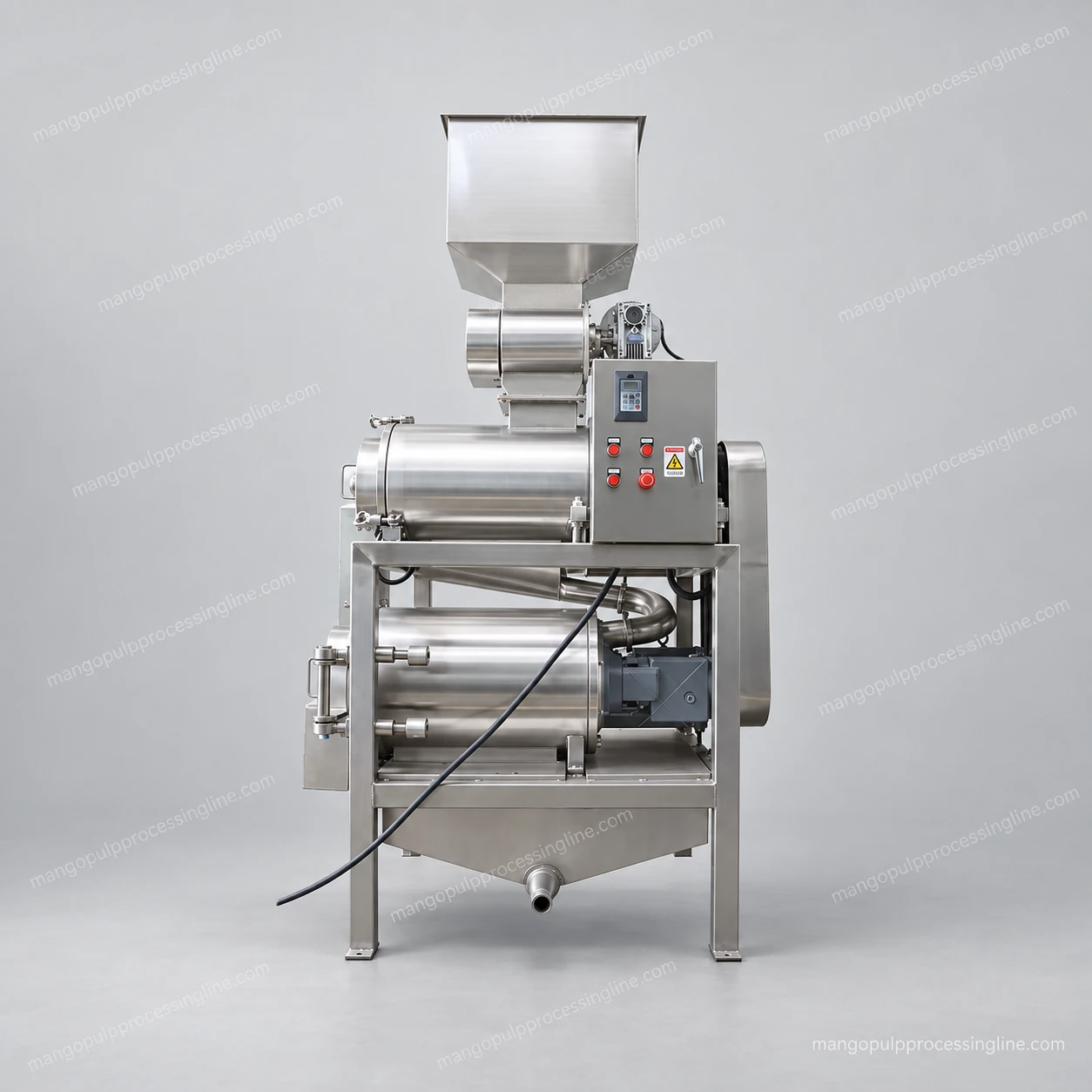
The machine combines a bed of rotating brushes with water sprayed from bars above it. The brushes contact the fruit surface while the nozzles rinse away loosened material. Sidewalls contain the washing zone and the lower section collects wash water.
The pictured equipment is a brush washer. Bubble washing uses a different structure and can be considered as another front-end arrangement when the condition of the incoming fruit calls for it. Brush stiffness, contact and residence are chosen around the fruit rather than applying one washing action to every variety.
Treat the water route as part of the machine
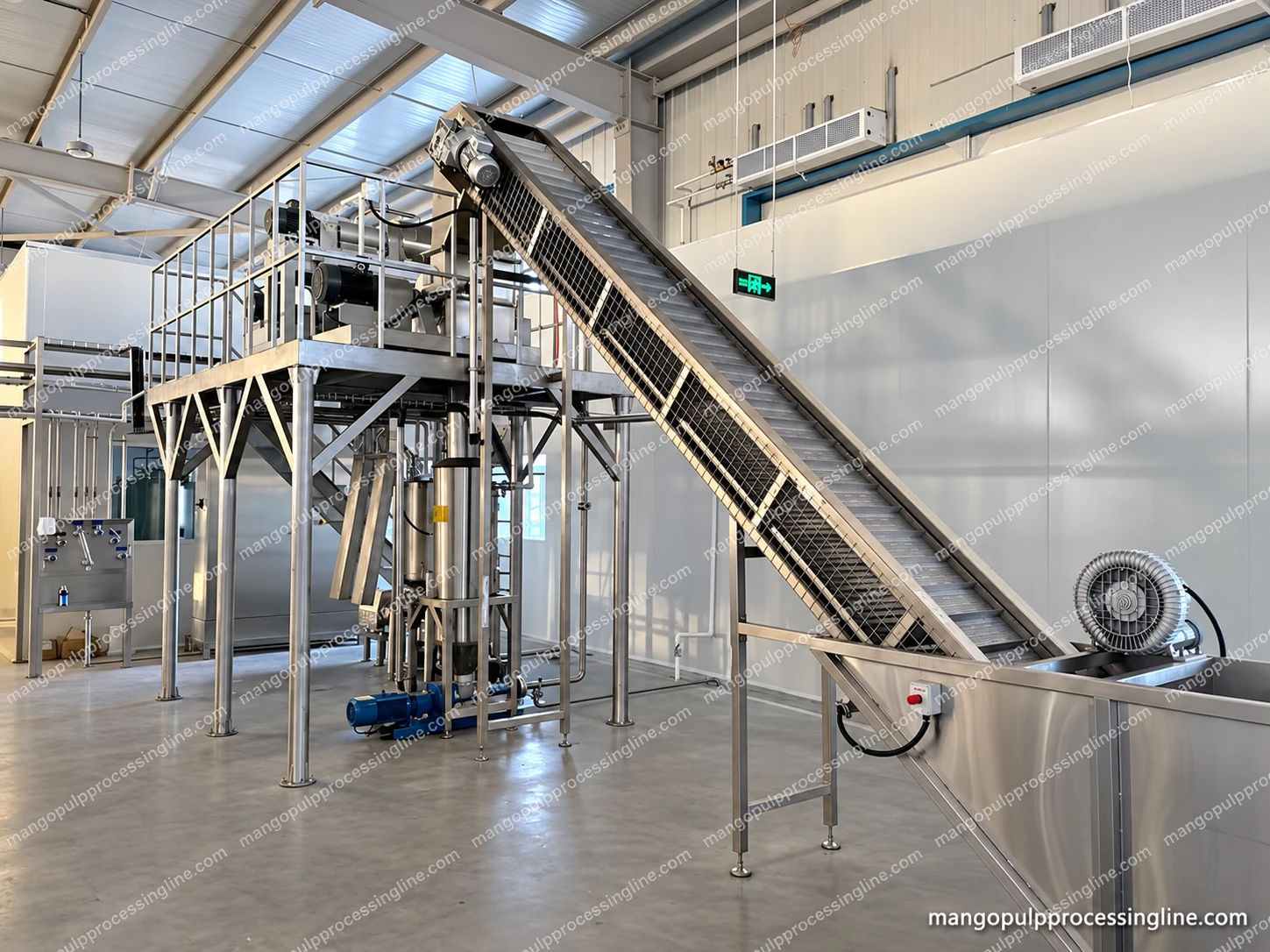
The spray inlet, collection section, solids removal and drain connections need to fit the plant’s water supply and wastewater arrangements. Where a circulating-water circuit is selected, filtration and water renewal must be defined with it.
The finished equipment specification identifies the water circuit actually supplied. Spray pressure, water demand and pump duty are selected with the nozzle arrangement and operating conditions, rather than inferred from the size of the photograph.
Inspect the parts that touch and rinse the fruit
This is open fruit-handling equipment. Its brush bed and exposed surfaces are cleaned as an open machine; a downstream closed-pipe CIP circuit does not automatically clean those surfaces.
- Check brush wear, loose material and accumulation between rollers.
- Inspect nozzle patterns and blocked spray openings before processing.
- Keep the collection section and waste outlets accessible for removal of soil and fruit debris.
- Clean the exposed fruit path using the machine’s cleaning instructions, with the drive isolated before access.
Deliver fruit to a visible sorting step
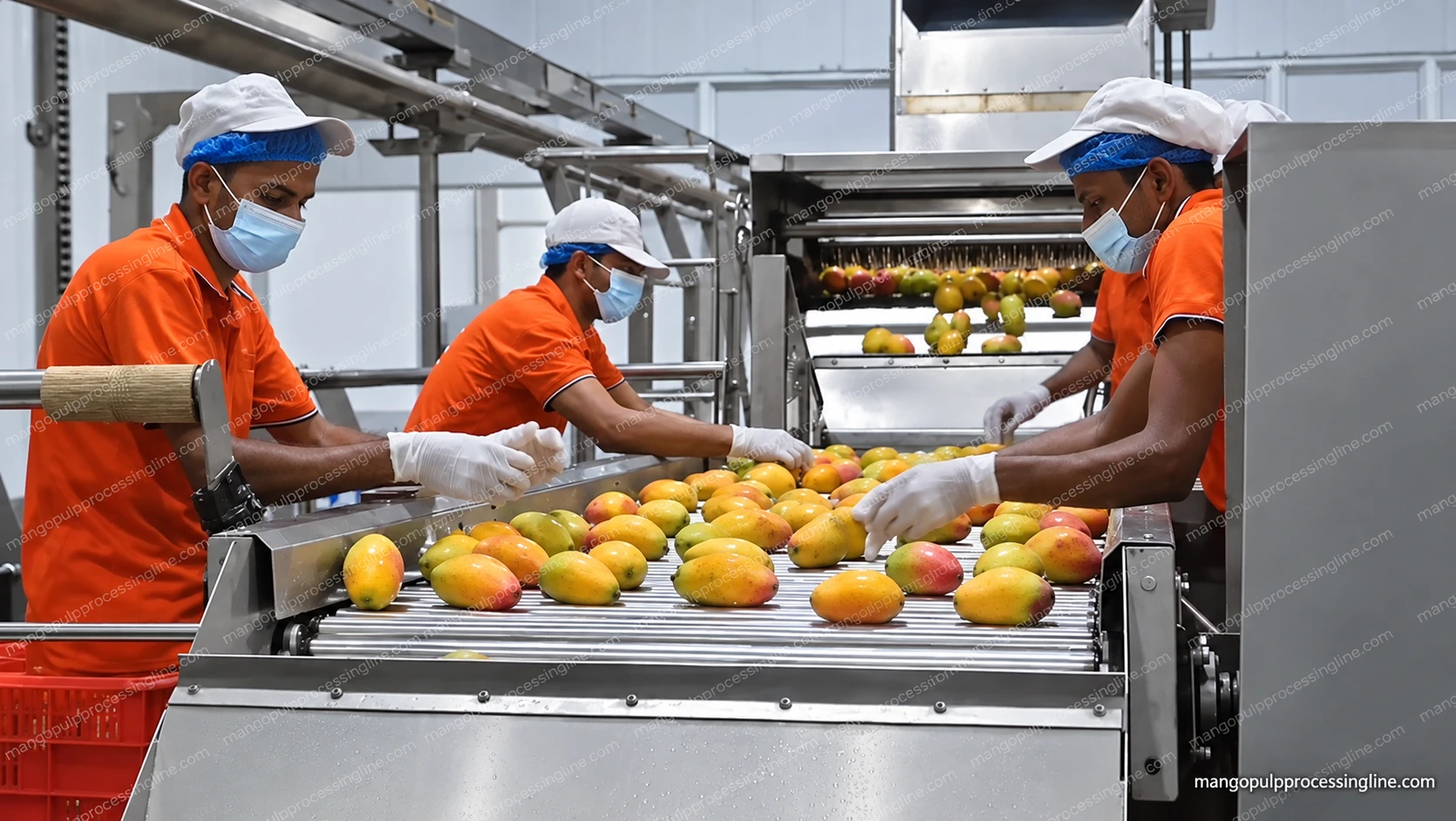
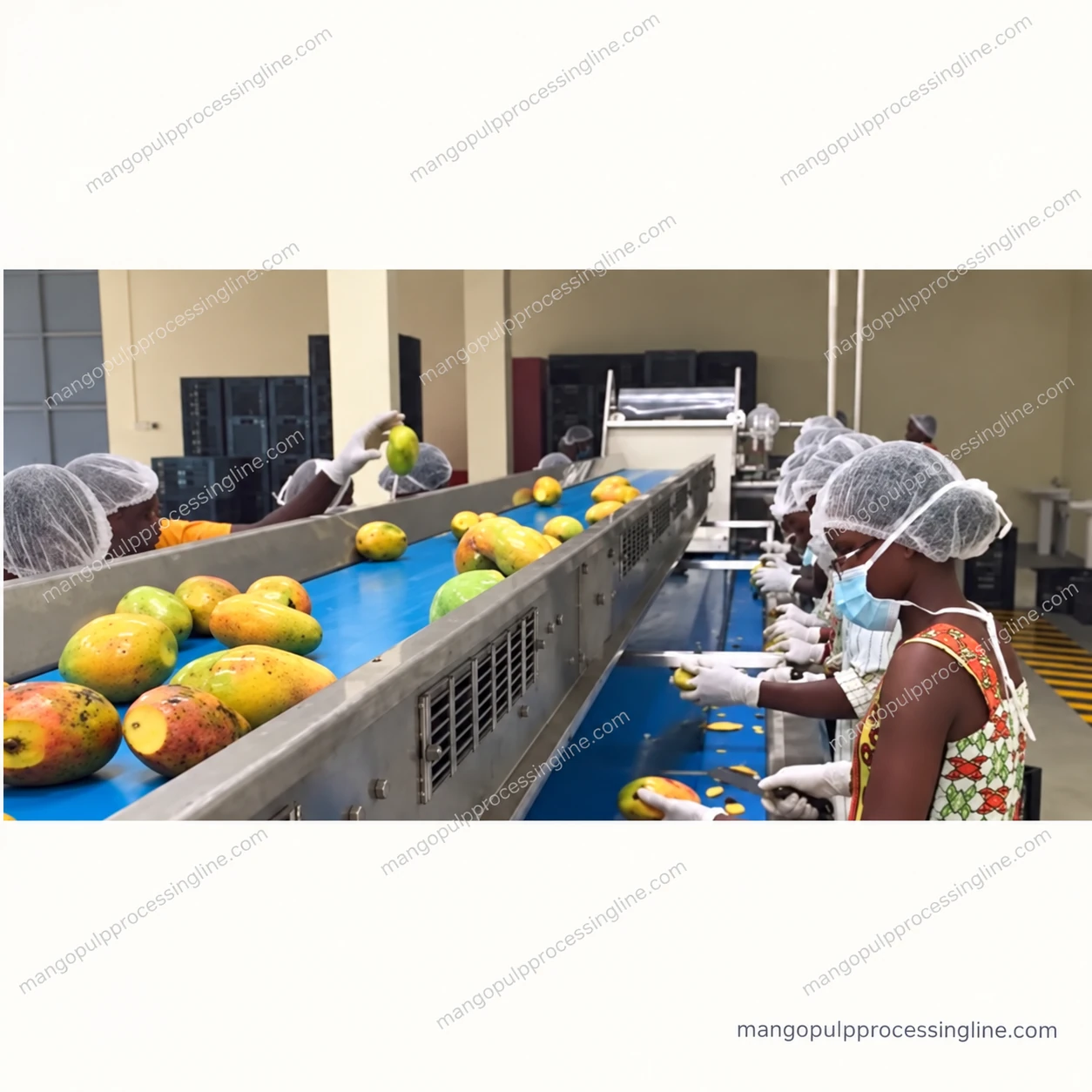
The outlet connects to the manual sorting conveyor or to a conveying section arranged for inspection. Leave enough access for operators to remove damaged fruit before the accepted feed reaches the combined destoner.
Common questions
Does this washer identify and reject damaged mangoes?
No. The pictured machine washes the fruit surface. Inspection and rejection are handled at the manual sorting step; optical sorting is not part of this configuration.