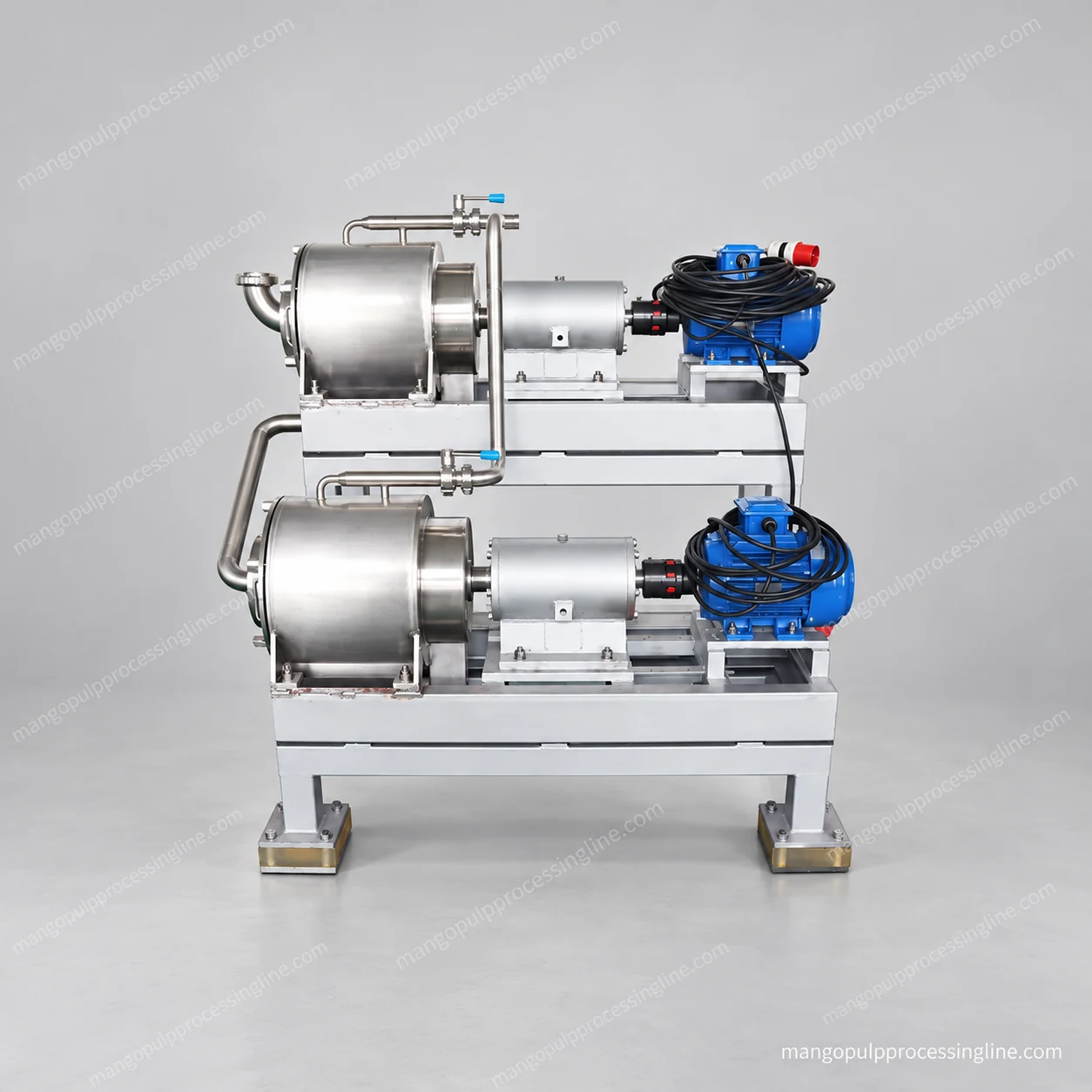
Two chambers with a clear transfer between them
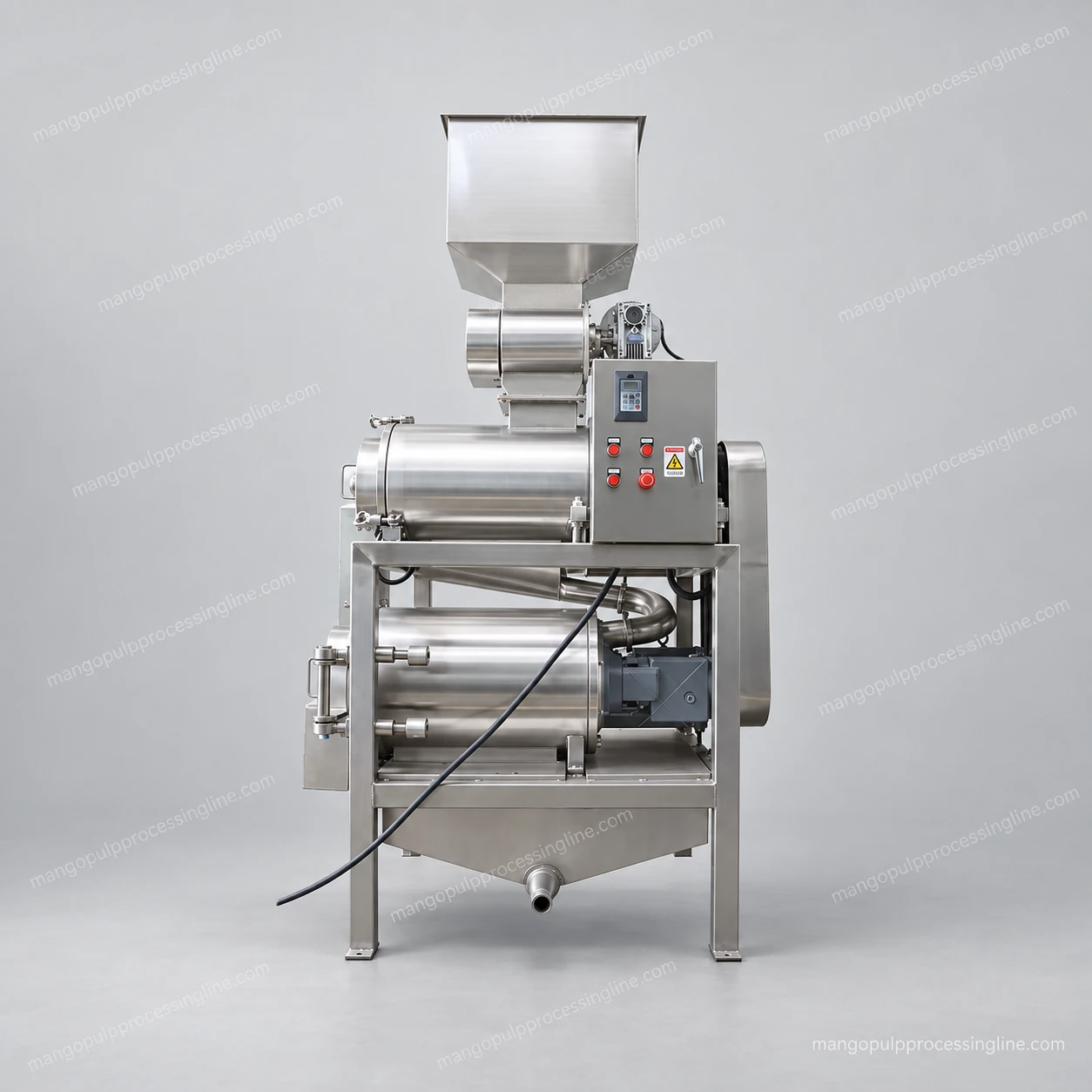
The pictured machine places two driven processing chambers one above the other. A connecting pipe carries material between the stages. Screening separates pulp that can pass the selected openings from the coarser residue removed through the separation route.
In a mango line, the finisher normally receives material after destoning. The first and second screen selections are considered together with the fruit fibre and desired finished texture. Two stages do not imply that every pulp needs the same pair of apertures.
DJ family selection data
The equipment catalogue lists these reference options for its fruit and vegetable pulping and refining family. The pictured machine is a two-stage arrangement; its specific DJ submodel is not identified. Listed capacity depends on the feed and selected screening duty and is not a guaranteed mango-pulp output.
| Model | Reference capacity | Listed drive power | Dimensions |
|---|---|---|---|
| DJ-3 | 1–3 t/h | 4.0 × 2 kW | 1550 × 1040 × 1500 mm |
| DJ-5 | 5 t/h | 7.5 × 2 kW | 1550 × 1040 × 1500 mm |
| DJ-10 | 10 t/h | 18.5 × 2 kW | 1900 × 1300 × 2000 mm |
| DJ-15 | 15 t/h | 30 + 18.5 kW | 2400 × 1400 × 2200 mm |
| DJ-25 | 25 t/h | 45 + 37 kW | 2400 × 1400 × 2200 mm |
Choose the separation, then balance the flow
The manufacturer lists screen openings from 0.4 to 1.5 mm and offers single-stage and double-stage machines. The screen specification describes the selected openings for each stage, rather than treating the whole range as an installed feature.
Smaller openings change the separation duty and can change the useful processing rate. Pulp texture, retained fibre and the amount of rejected material are considered together. The resulting pulp flow sets the duty for the receiving tank and transfer pump.
Screen access is a maintenance requirement
The equipment catalogue describes the family as designed for disassembly and cleaning. The cleaning arrangement for screens and removable parts is defined separately from the closed pipework that carries the finished pulp.
- Provide space to open the chamber and remove the screening parts using the supplied procedure.
- Inspect screens for blockage, wear or damage that changes the separation result.
- Remove accumulated residue from the reject path as well as the pulp outlet.
- Isolate both drives before opening either stage; restore all covers before restarting.
Common questions
Does choosing a finer screen always improve the product?
The useful choice depends on the desired texture and the feed. A finer cut changes fibre separation, residue and processing rate; it is selected with the product target rather than used as a universal quality setting.