1. Receive, convey, wash and inspect
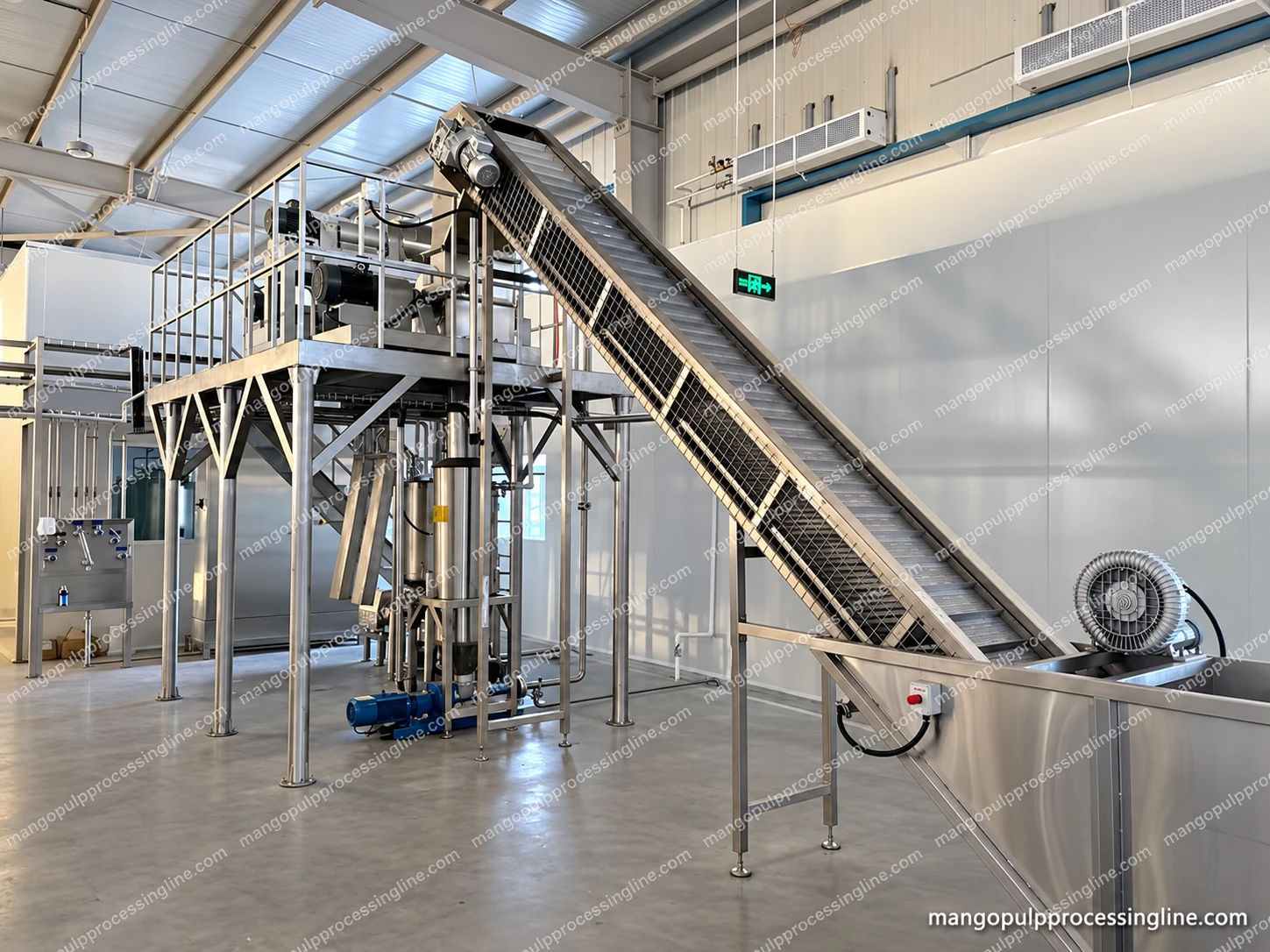
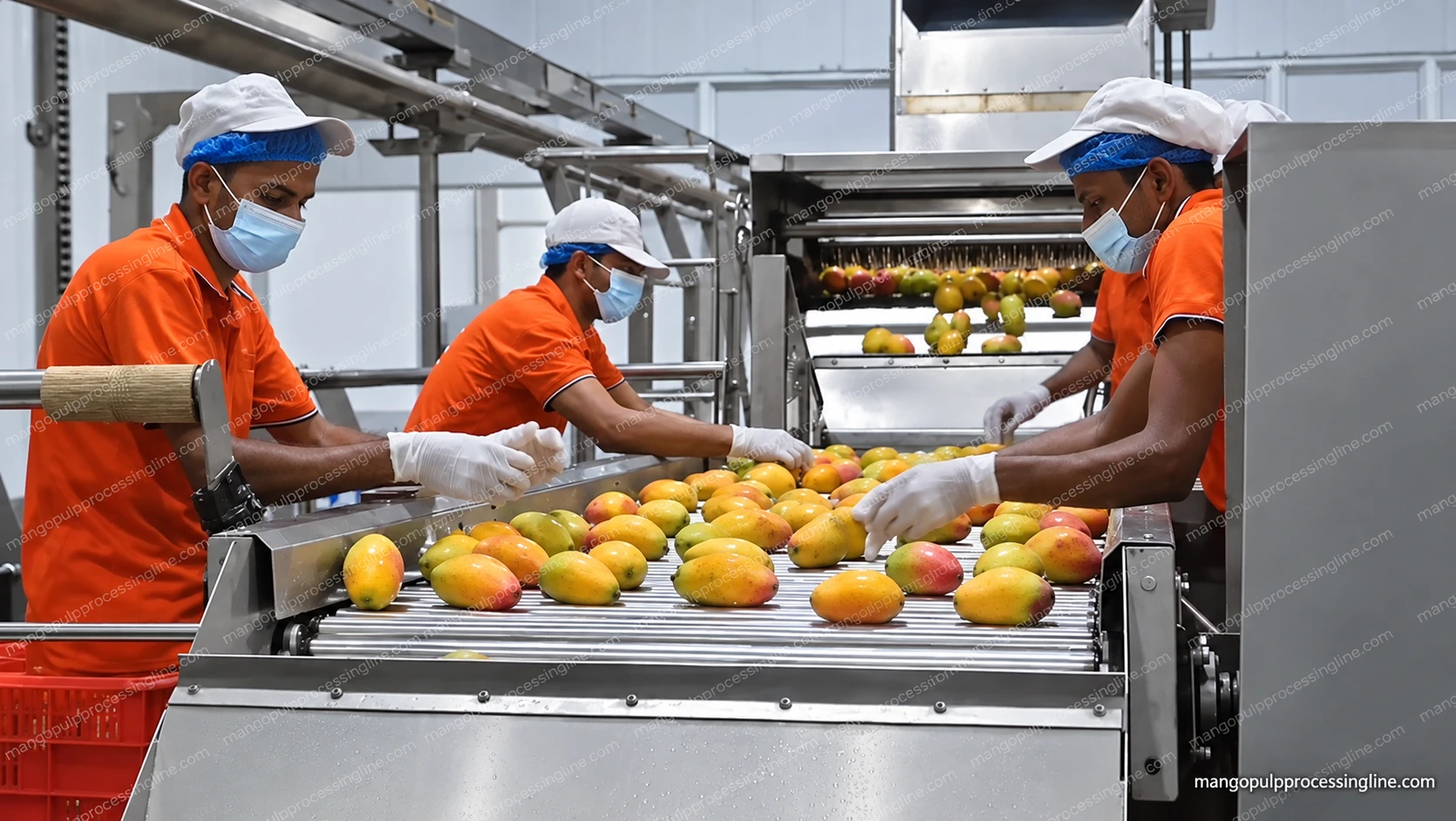
Whole-fruit handling establishes a controlled feed to extraction. The elevator bridges levels between machines; its discharge should spread fruit into the receiving section without obstructing inspection or overfeeding the next inlet.
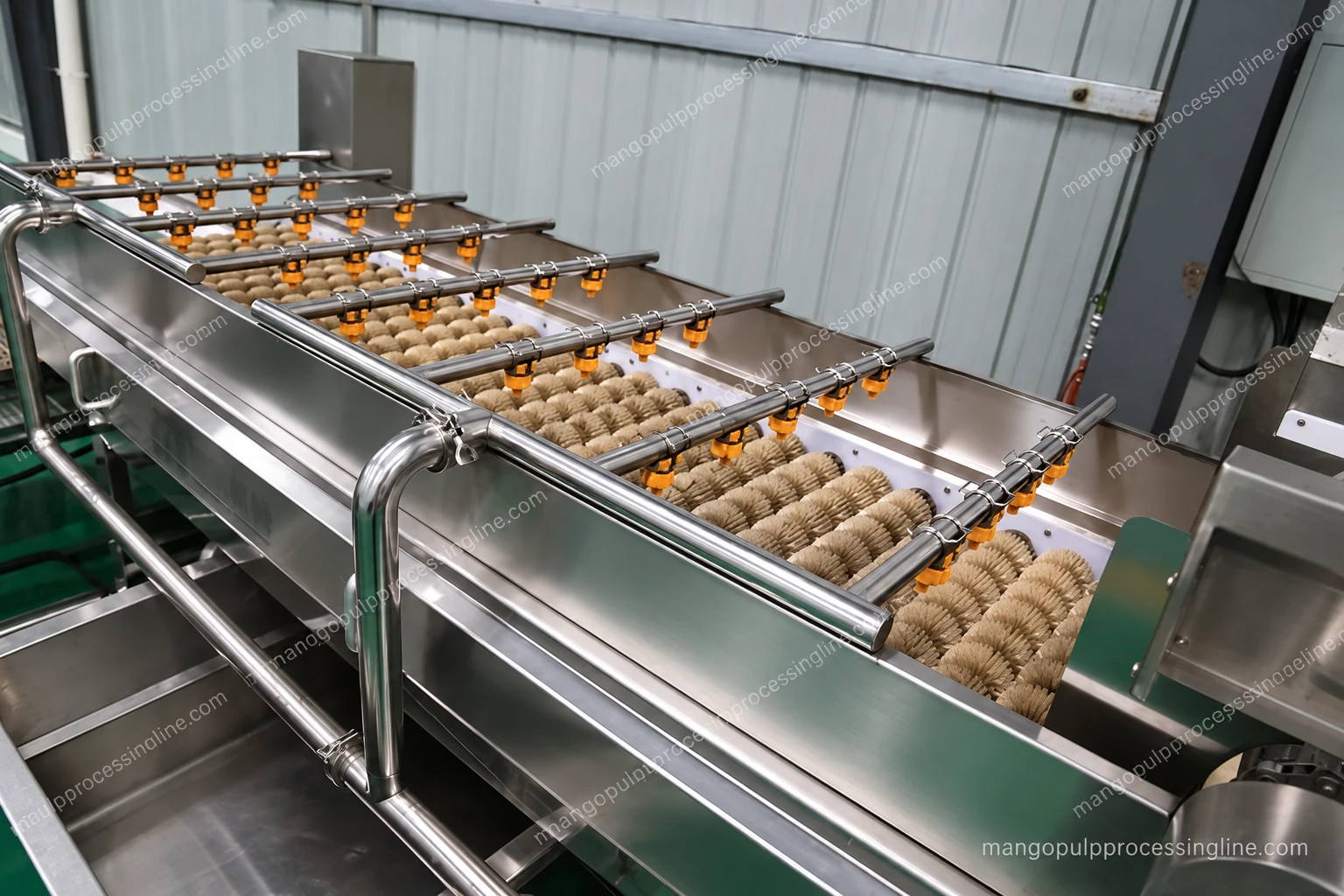
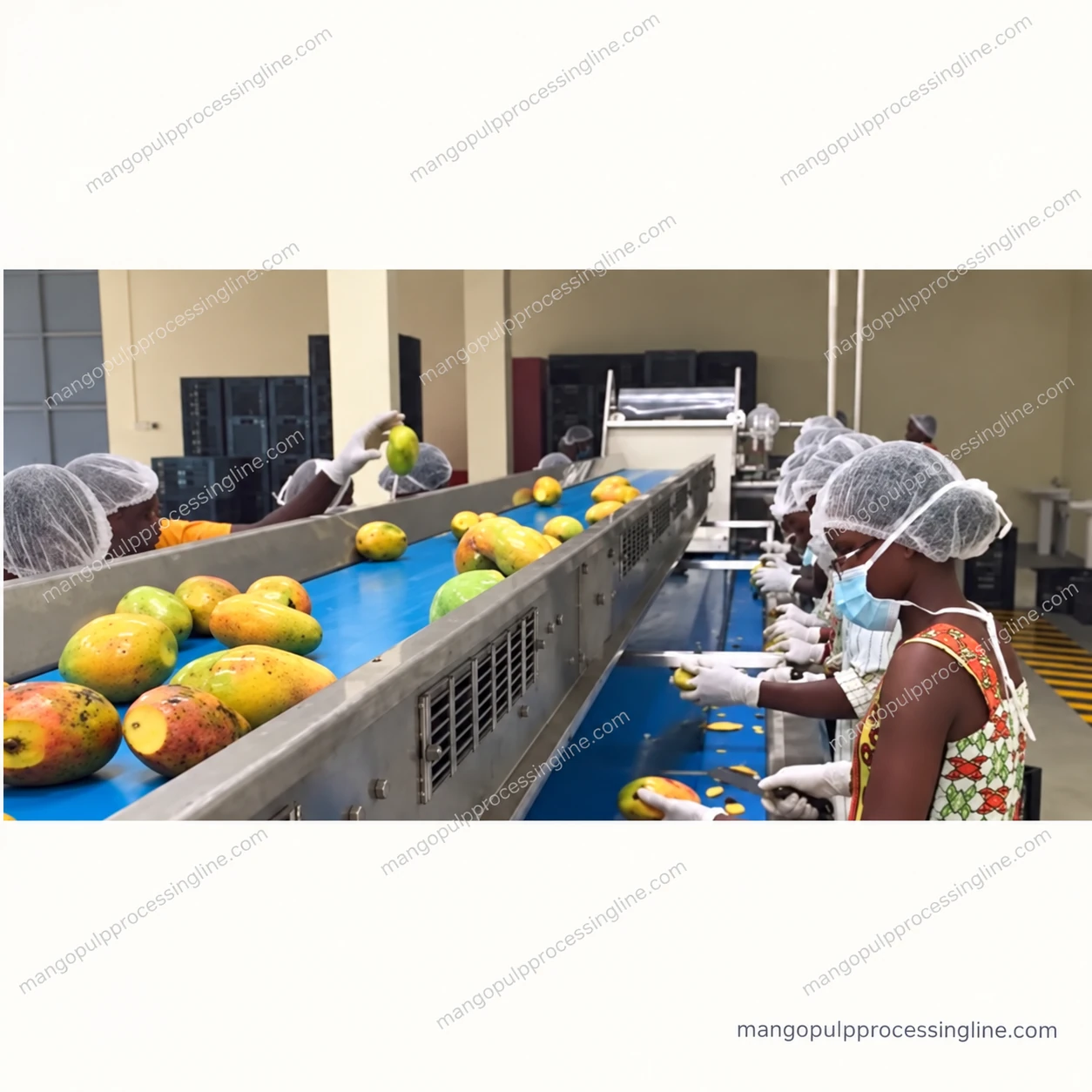
In the brush-and-spray configuration, rollers contact the fruit while spray bars apply water. Operators at the sorting conveyor remove unacceptable fruit and foreign material. Washing arrangement and inspection positions may be combined within the front end, with drainage and rejected fruit routed away from the accepted flow.
2. Separate peel and stones while extracting pulp
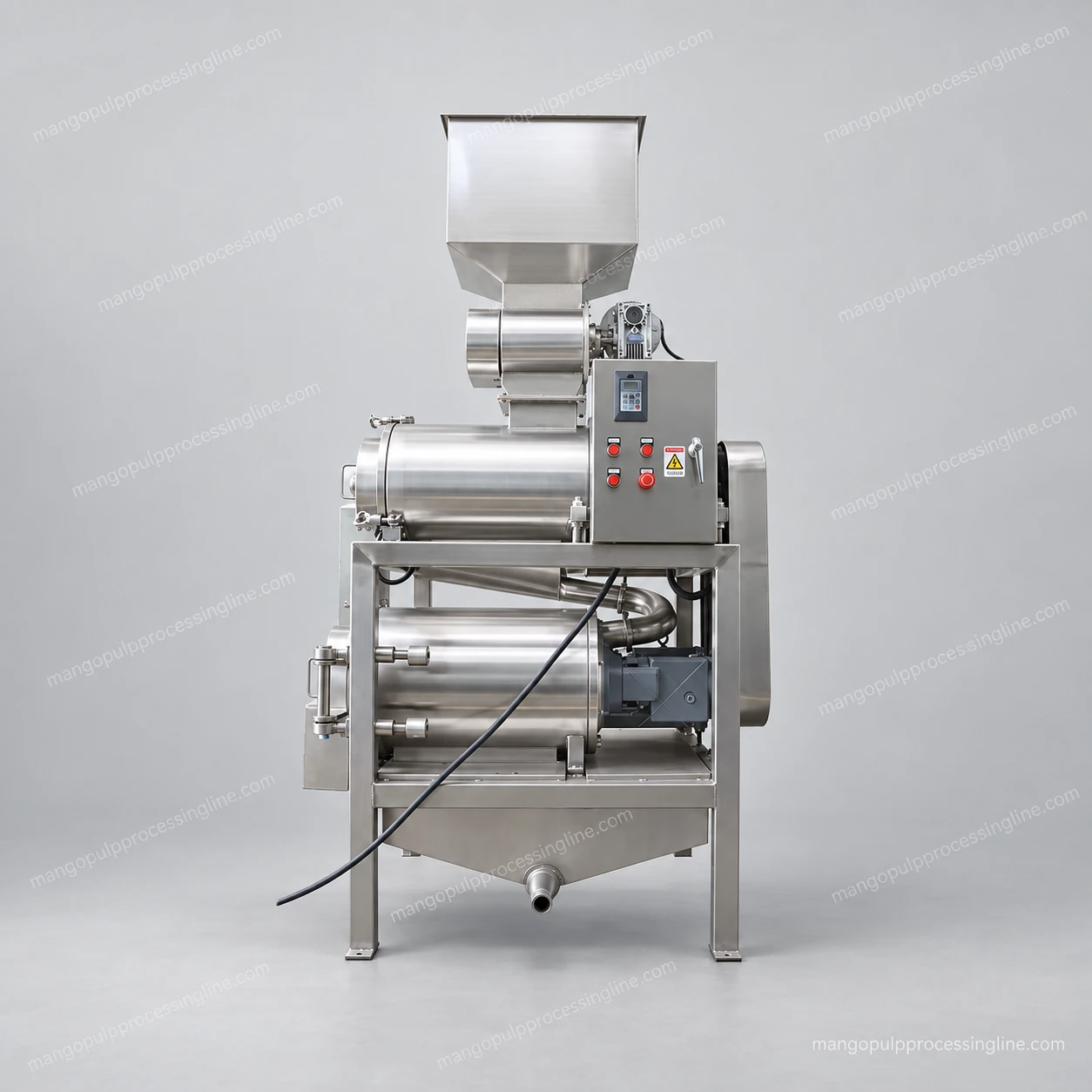
The combined mango destoning and pulping machine receives prepared whole fruit and separates the usable pulp from peel and stones. Its extraction duty is distinct from fine finishing. The feed hopper, working chambers, product outlet and reject discharge must remain accessible within the layout, including space for product-contact parts to be cleaned and inspected.
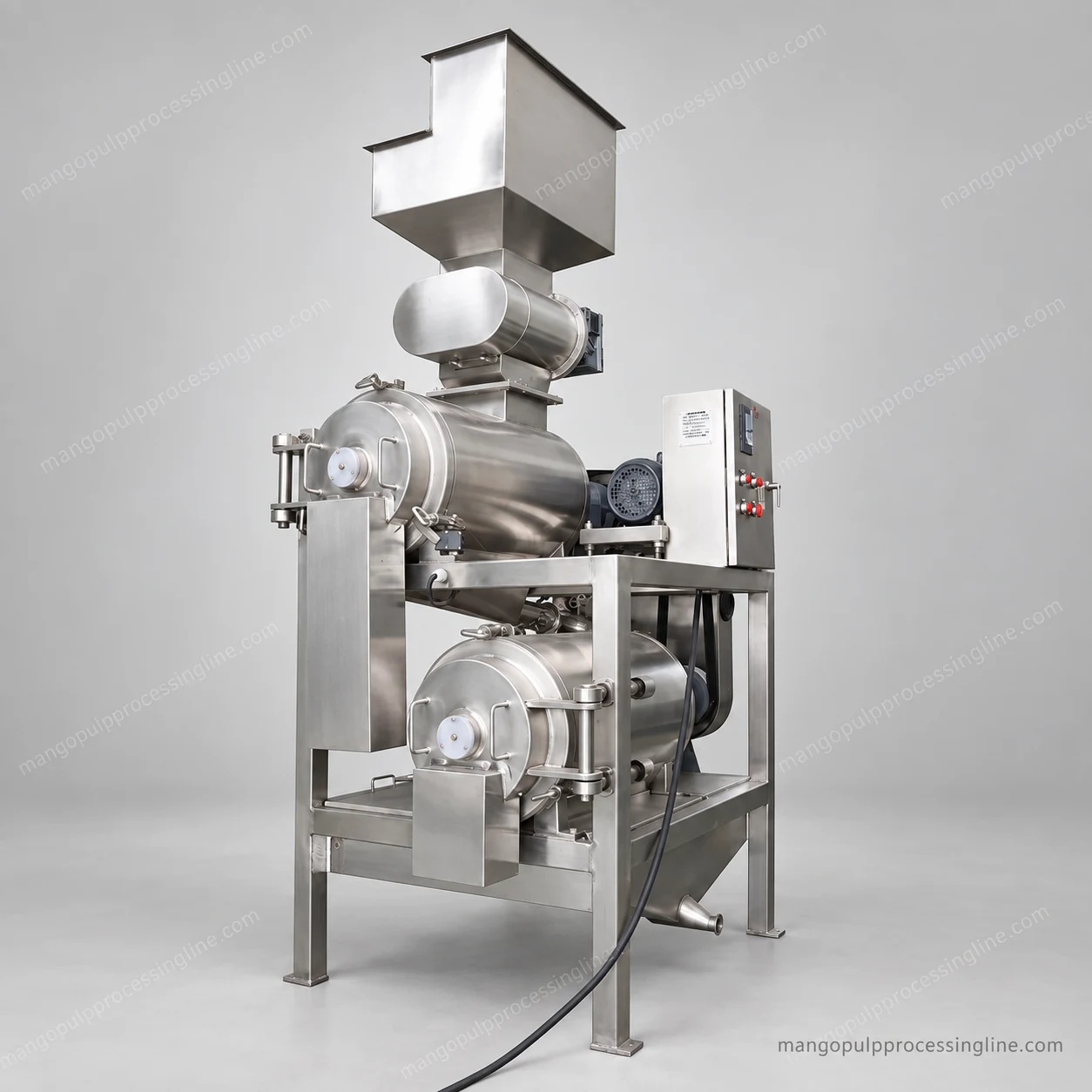
3. Refine the pulp to the required fibre profile
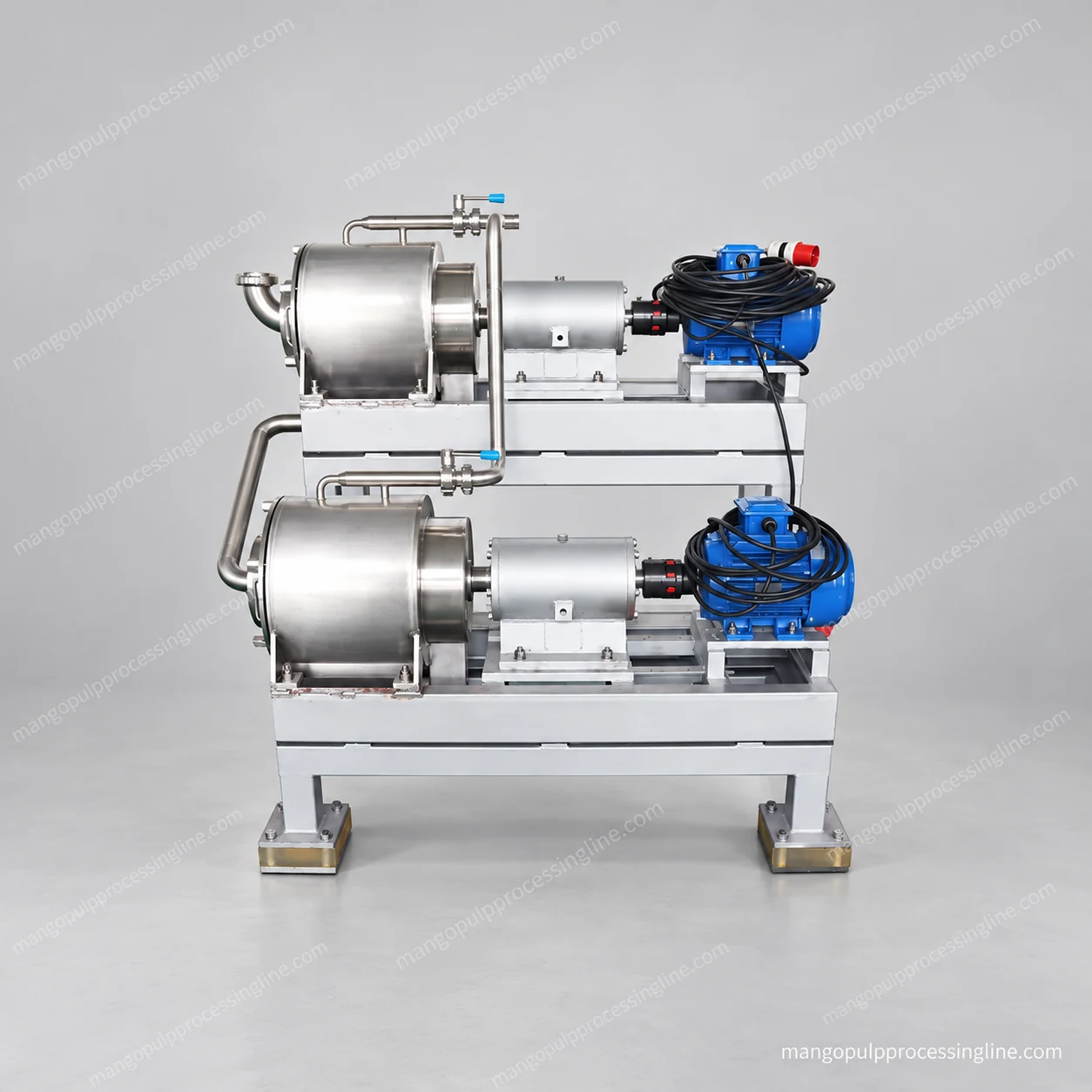
The finisher works on extracted pulp. Its screens separate accepted pulp from coarser material, with a two-stage configuration available for successive processing. Fibre removal, pulp texture and recovery should be assessed together. The reject outlet needs a collection route that does not cross the finished-pulp connection.
4. Buffer and transfer the refined product
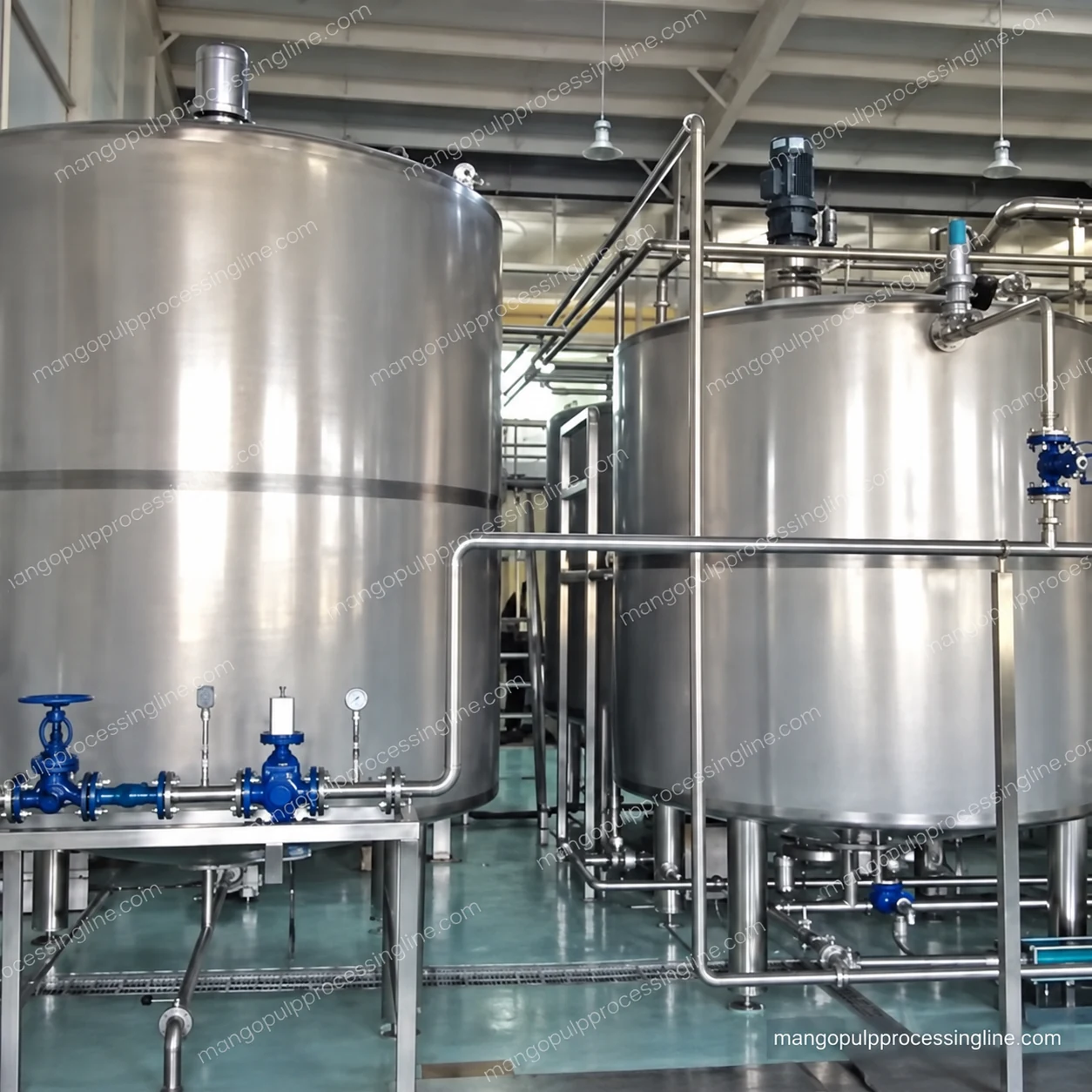
A buffer tank receives pulp between processing sections. Its working range, level controls and selected transfer pump help connect variable upstream delivery to the downstream inlet requirement. Pipe bore, route, temperature and product viscosity belong to this selection; a tank’s total volume alone does not describe usable buffering.
5. Add the treatment that the product needs
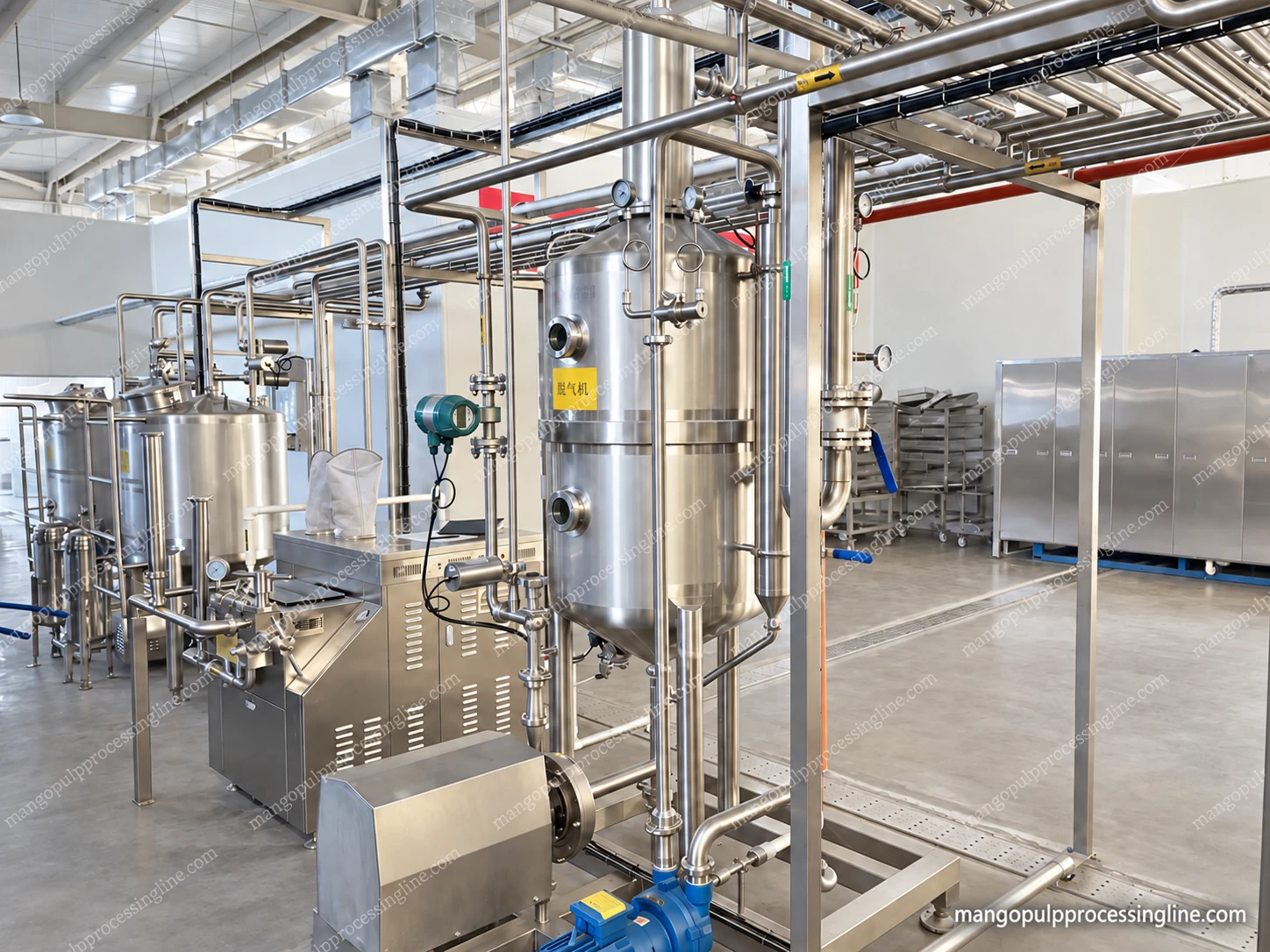
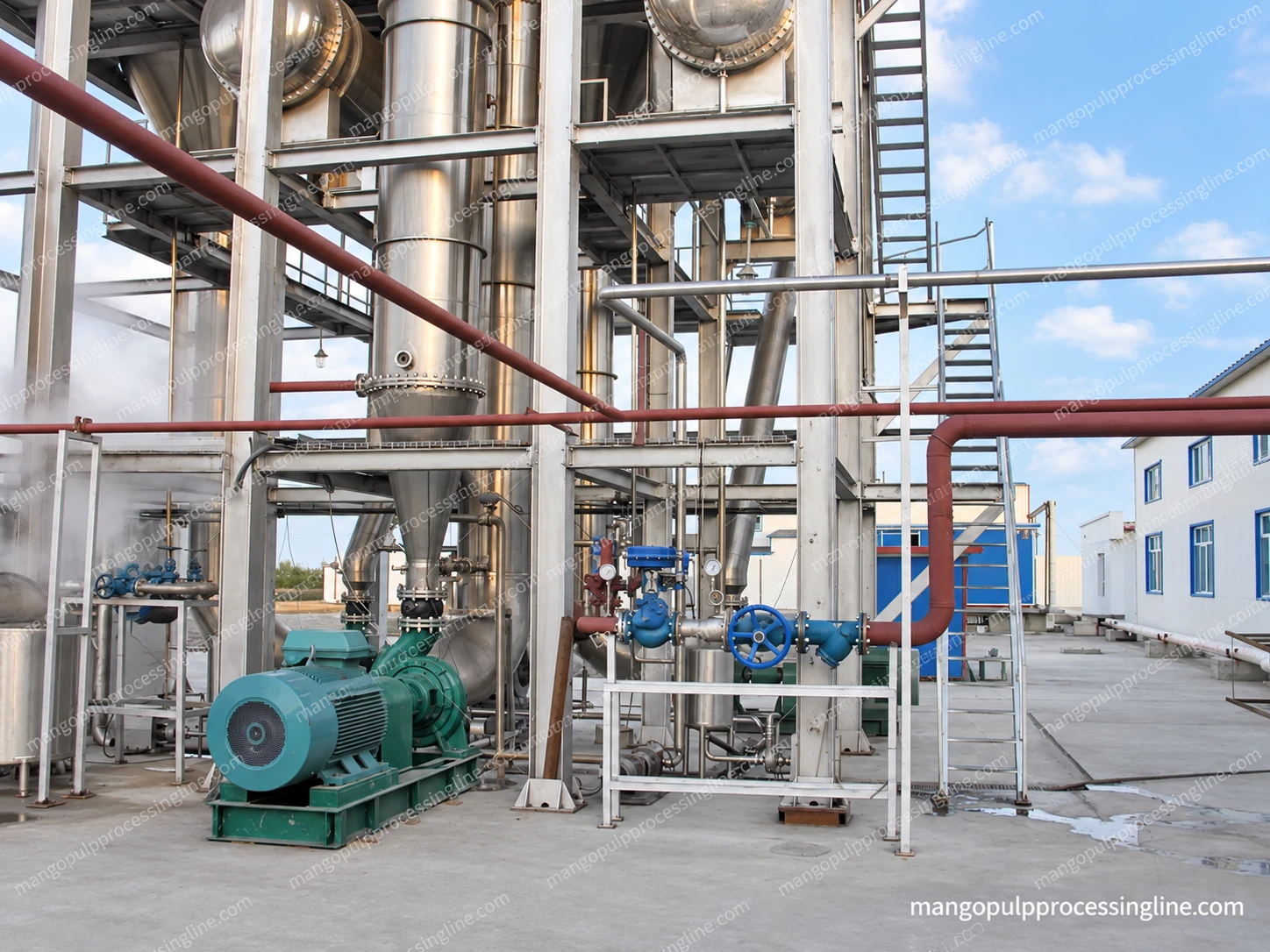
Vacuum deaeration and evaporation perform different jobs. A deaerator provides an air-removal stage. An evaporator removes water to produce a concentrate. Neither should be added solely because it appears in a generic line diagram; each needs an identified product duty and matched inlet and outlet conditions.
6. Heat-treat and package through connected equipment
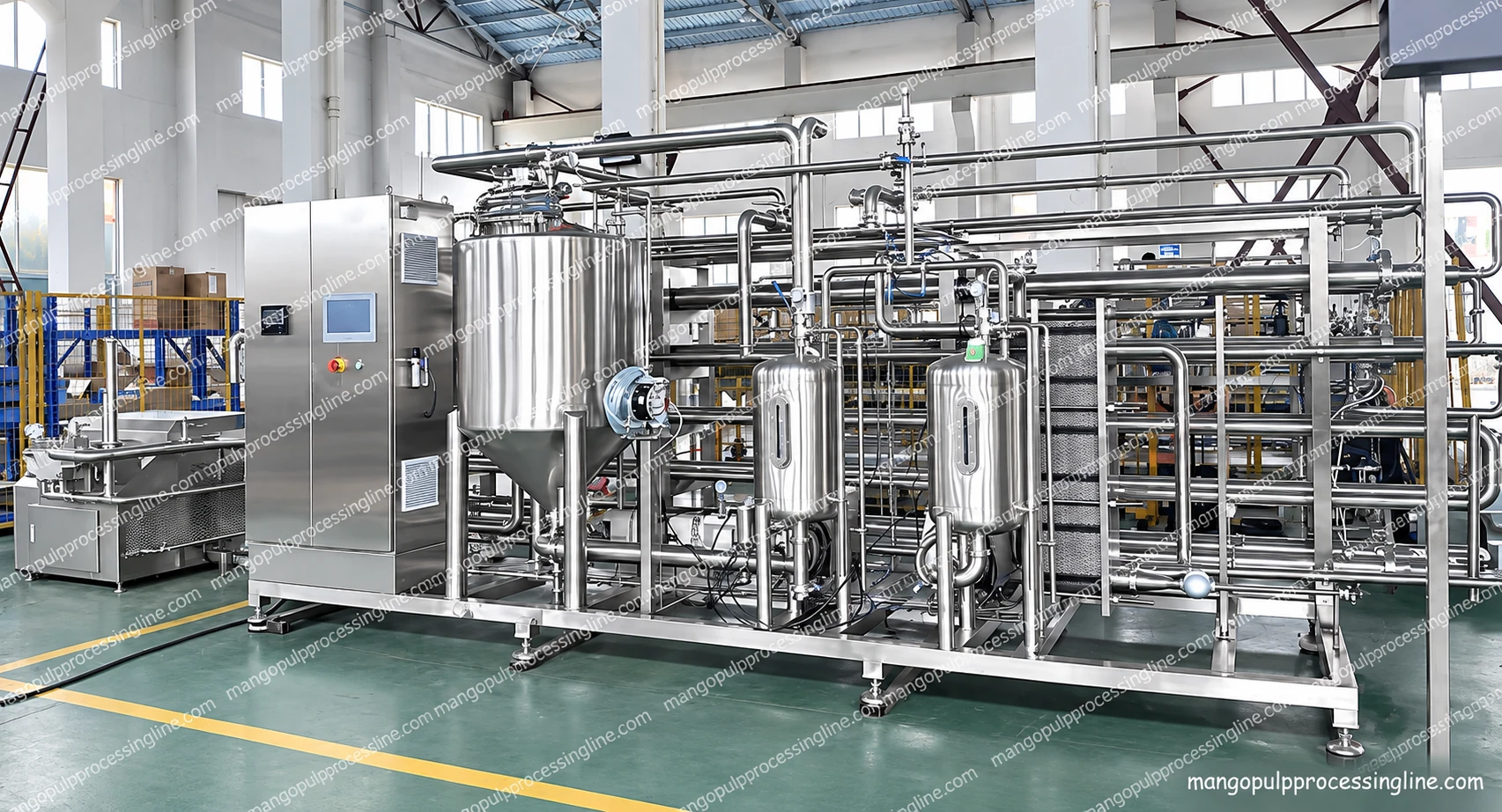
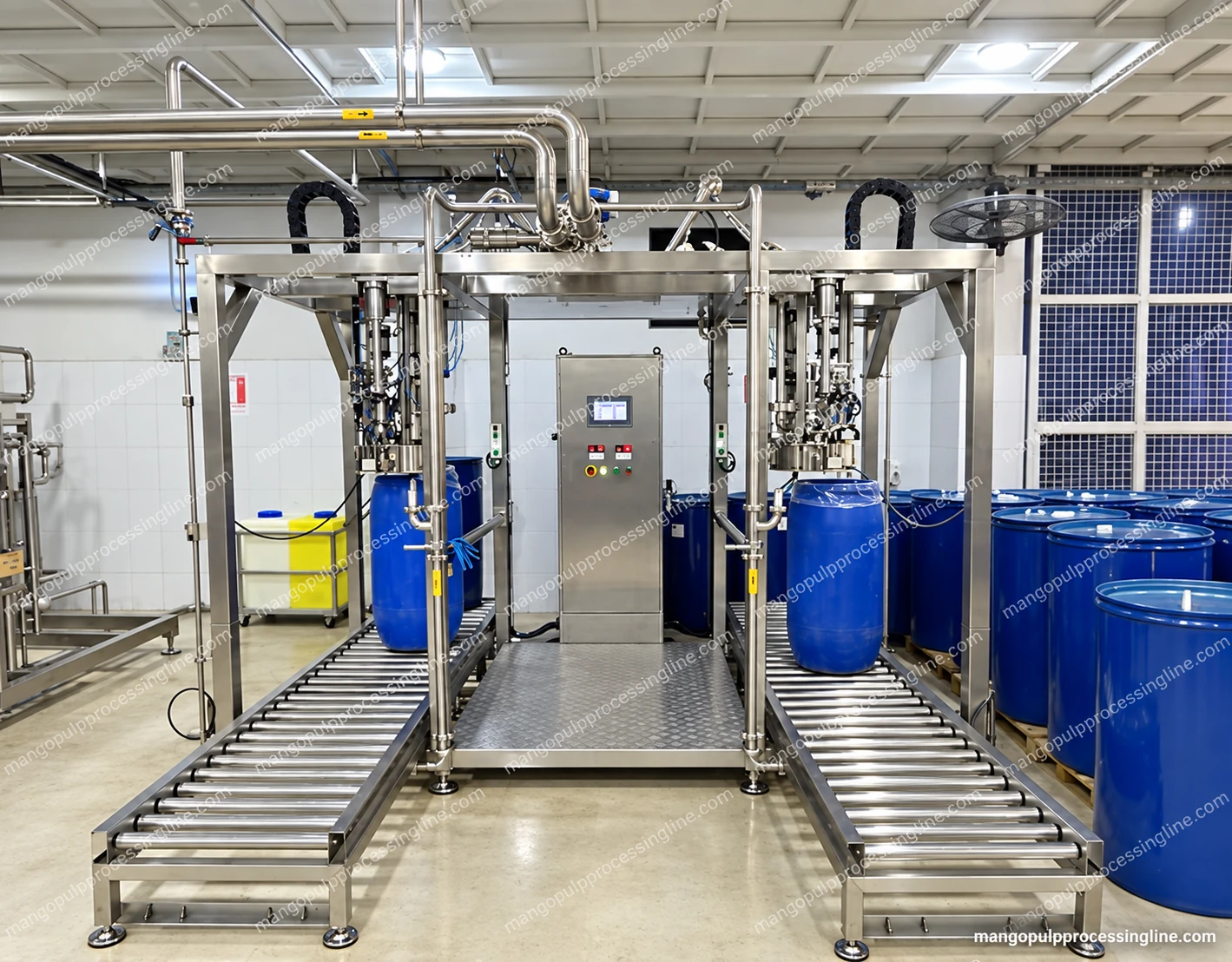
For the aseptic-bag route, pulp passes through a configured heating, holding and cooling system before transfer to the filler. The tube-in-tube unit, connecting valves and pipework, sterile filling interface and selected package form the downstream scope. Aseptic bags are a packaging choice for the treated product, whether the recipe uses single-strength pulp or concentrate.
Design the cleaning route alongside the product route
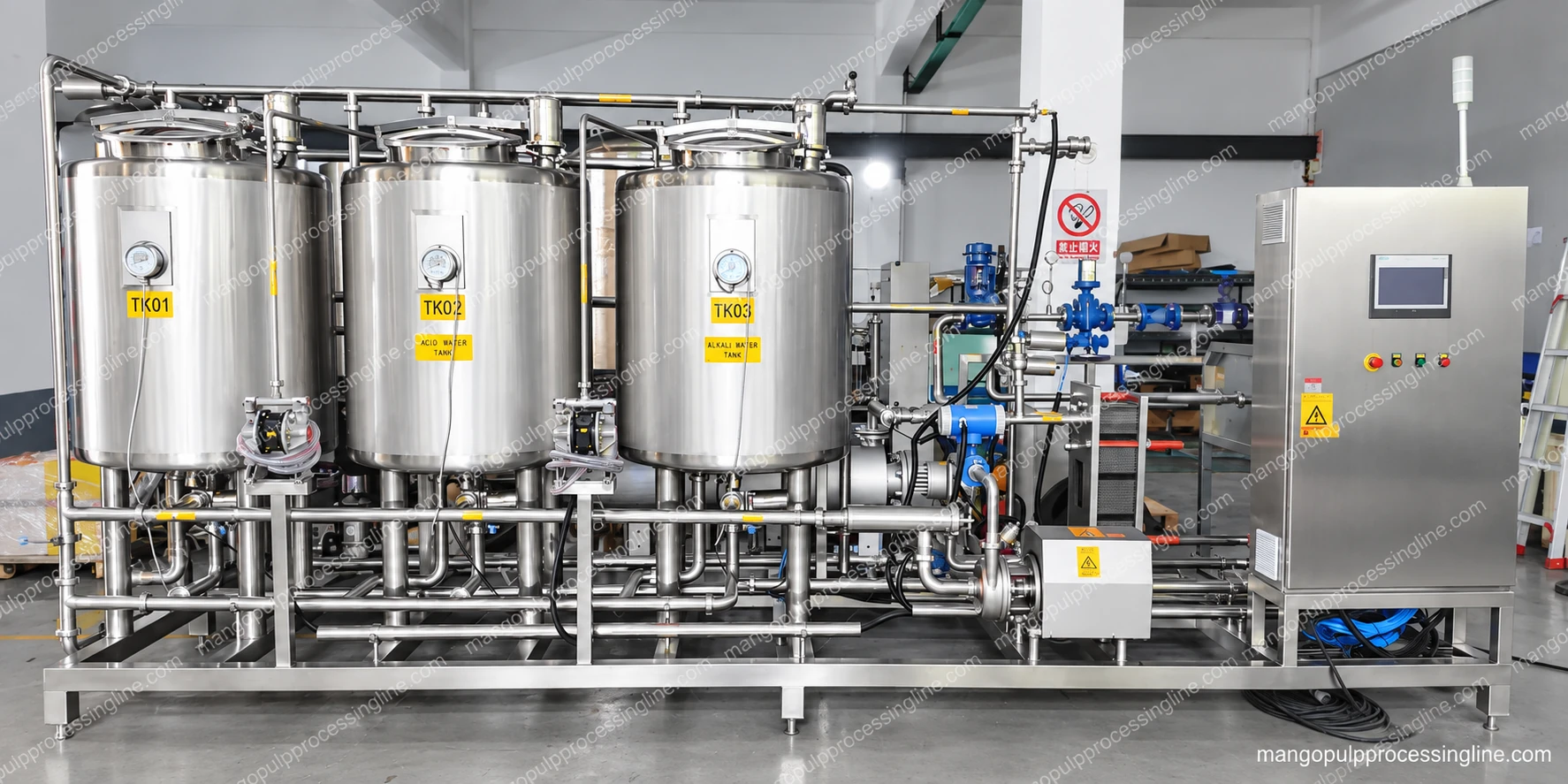
The line also has water, cleaning-solution, return and waste flows. Open conveyors and removable screens require accessible cleaning and inspection. Closed tanks, pipes and treatment equipment can be grouped into suitable CIP circuits. Those two cleaning arrangements should be visible in the equipment and utility scope from the start.