Reach the underside as well as the fruit-contact surface
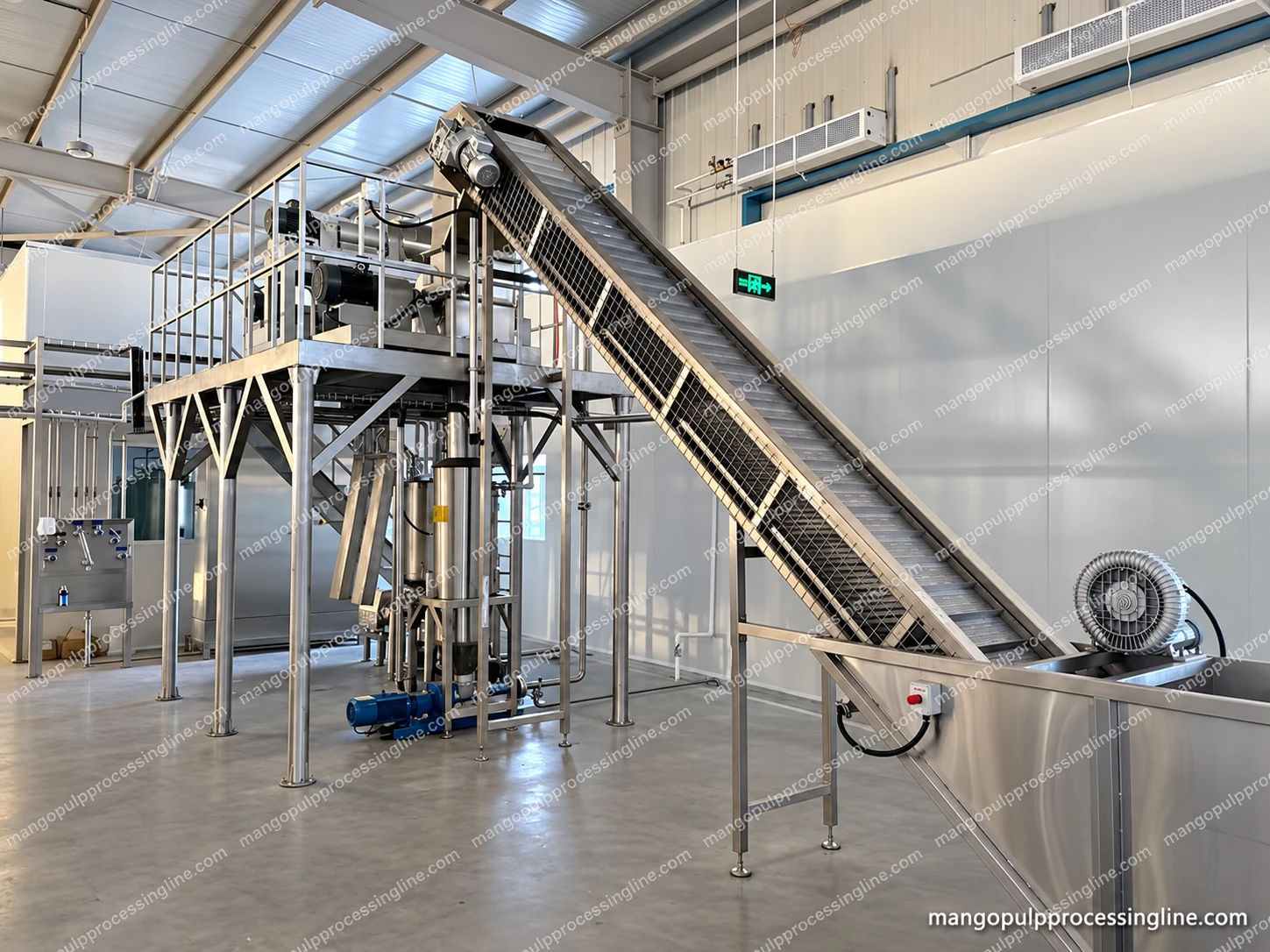
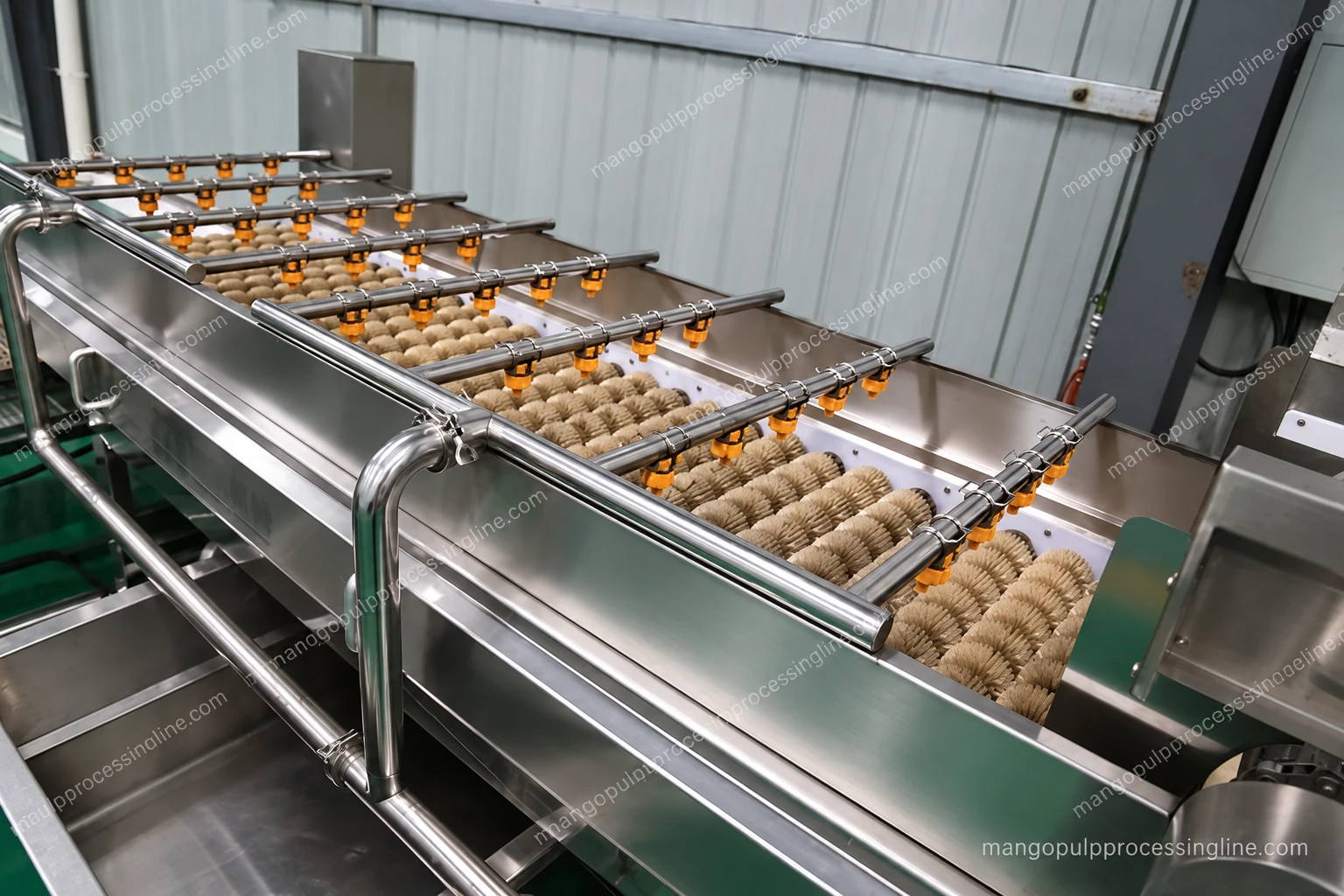
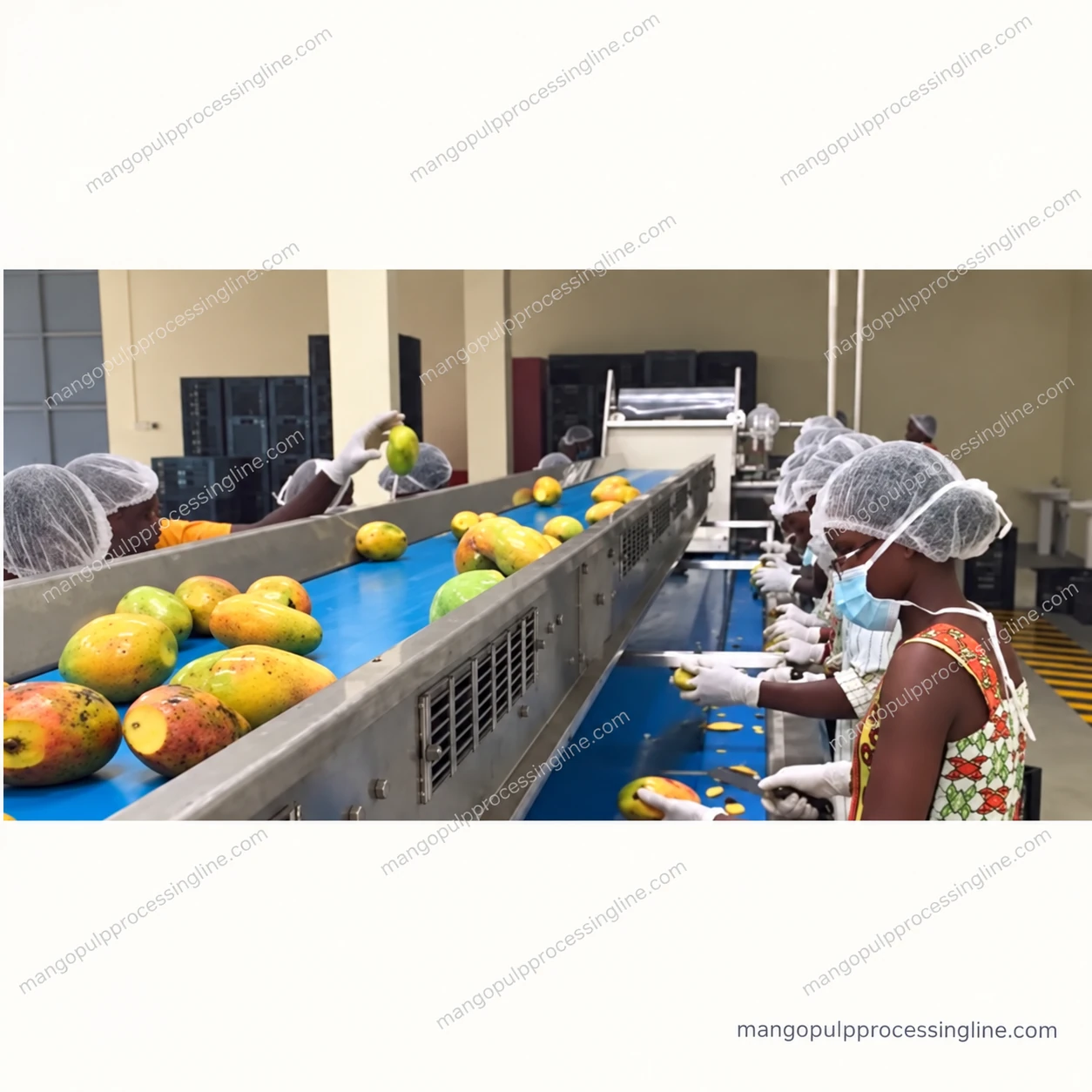
The elevator has cleats, side guides, a return belt run and transfer points. The washer adds brushes, spray nozzles and a water-collection section. The sorting conveyor needs access to its belt path and reject area. The cleaning arrangement must address the surfaces that collect debris, including areas beneath the visible product path.
Use the equipment instructions for isolation, access and cleaning methods. Remove trapped fruit and soil without reaching into moving belts, brushes or drives. A pipe-connected CIP skid does not automatically clean these open structures.
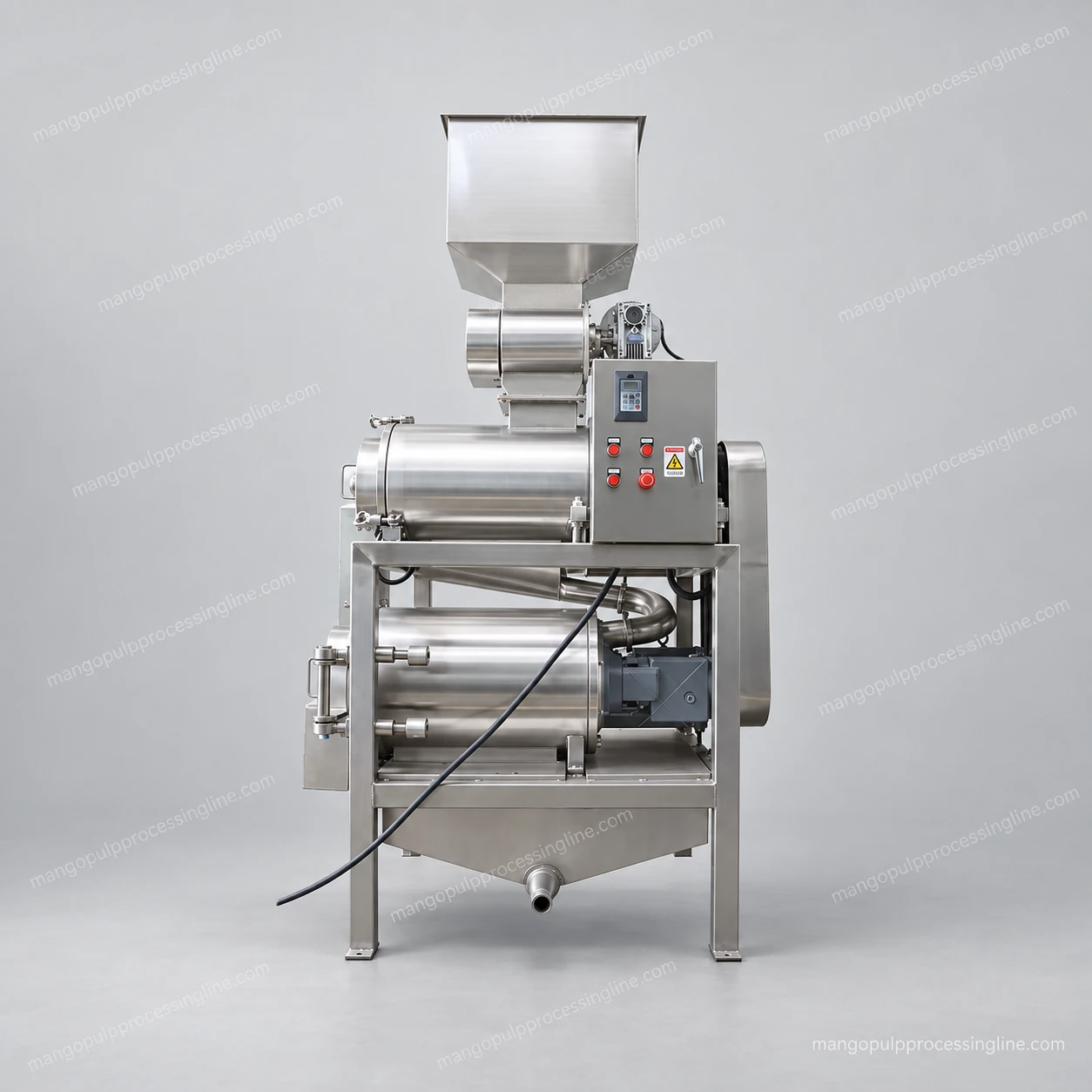
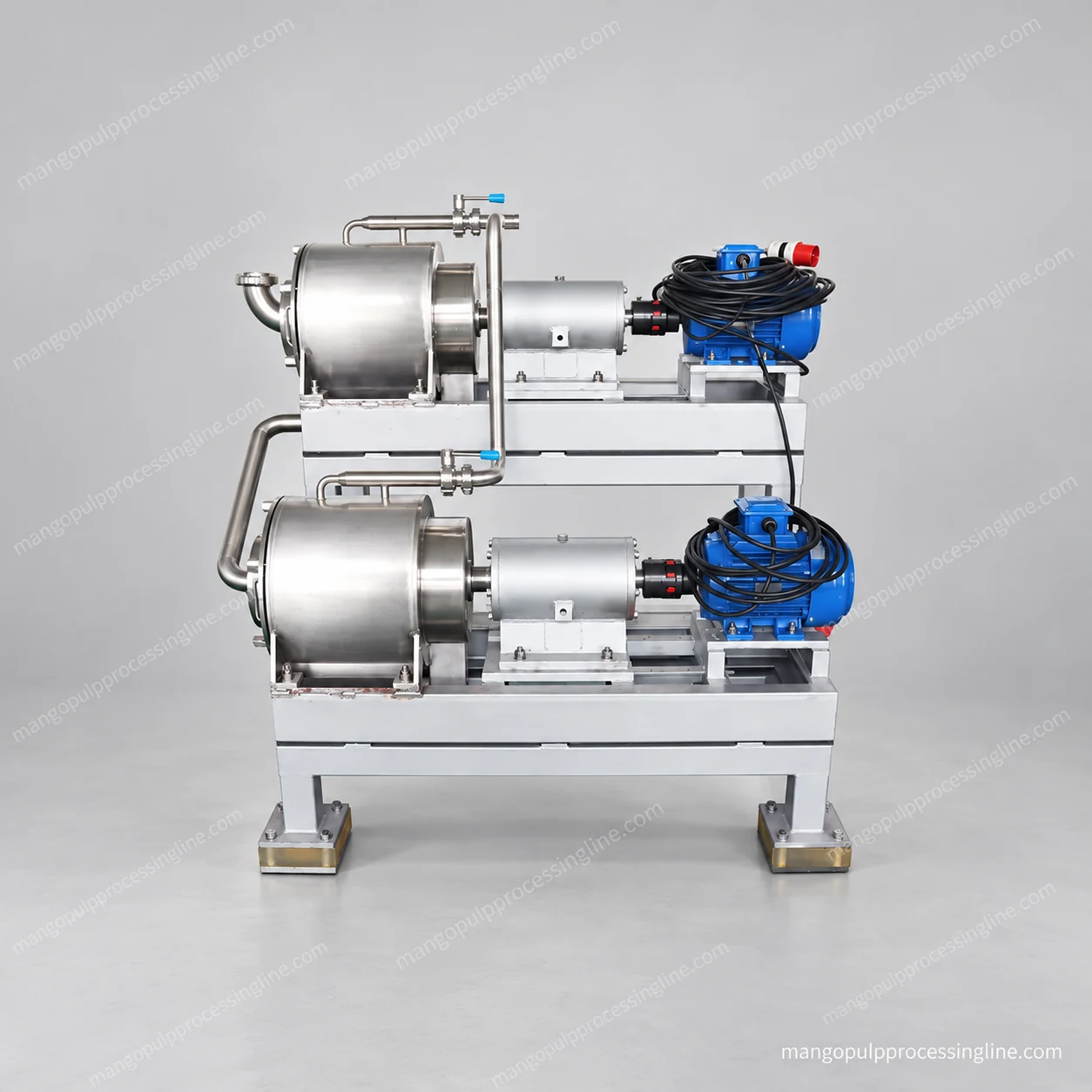
Inspect extraction chambers, screens and reject outlets
The destoner and finisher concentrate separation work into their chambers and outlets. Fibres or peel can remain at screens, seals, connections and discharge areas. Provide the space and handling arrangements needed to open or remove the specified parts, clean them and inspect their condition before reassembly. The required disassembly follows the actual machine design; it should not be replaced by a general “CIP-ready” label.
Give each closed circuit a complete supply and return path
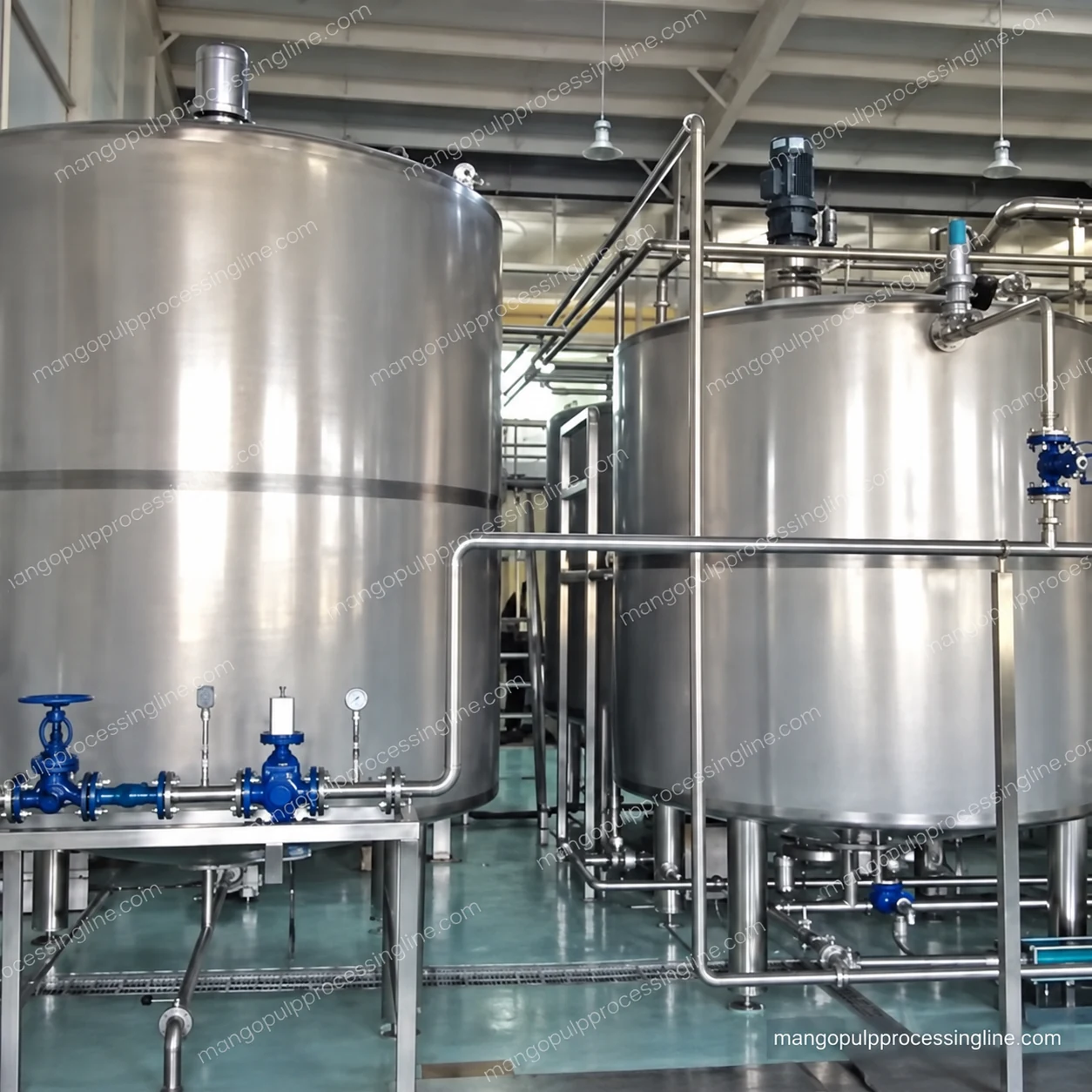
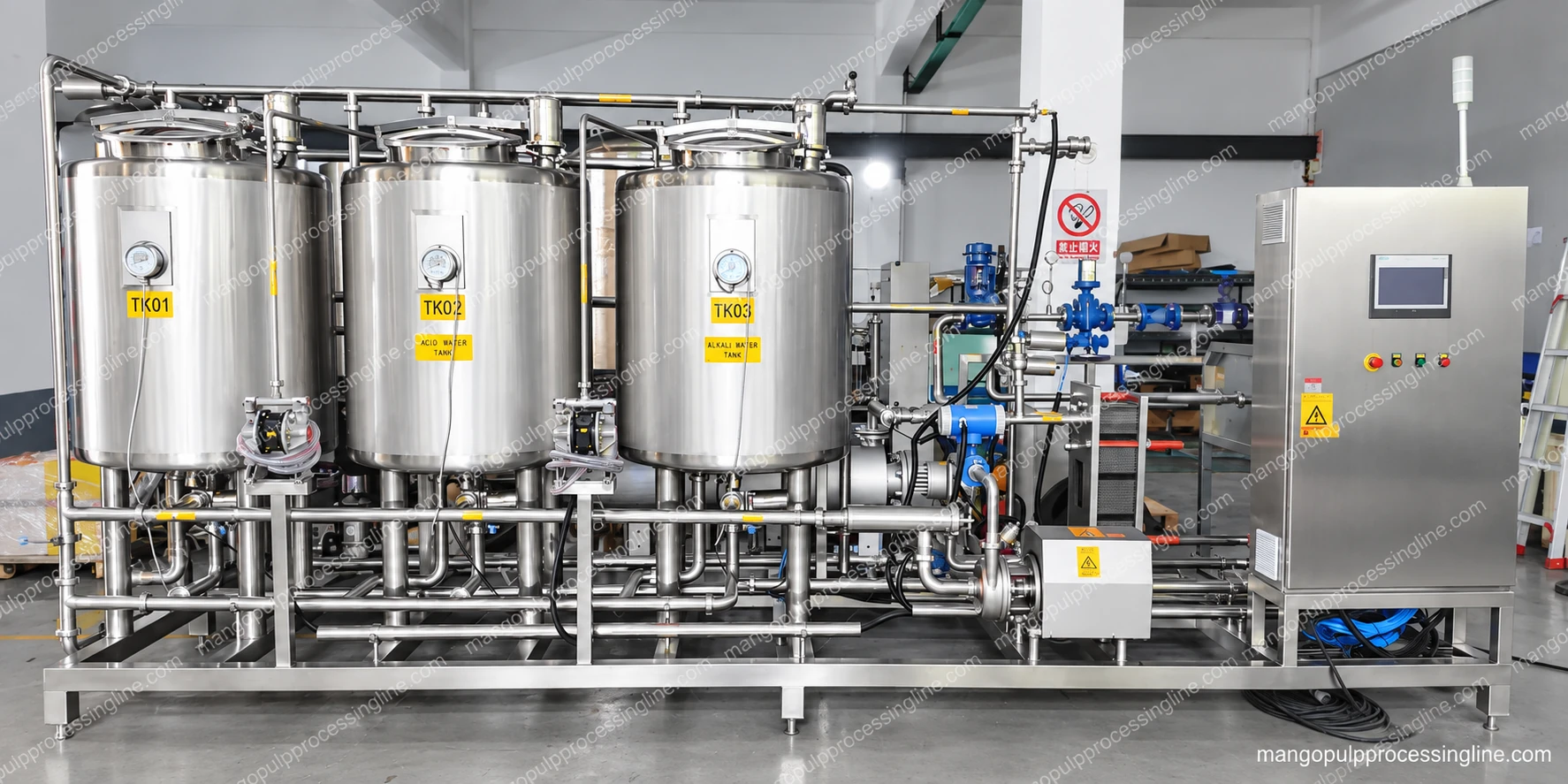
The CIP equipment catalogue includes cleaning-solution tanks, heating options, circulation and PLC control for suitable tanks, piping, thermal equipment and fillers. The selected skid supplies a cleaning circuit; the return, valves, tank-cleaning devices and drainage must make that circuit complete.
Define which machines and branches are cleaned together, how flow reaches each route and where displaced product and cleaning liquid go. Supply and return behaviour must suit the equipment. A tank connected to the header is not enough to show that every product-contact surface receives the required cleaning action.
Keep cleaning and sterilization as separate operations
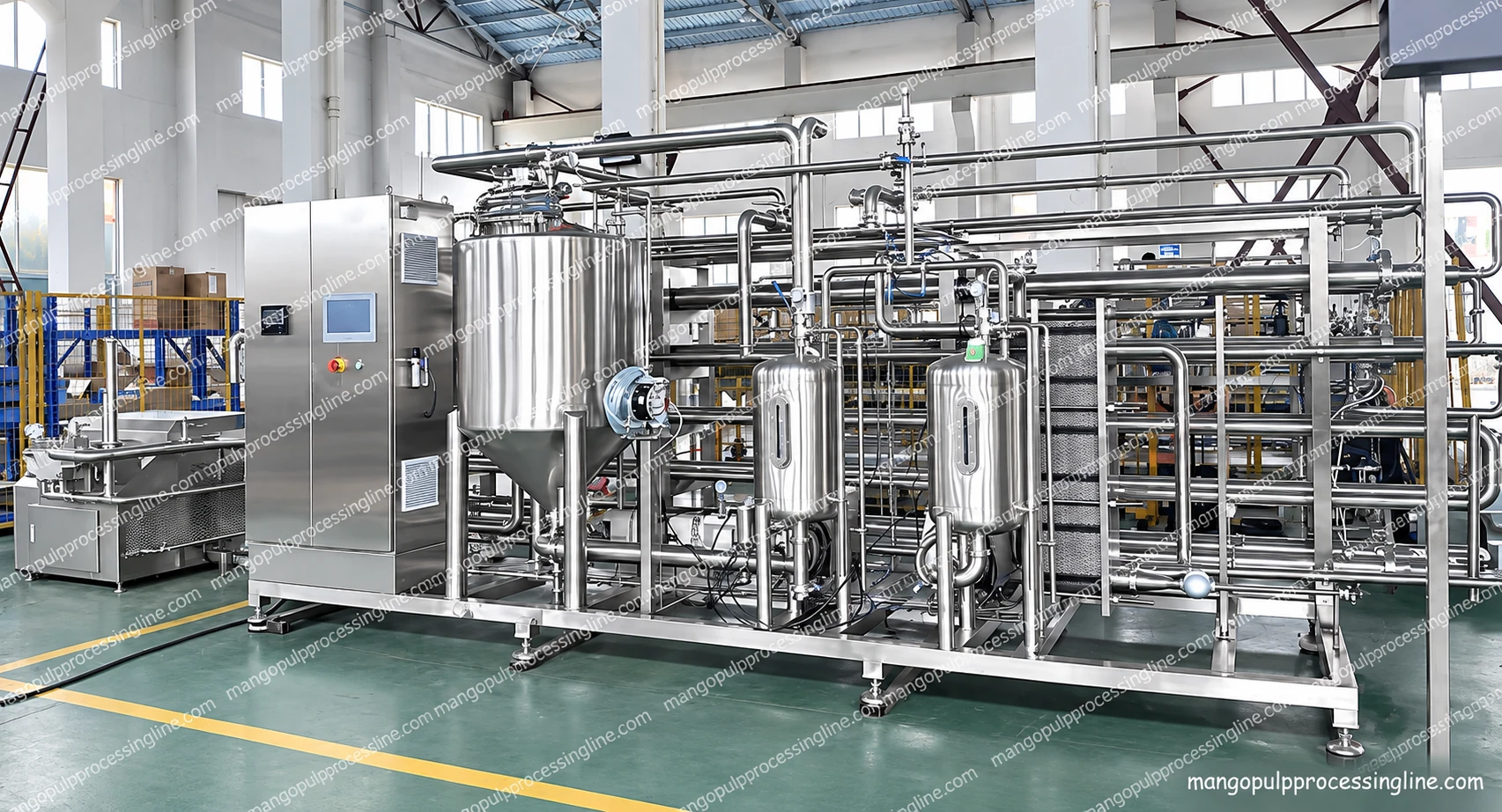
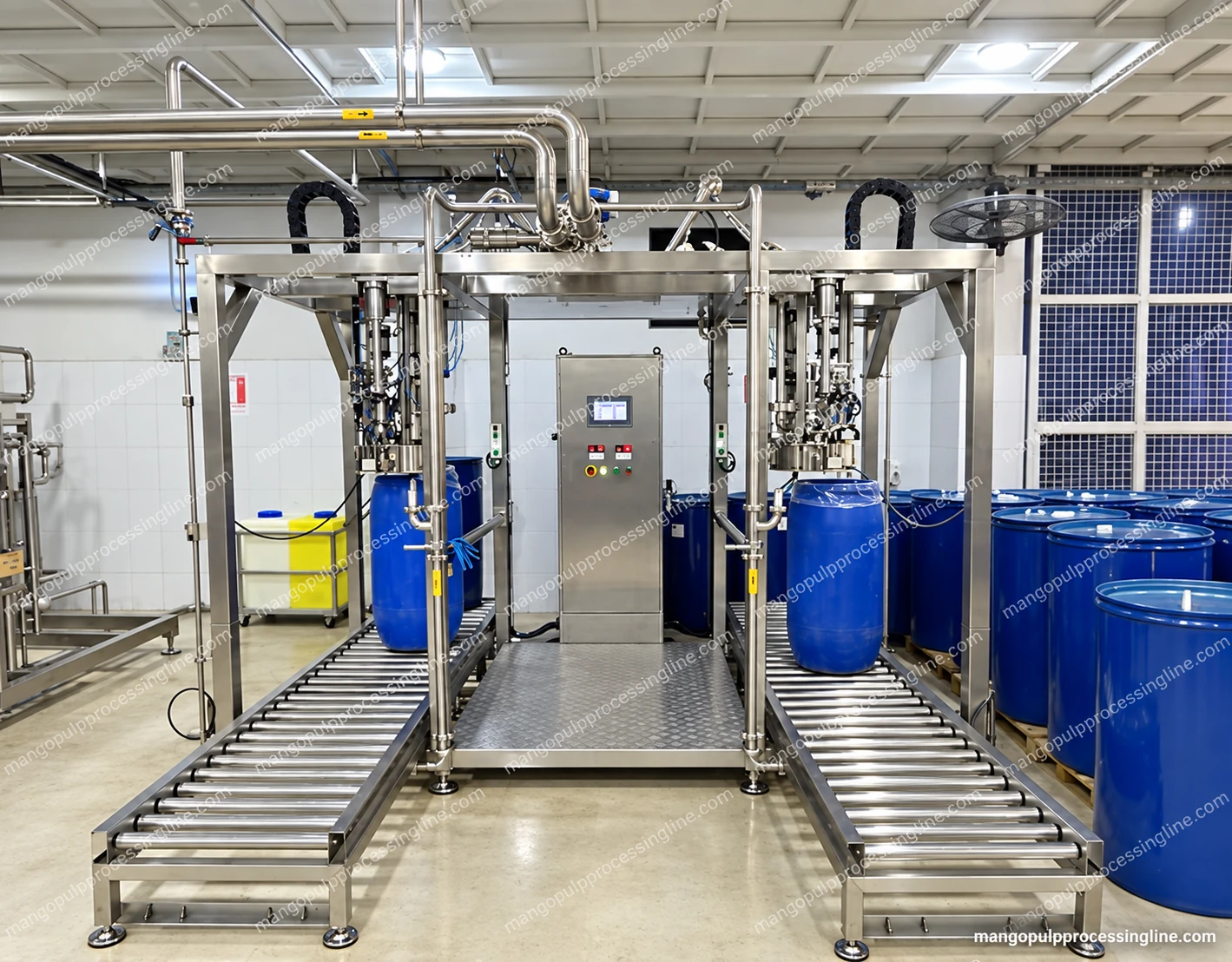
CIP removes product soil from a suitable closed circuit. SIP is a sterilization operation for an appropriately designed system. Aseptic treatment and filling need coordinated operating sequences for the relevant product path and filling interfaces. Cleaning conditions, sterilization conditions and the mango product’s thermal process are different specifications.
Handover should include a usable cleaning map
Choose cleaning chemicals and operating conditions for the actual residue, equipment materials and cleaning programme. There is no single time, temperature or concentration that can be assigned to every mango machine from a photograph or catalogue heading.
| Equipment area | Practical handover information |
|---|---|
| Open front end | Access points, isolation, debris removal and water/drain arrangements |
| Destoner and finisher | Parts to open or remove, handling method, inspection and reassembly instructions |
| Closed pulp circuits | Circuit boundaries, valve routes, cleaning supply/return and drainage |
| Thermal and filling system | Cleaning and sterilization sequences for the supplied configuration |
| Routine verification | Applicable inspection and verification methods, recorded conditions and release responsibilities |