Begin at a defined pulp handover point
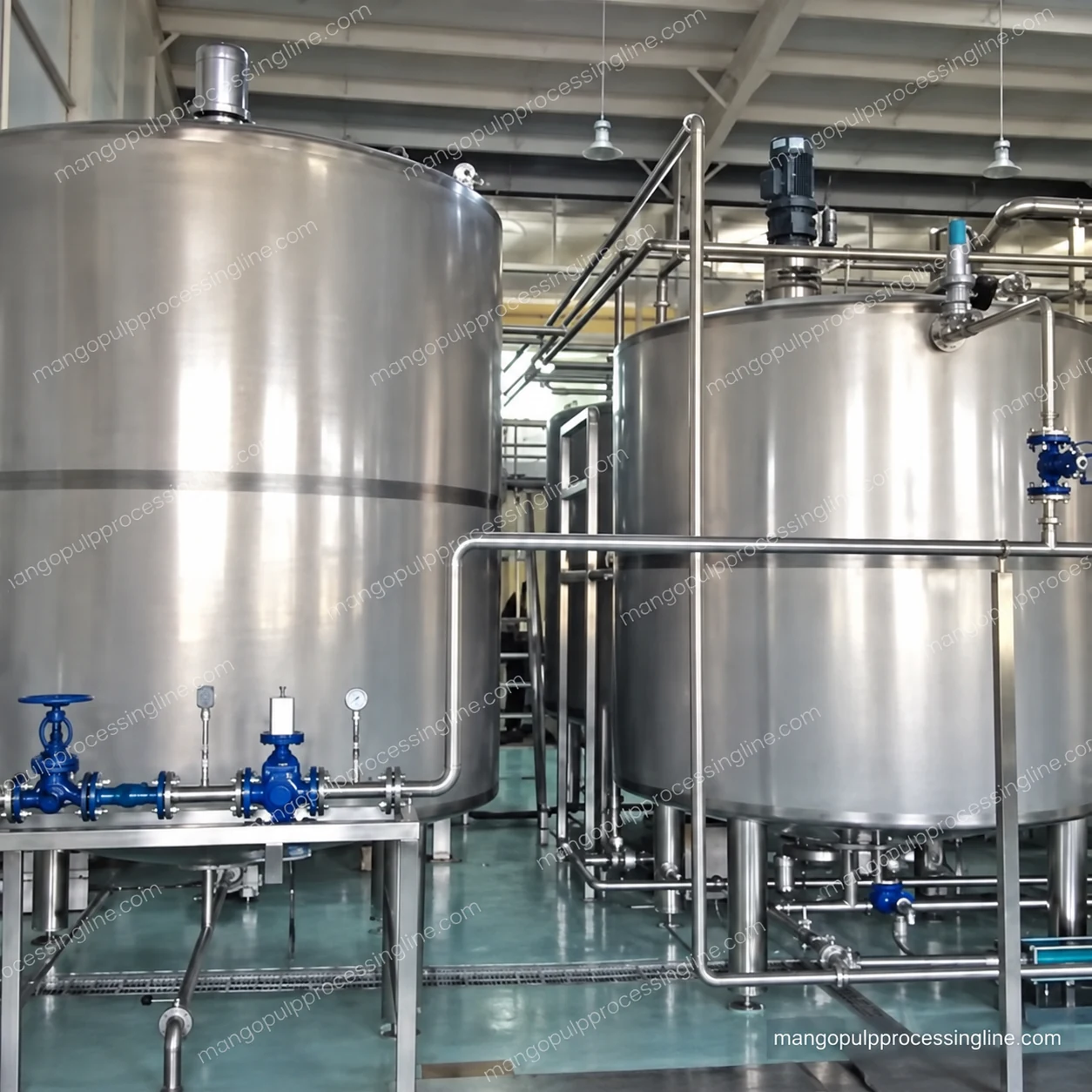
The feed should have the fibre profile, composition and temperature range expected by the thermal system. A buffer and product pump link the existing process to the new equipment. Their job is to supply the required flow under the inlet conditions of the treatment unit.
An existing extraction plant therefore needs an interface review, not an automatic replacement front end. Available product pressure, interruptions in feed, current cleaning connections and separation between untreated and treated product all influence the downstream arrangement.
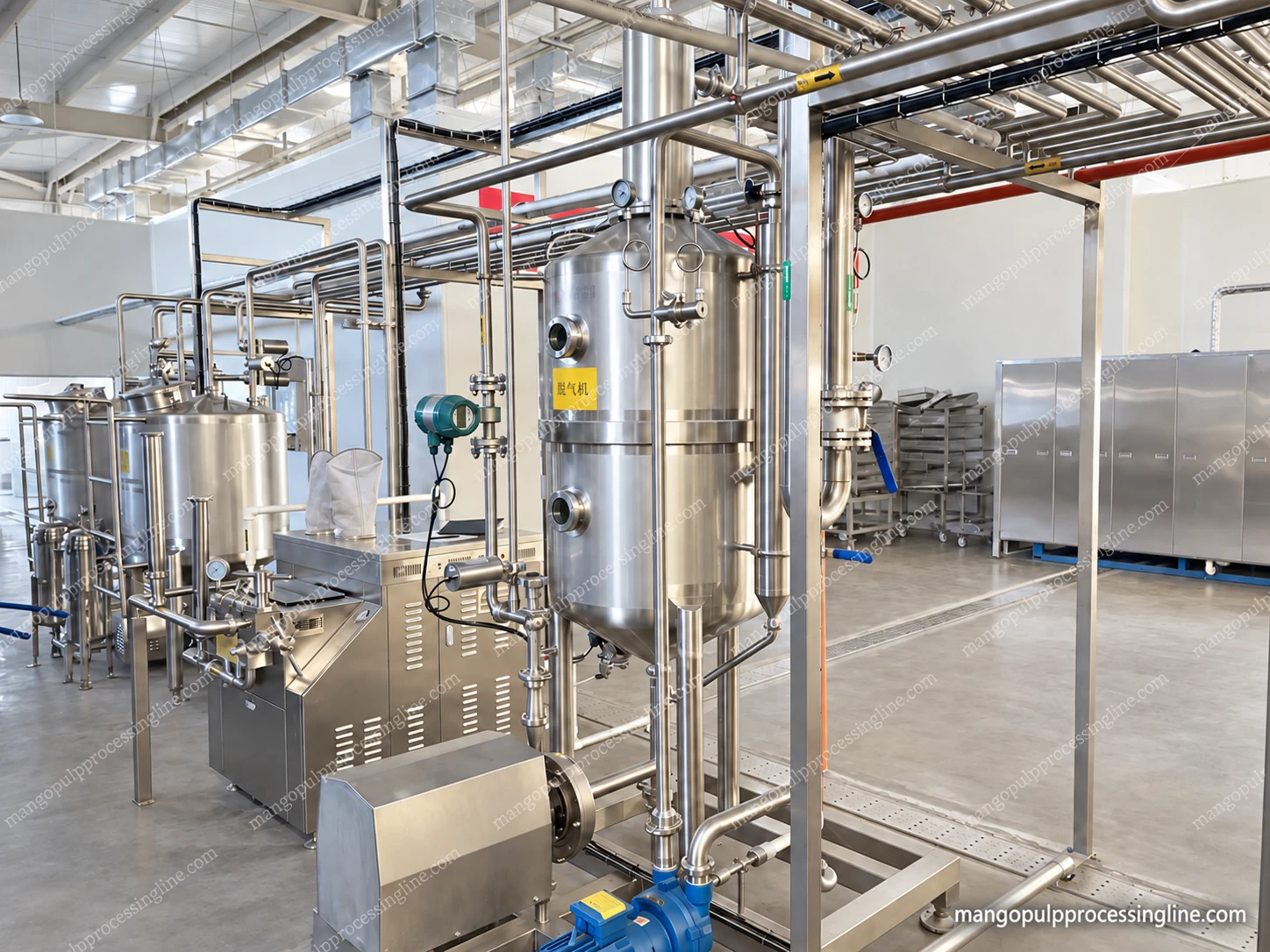
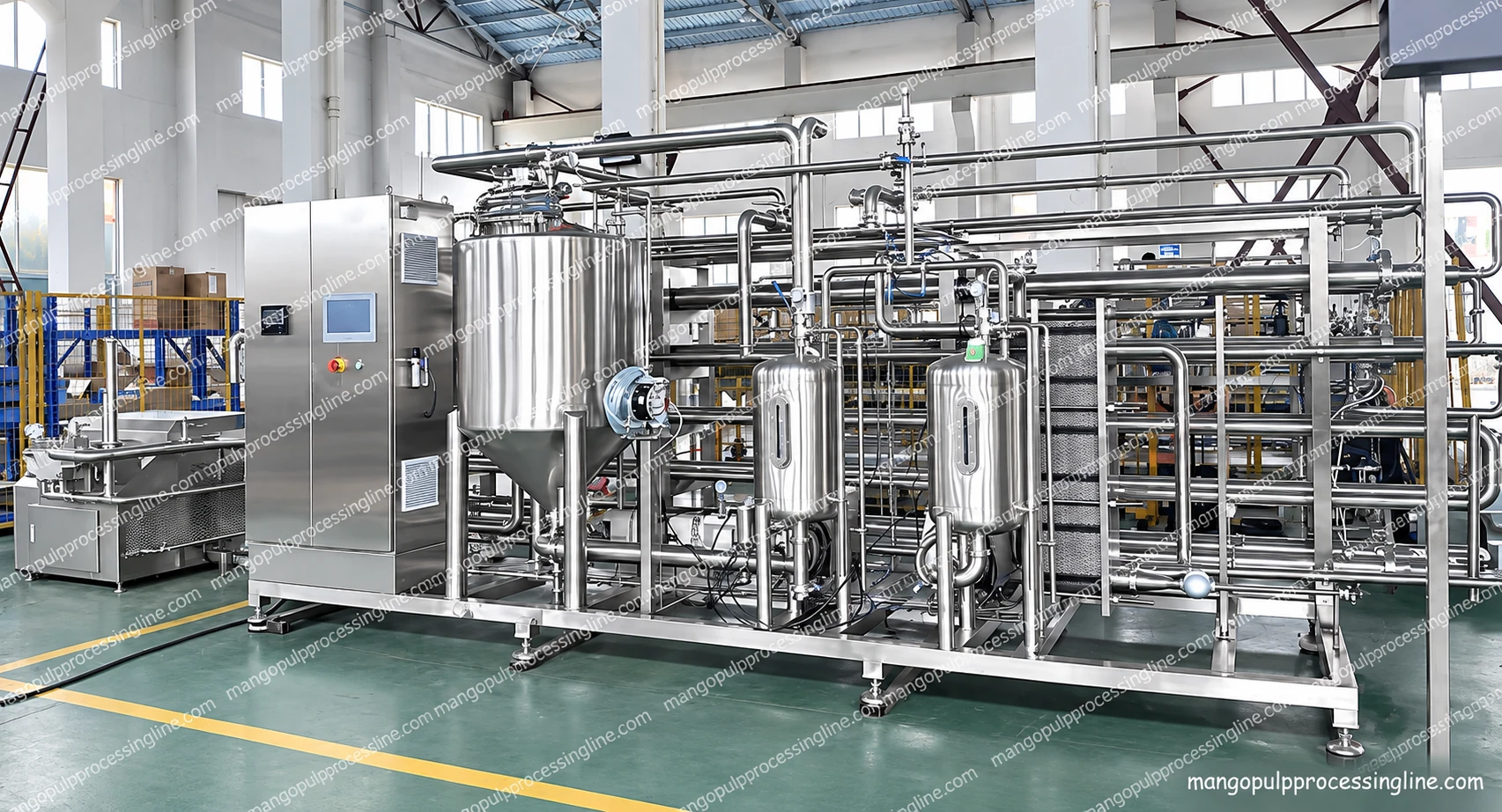
Heating, holding and cooling form one product path
The tube-in-tube system uses indirect heat exchange through concentric passages. The product is brought to its specified processing condition, held within the configured section and cooled before the downstream packaging step. Feed, utility and control arrangements must all correspond to the actual pulp flow.
A machine’s adjustable temperature or holding-time range describes equipment capability. It does not prescribe the process for every mango product. Product composition, relevant microbiological targets, flow behaviour and the package system determine the process that must be established and validated.
Match the bag, filling head and product supply
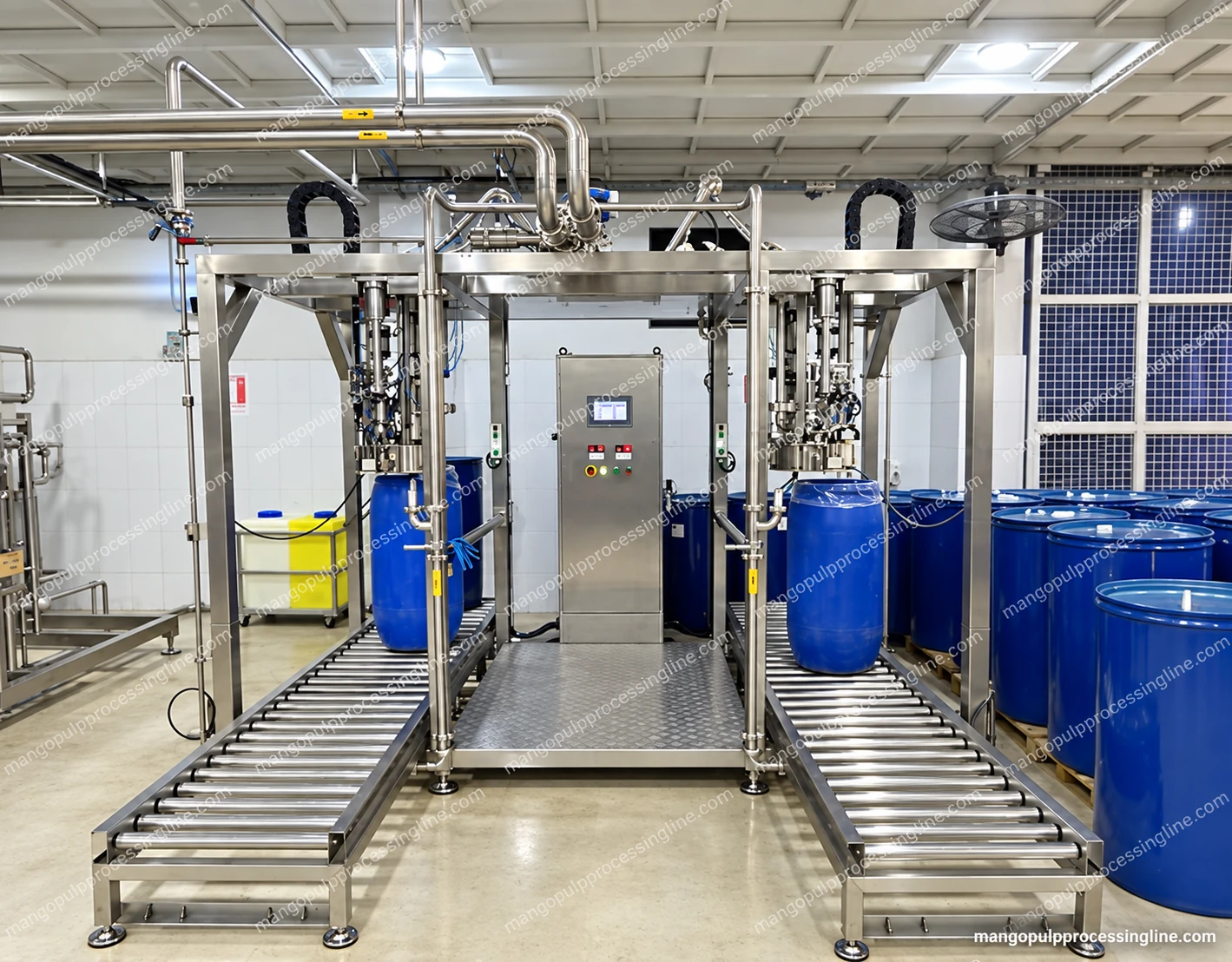
The displayed aseptic filler has two filling positions and drum roller lanes. Pack compatibility involves the bag and fitment, supporting container, required fill quantity and product conditions. A family-level bag-volume range is not a statement that every format fits every filling head.
Bag presentation, connection, filling, closure and container handling determine the practical cycle. The treatment system and filler must also accommodate interruptions and operating changeovers without treating an unconfirmed product path as ready for filling.
Include the return paths and operating sequences
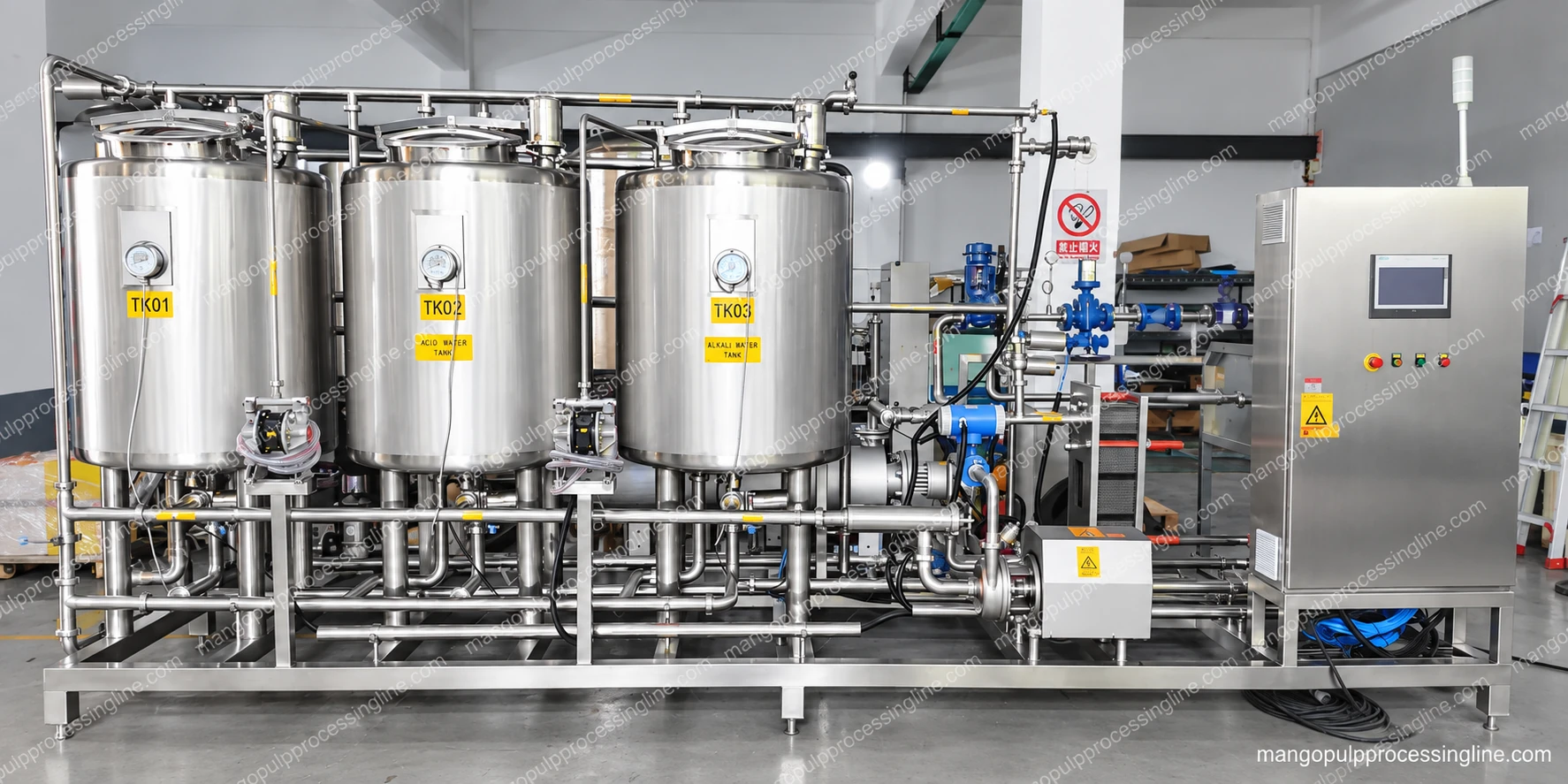
The equipment scope extends beyond the two main machines. Product piping, valves, instruments, cleaning supply and return, and the connections used for sterilization must be coordinated. CIP cleaning and SIP sterilization have different purposes; neither is established by fitting a control screen alone.
Before production, the operating sequence must address start-up, transition to product, process interruptions, end-of-run recovery and cleaning. The equipment schedule should state which valves, instruments, utilities and connecting pipework are supplied with each assembly.
Choose the downstream scope without rebuilding the whole plant
Single-strength pulp and concentrate can both lead to aseptic bags when the treatment and filler are configured for the product. Start an enquiry with the material you already produce and the package you want to fill. Feed-rate measurements, a layout or a bag specification can be added as the interfaces are developed.