Bag volume does not define filling compatibility
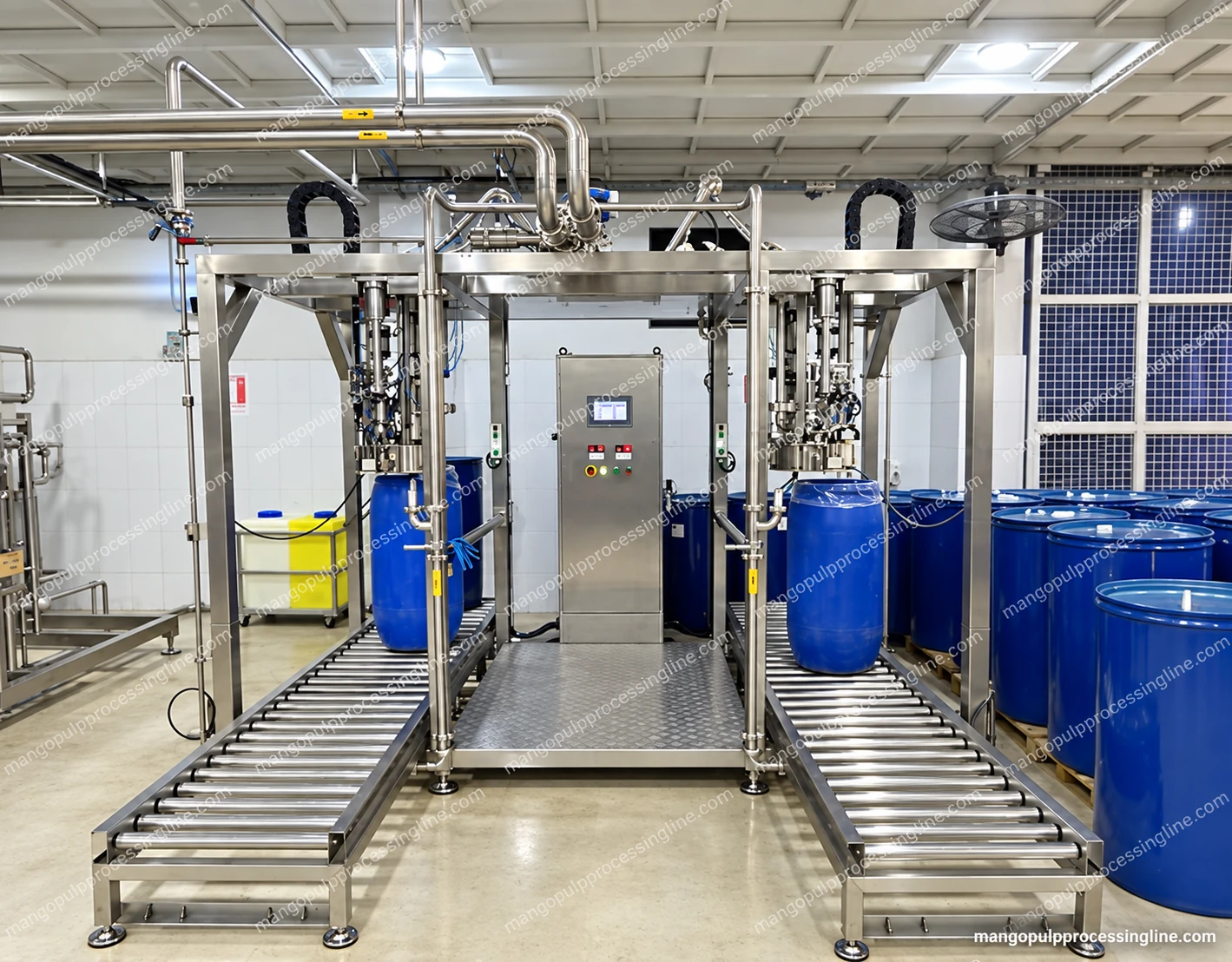
Identify the proposed bag specification, fitment and supporting container before selecting the head and handling arrangement. The reported Watani project uses 20 L and 200–220 L aseptic bags. Those reported formats are project context, not proof that an unspecified bag or fitment will work with every filler configuration.
Include the incoming pulp flow, temperature, solids, viscosity assessment and any permitted particles. Describe bag presentation, drum movement and the required working access. Head count alone does not establish an achieved line output.
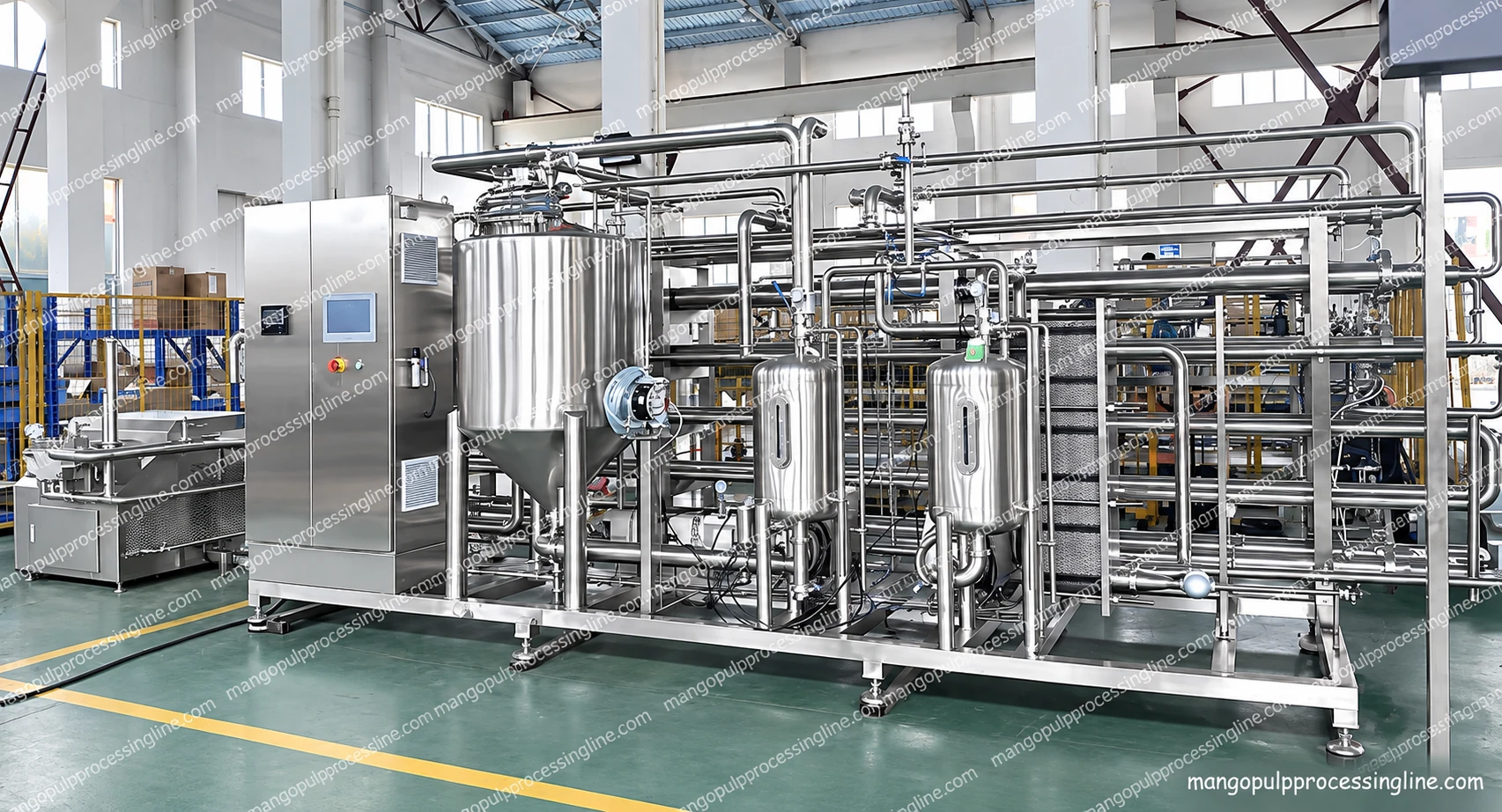
Treat the thermal section and filler as a connected scope
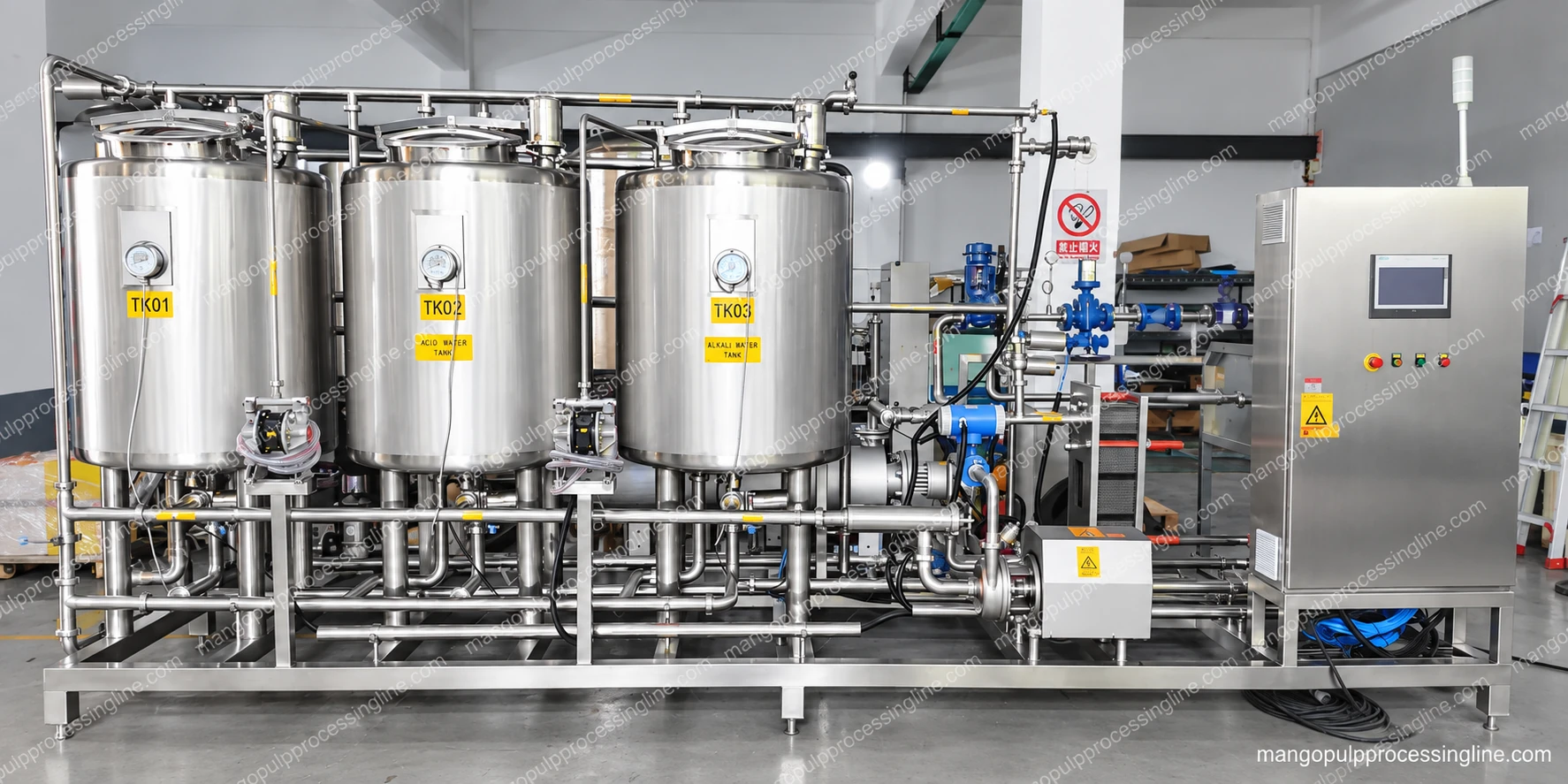
Define where treated product reaches the filler and who supplies and verifies that connection. Startup, changeover, cleaning and sterilization require coordinated responsibilities. A filler photograph cannot establish a validated thermal schedule, sterile boundary or package-integrity result.
| Selection input | Confirmation required |
|---|---|
| Bag, fitment and supporting container | Head compatibility, handling and supplier documentation |
| Treated product at the handover | Flow, temperature and product properties |
| Treatment-to-filler connection | Transfer, control and cleaning/sterilization boundaries |
| Acceptance and release | Agreed process validation and package-integrity evidence |
Select a new downstream package or retain existing equipment
An existing mango plant may need treatment and filling together, or an interface upgrade around useful equipment already installed. List what remains in service and the precise handover points. No shelf-life result, bag-consumption rate or independent aseptic acceptance record is disclosed for the Watani project.