Control air removal in a contained vessel
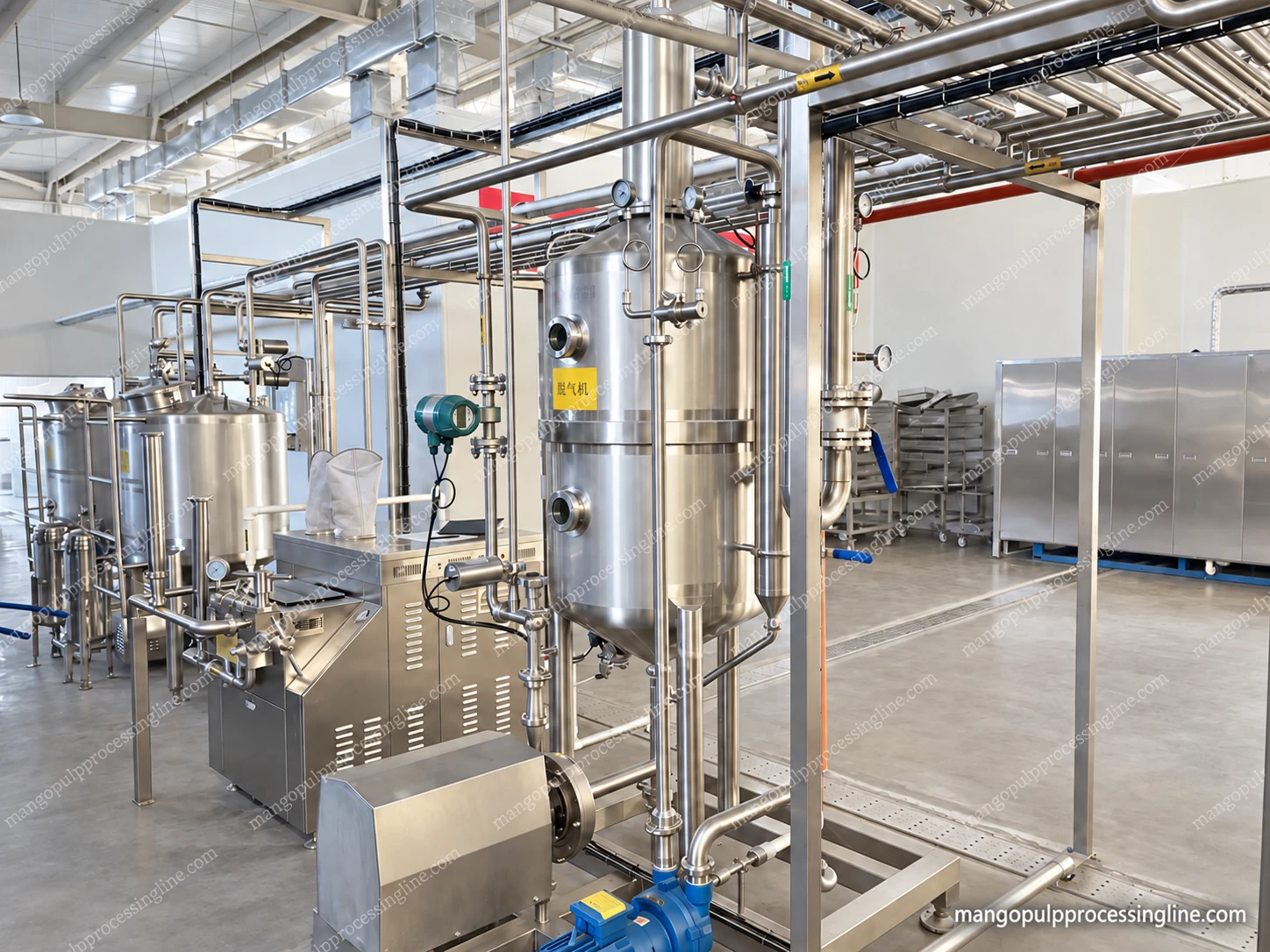
The deaerator receives pulp into a vessel operated under reduced pressure. Air released from the product is removed through the vacuum system while the product leaves through the discharge route. The operating conditions are selected to manage the pulp without excessive foaming or unwanted product carryover.
The photographed unit has a vertical vessel, sight windows, pressure indication and connected piping. The windows provide observation points, while the lower outlet links the vessel to the product-transfer section. The exact internal distribution arrangement follows the selected machine.
Viscosity and temperature belong in the same specification
The flow presented to a deaerator can change after refining or concentration. A thicker pulp may behave differently from a lower-solids product at the same nominal flow. Temperature also affects the way the product behaves under vacuum.
Selection therefore considers pulp condition, feed stability, foaming, the required vacuum arrangement and the downstream discharge duty together. Any numerical oxygen-removal target needs a defined measurement method and operating conditions; the vessel photograph alone cannot establish a removal percentage.
- Identify whether the feed is single-strength pulp or concentrated pulp.
- Coordinate the feed temperature with the upstream and downstream process.
- Size the vacuum and discharge arrangements as part of the same operating duty.
Place the stage where it serves the product
The mango process schematic includes deaeration within the pulp route. Its position is coordinated with the chosen concentration and thermal-processing arrangement. It is an option within that route rather than a substitute for refining or a universal requirement for every pulp product.
Include the vessel and the connected routes in cleaning
The cleaning arrangement covers the product-contact vessel, inlet distribution, discharge and connected product piping. Vacuum-side protection and any product carryover need their own inspection points, so cleaning scope should follow the actual circuit.
Provide access to the sight windows, seals, valves and pump assembly. Check the specified safe venting and isolation procedure before opening a vessel that has operated under vacuum.
Common questions
Will a deaerator replace thermal processing?
No. Vacuum deaeration addresses air in the pulp. The required heat treatment and packaging controls remain separate process duties.