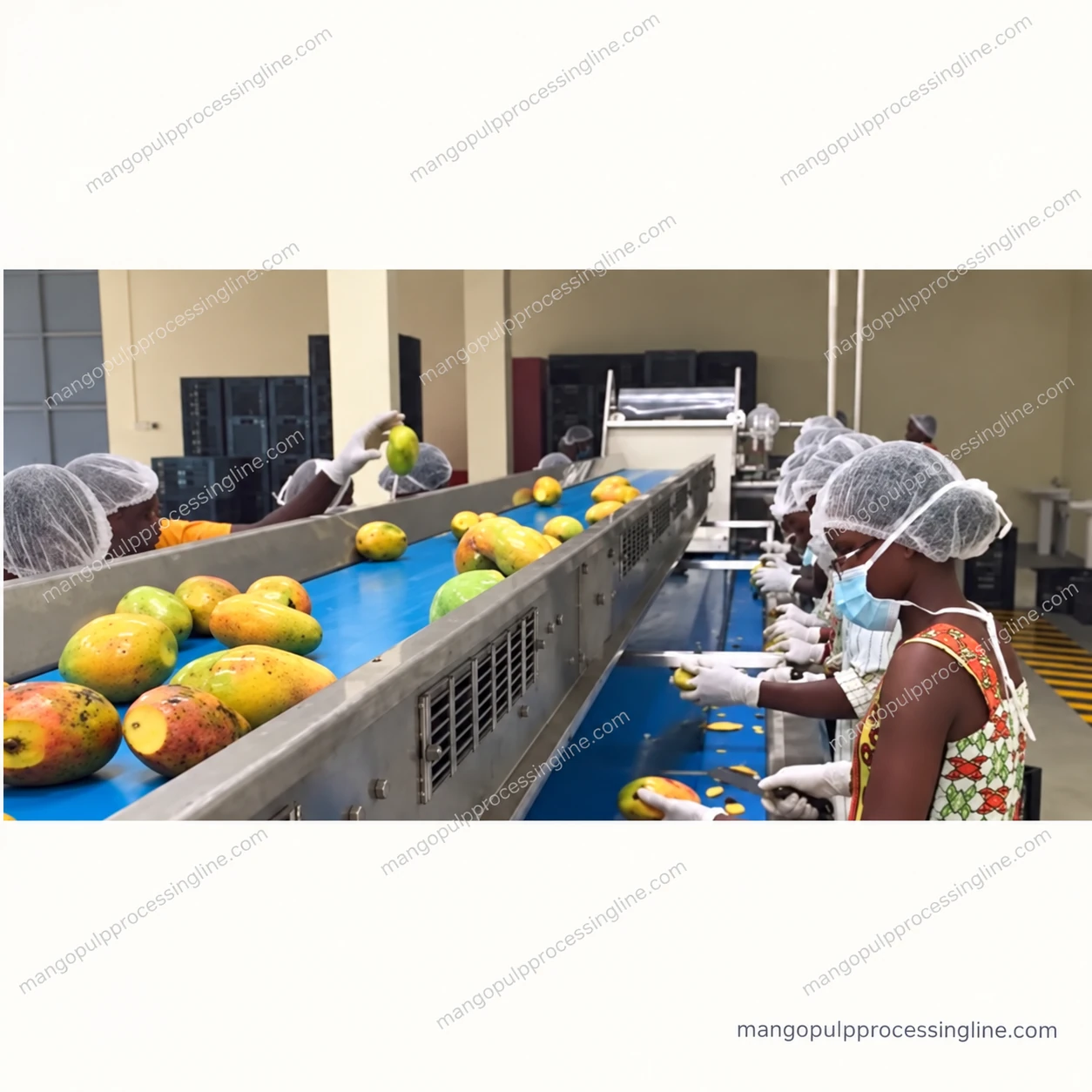
A fruit path that operators can work beside
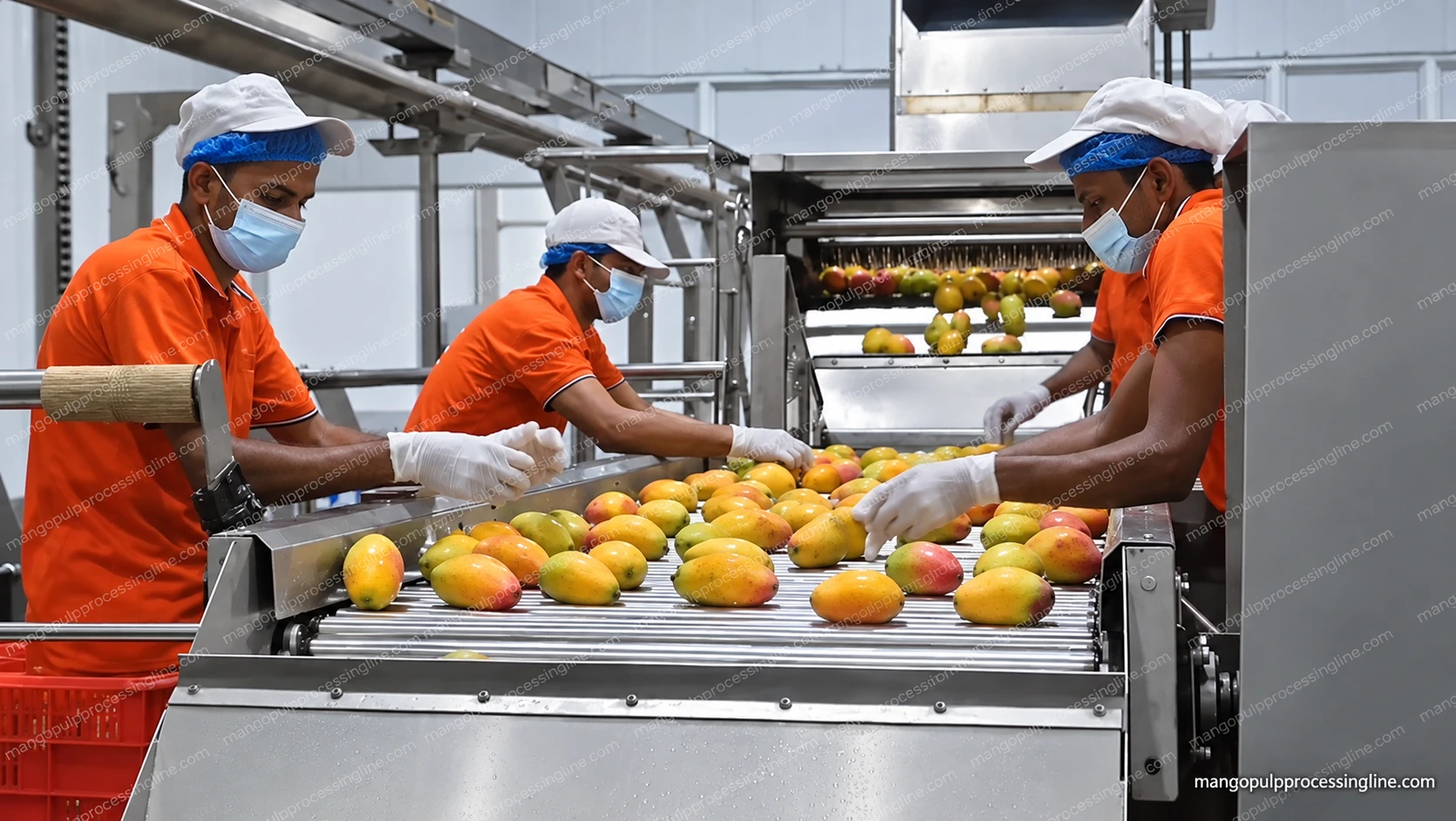
The conveyor presents whole fruit through a picking zone with access from the sides. Operators inspect the passing mangoes and remove unsuitable pieces before the accepted fruit continues to the next process.
The working width, conveyor speed and fruit loading affect how much of the fruit surface can be inspected. A fast, crowded belt can limit the useful inspection time even when its mechanical handling capacity is adequate. The line layout therefore accommodates the people, the fruit path and the rejected-material route.
Match the conveying surface and the work area
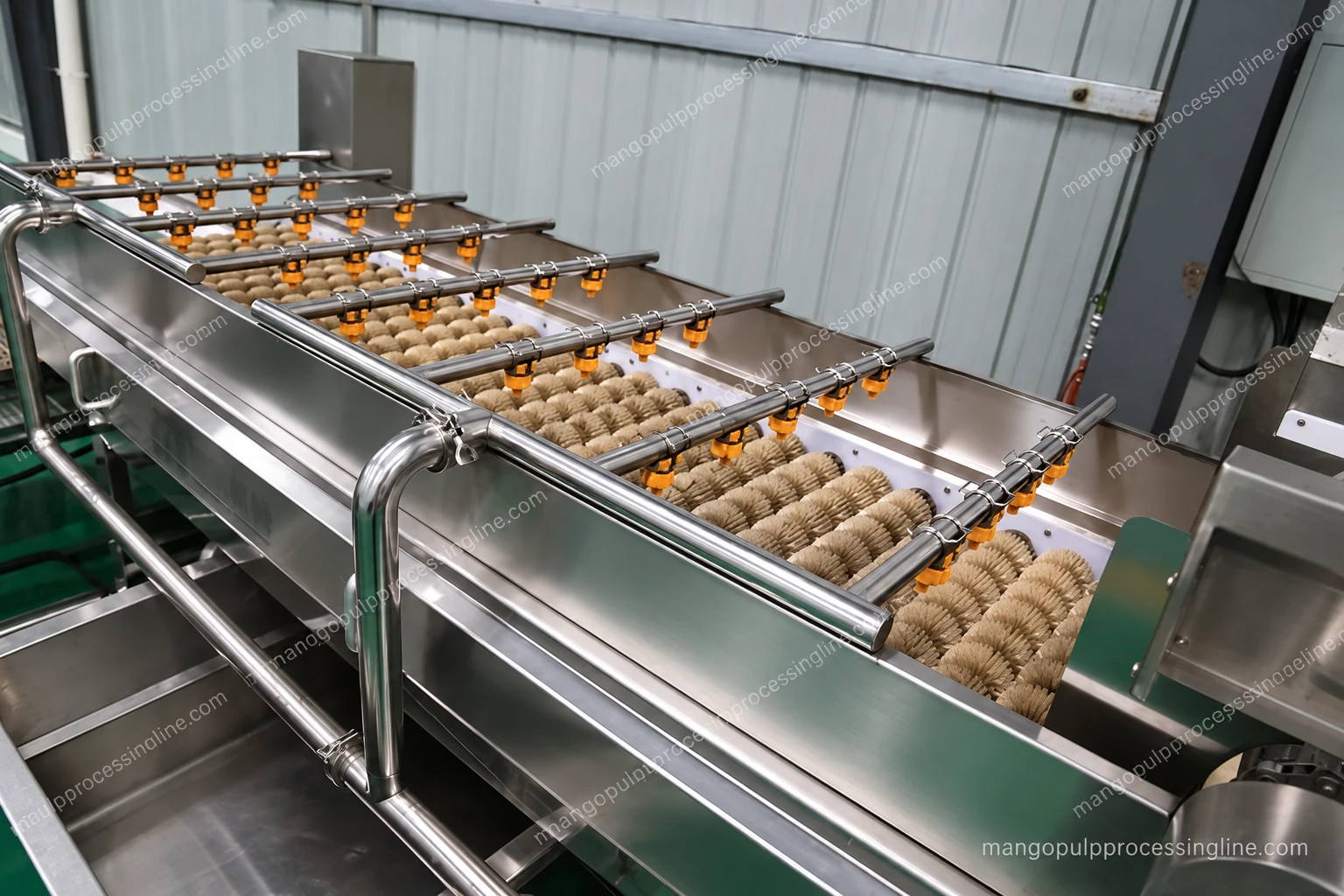
The equipment catalogue includes sorting-table configurations with project-dependent width. The manual belt scene shown here and the roller sorting scene on the mango project represent different conveying arrangements; their dimensions and capacities are not interchangeable.
| Interface | What is coordinated |
|---|---|
| Infeed | Washer outlet, drainage and the spread of fruit entering the picking area |
| Picking zone | Conveying surface, working height, operator positions and access aisles |
| Reject handling | A defined place to remove and collect rejected fruit |
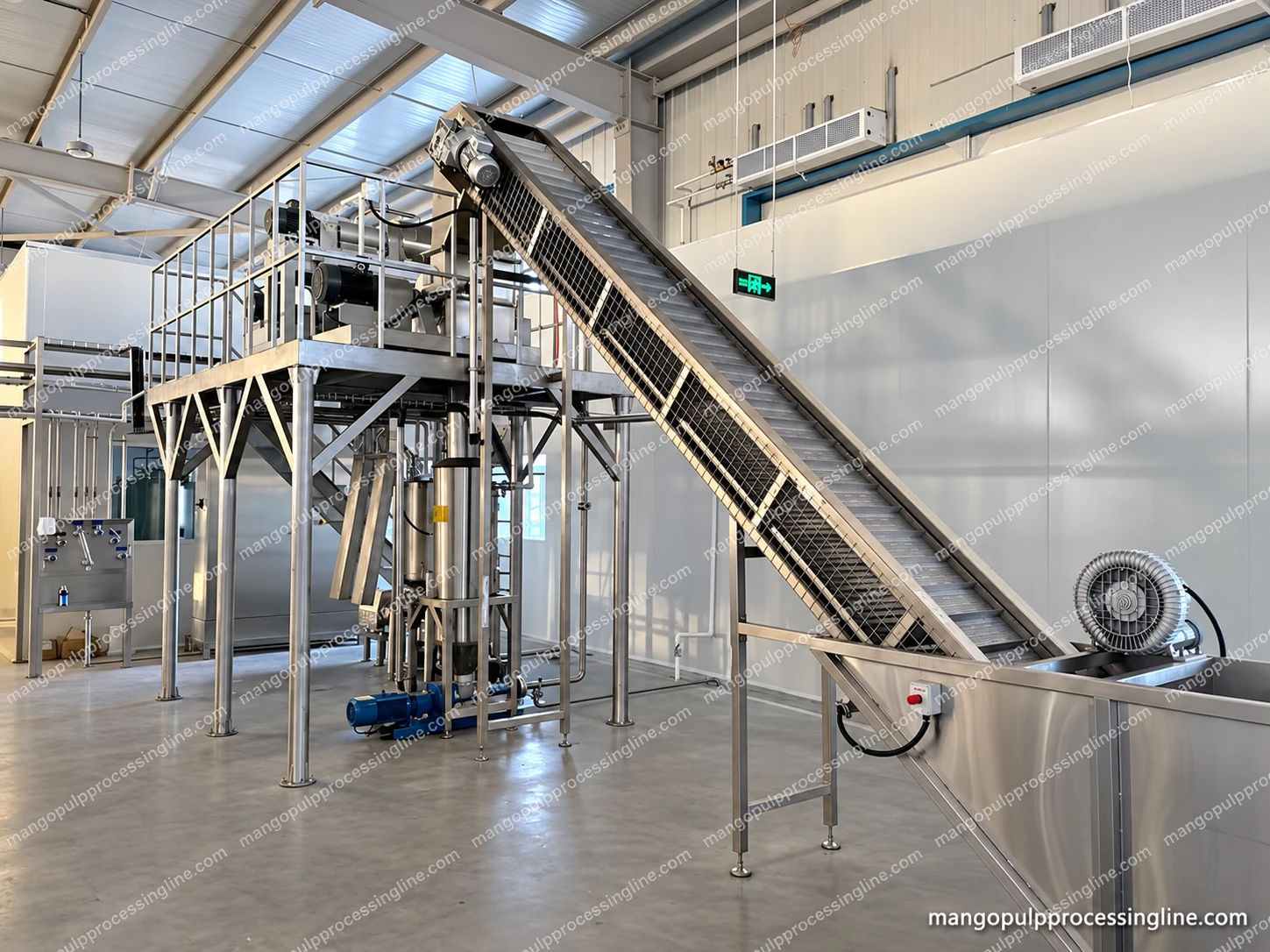
| Discharge | Transfer height and controlled feed to the elevator or destoner |
| Controls and guarding | Accessible stopping arrangements and guarded moving interfaces |
Cleaning reaches beyond the top surface
Open conveyor cleaning includes the conveying surface, side guides, supports beneath the fruit path and the places where rejected fruit is handled. Inspect the transfer gaps for trapped fruit and residue.
Access and drainage are planned into the work area. Moving surfaces and drives are isolated before hands-on cleaning or maintenance, following the instructions for the supplied conveyor.
A working stage within the mango front end
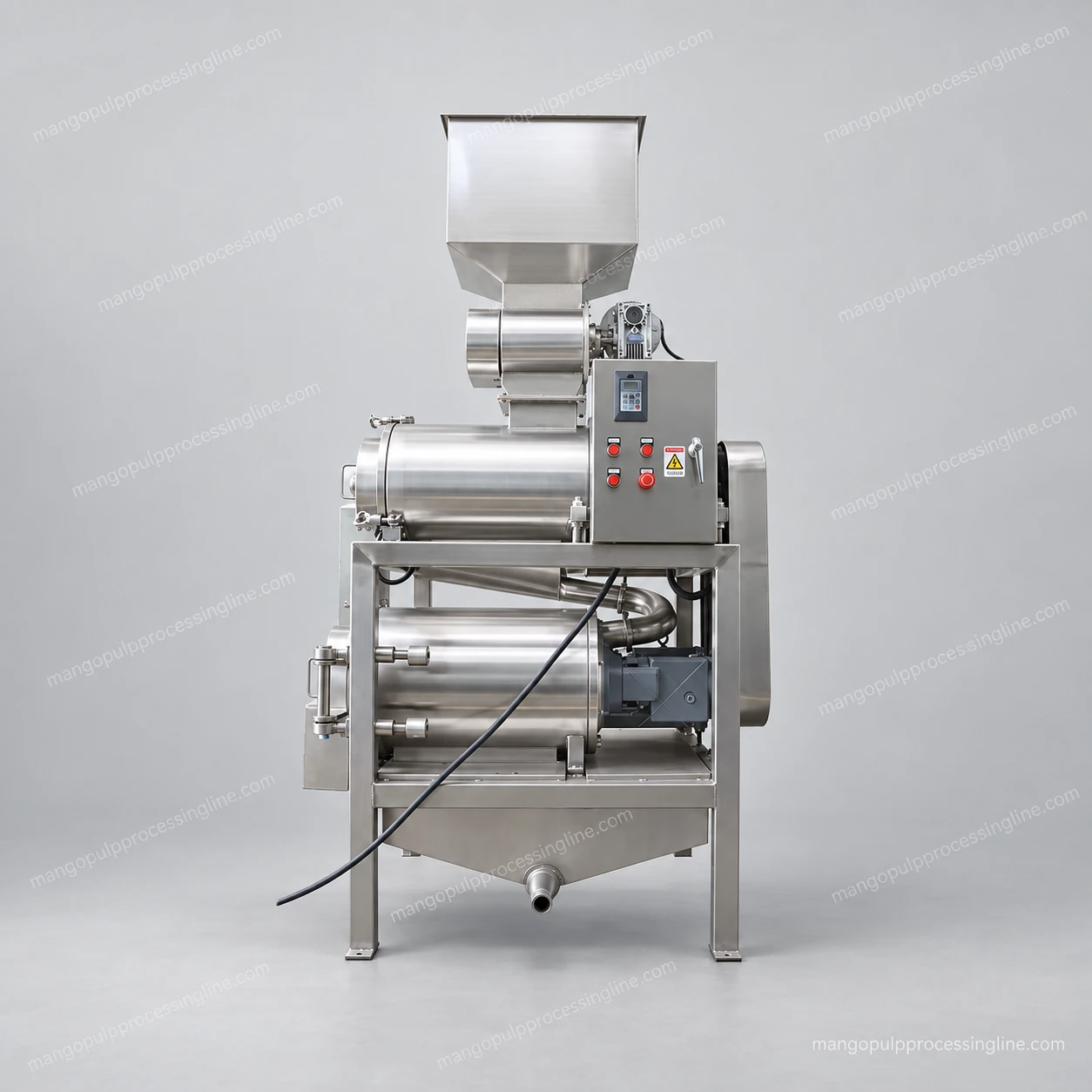
The manufacturer’s Watani project report includes washing and sorting before mango destoning and double-stage refining. That sequence keeps fruit inspection ahead of the point where whole fruit becomes a mixed pulp stream.
Common questions
Is the conveyor an automatic optical sorter?
No. The shown arrangements use people to inspect and select the fruit. No camera classification or automatic defect-rejection performance is specified for these conveyors.