Circulate the pulp through a dedicated evaporation system
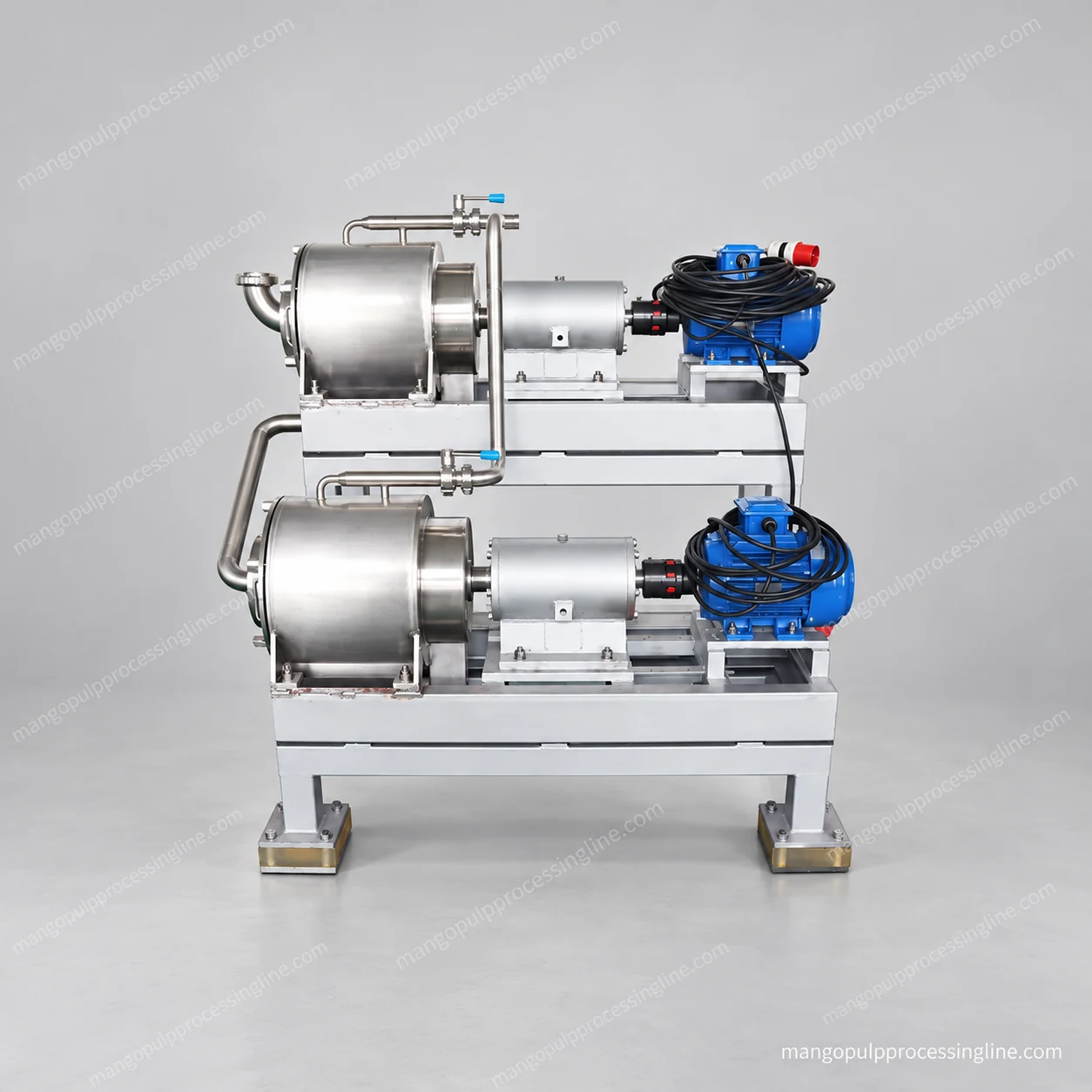
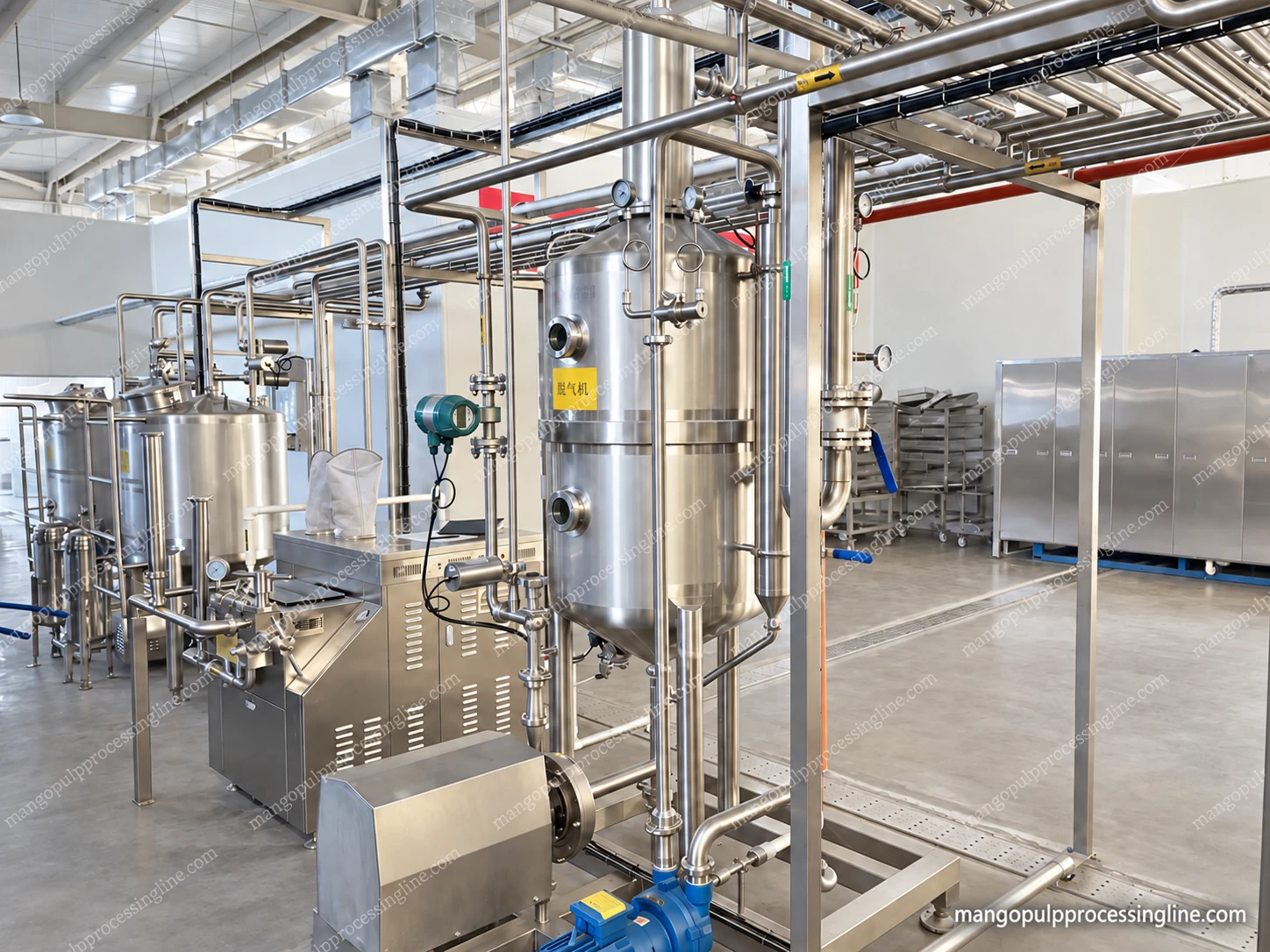
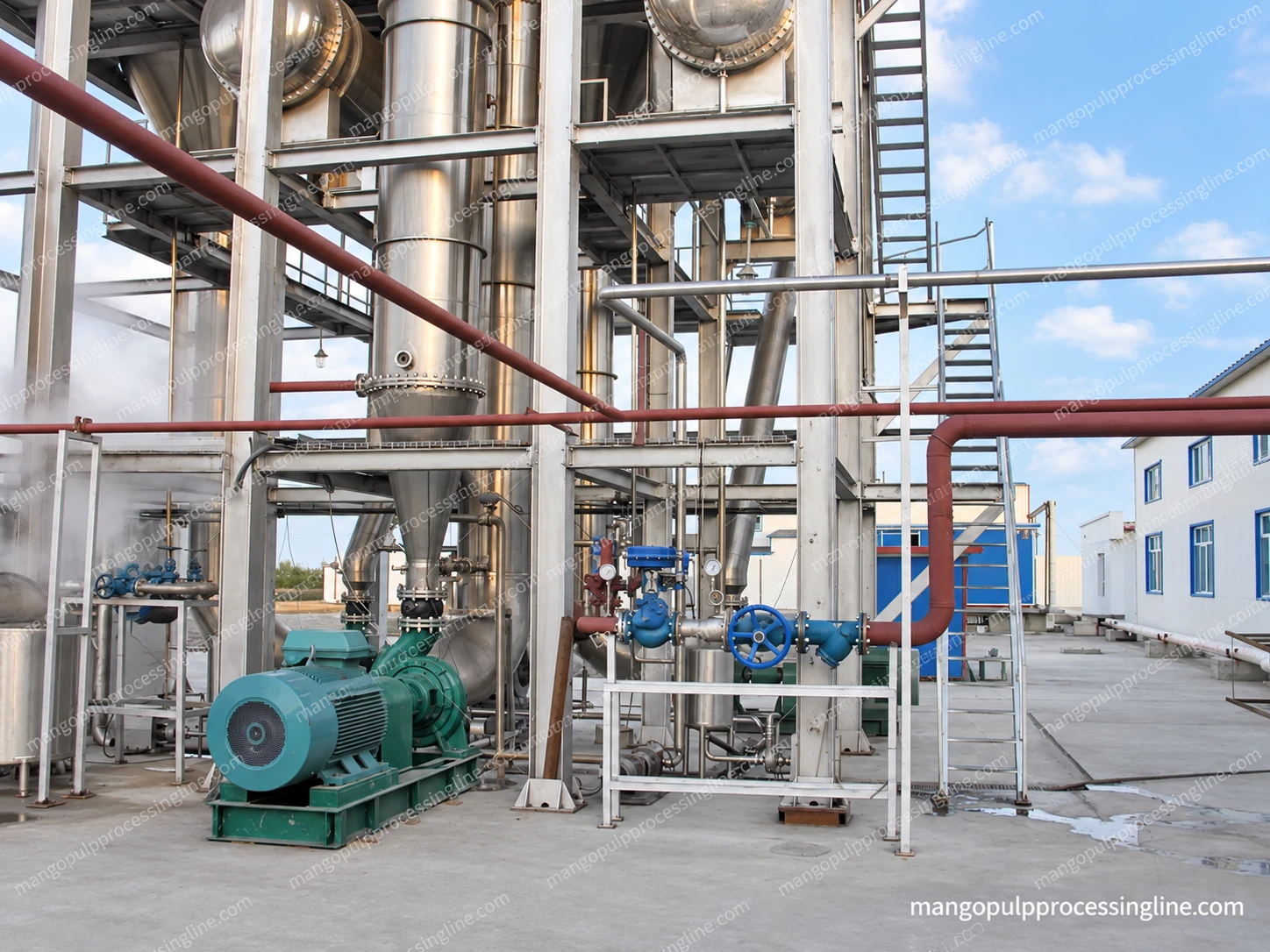
The equipment catalogue lists forced-circulation evaporators for fruit puree and other viscous or high-solids foods. A circulation pump moves the product through the heating and separation circuit as water is removed. The circulation duty and product-discharge duty serve different purposes and need to be considered separately.
The manufacturer offers single-, double- and multiple-effect configurations with project-specific evaporation capacity. The choice changes utility connections, equipment arrangement and operating control. It does not establish a universal energy-saving percentage or a finished mango concentration.
Specify both the incoming pulp and the concentrated product
The evaporator receives the pulp left after extraction and refining, not the gross mass of harvested fruit. Its duty depends on feed rate and composition, the intended concentration and the material removed as vapour. Changes in fibre and viscosity also affect circulation, heat transfer and discharge.
Soluble-solids readings are useful product measurements, but fibre-containing puree also contains insoluble material. A refractometer reading alone should not be used as a complete mass balance. Use a consistent solids definition and account for sampling, retained product and process losses when comparing measured flows.
| Information | Why it changes the configuration |
|---|---|
| Feed rate, temperature and solids definition | Sets the starting thermal and material duty |
| Desired concentrate and its measured flow behaviour | Affects circulation, transfer and downstream heat treatment |
| Seasonal pulp and fibre variation | Changes the operating range that the system must accommodate |
| Required production window and cleaning arrangement | Connects nominal equipment duty to scheduled output |
Build around the feed and concentrate interfaces
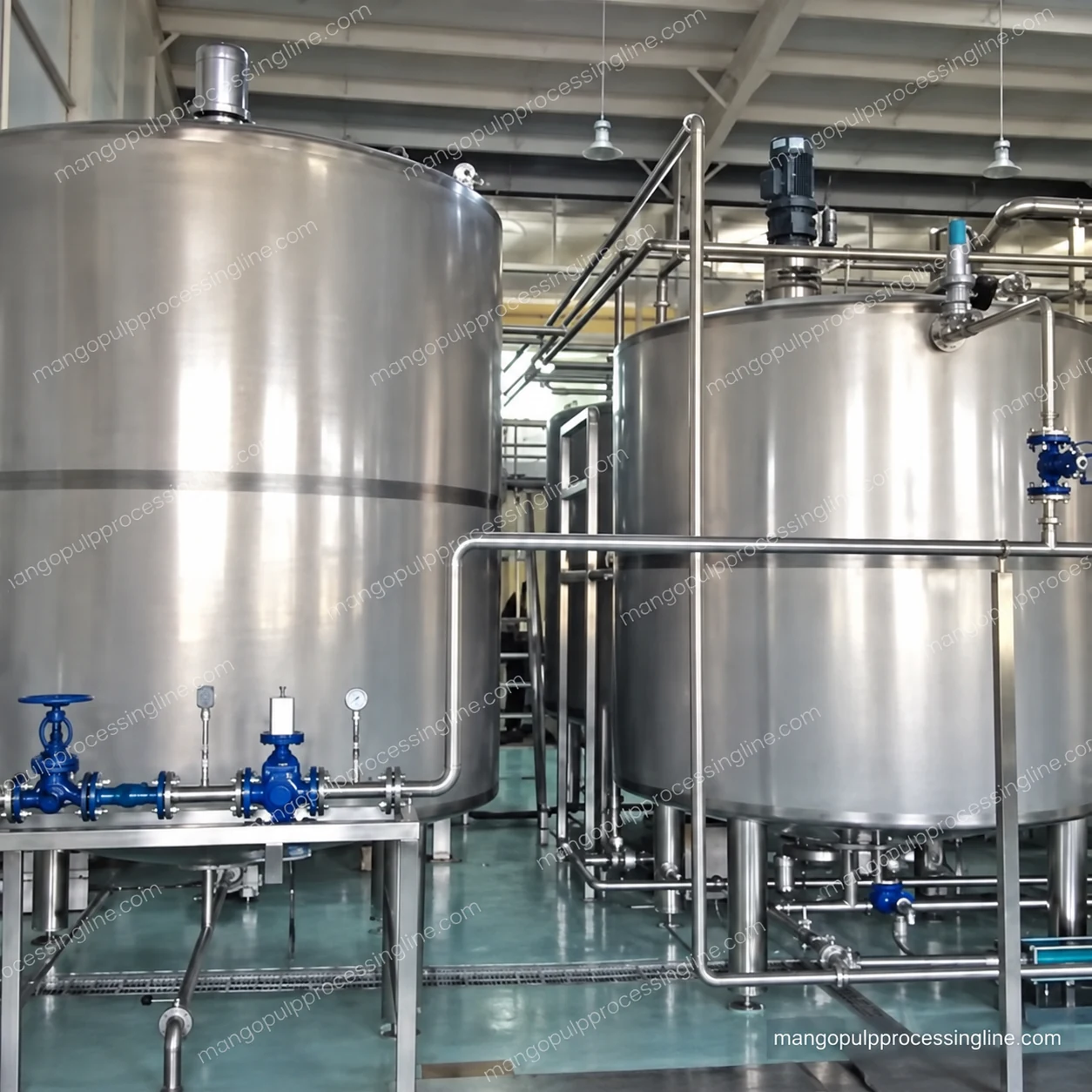
The upstream finisher establishes the material entering concentration. Buffering and transfer then maintain feed to the evaporation section. At the discharge, the pump, pipework and downstream thermal unit must be selected for the concentrated product rather than copied from the dilute-pulp section.
Steam or another specified thermal-energy system supplies heat; the evaporation arrangement also requires coordinated vapour, cooling and condensate handling. The utility schedule should separate installed connections from expected operating consumption at the agreed product duty.
Concentration and aseptic filling can be combined
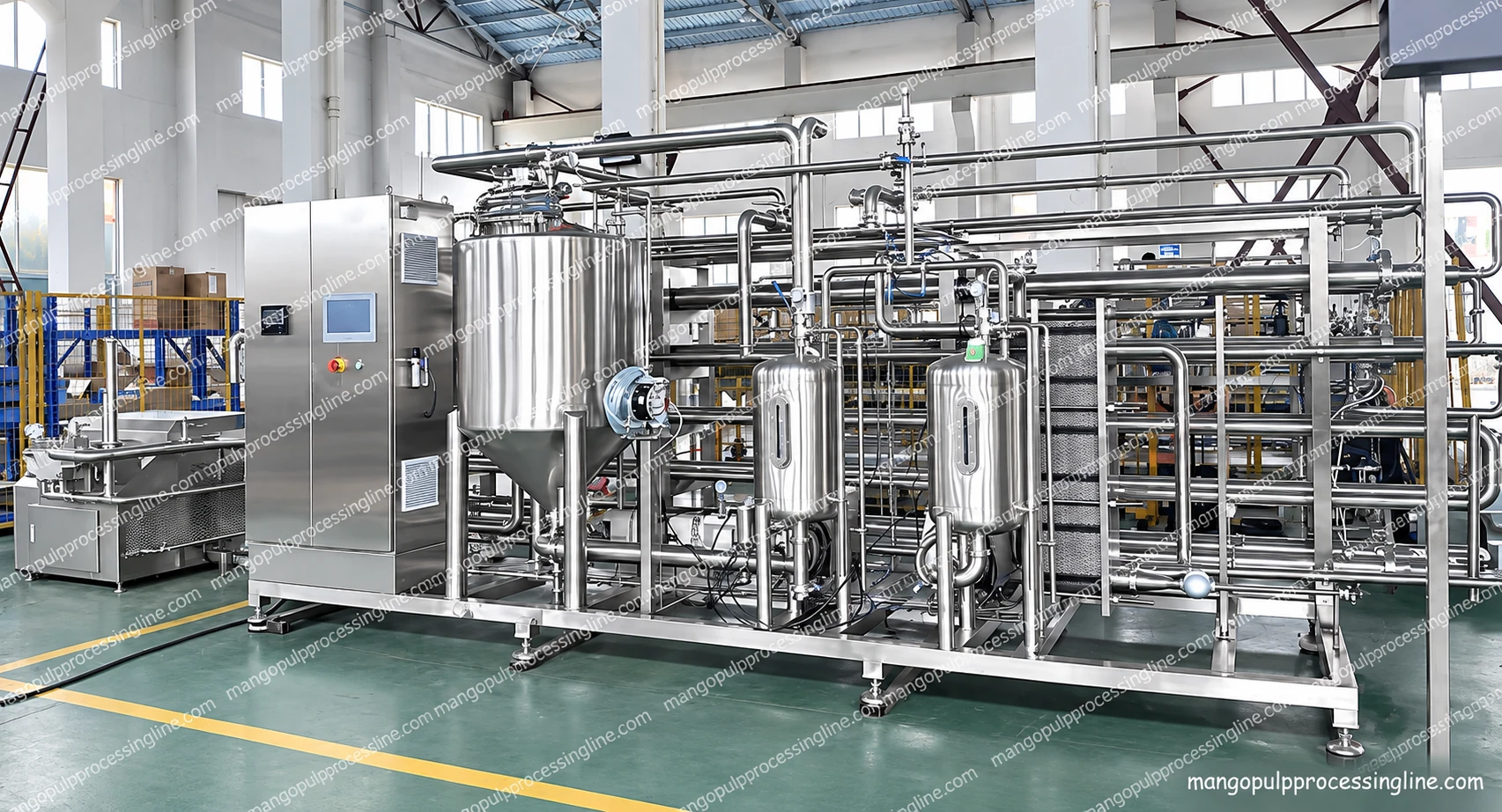
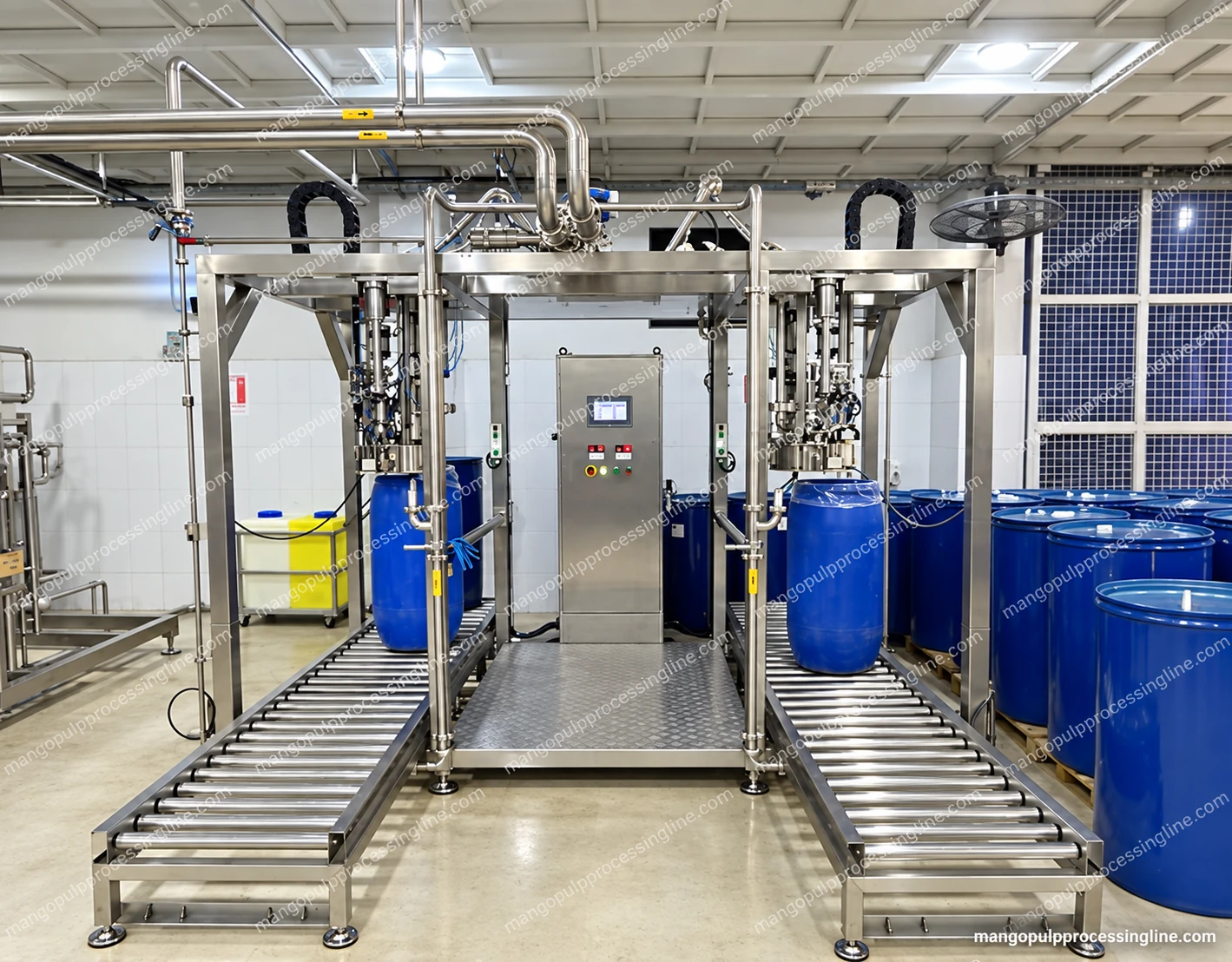
A concentrated pulp can continue to a configured thermal and aseptic-bag system. Concentration itself is not the finished package treatment. The thermal and filling sections need the concentrate’s actual product conditions and the selected bag format.
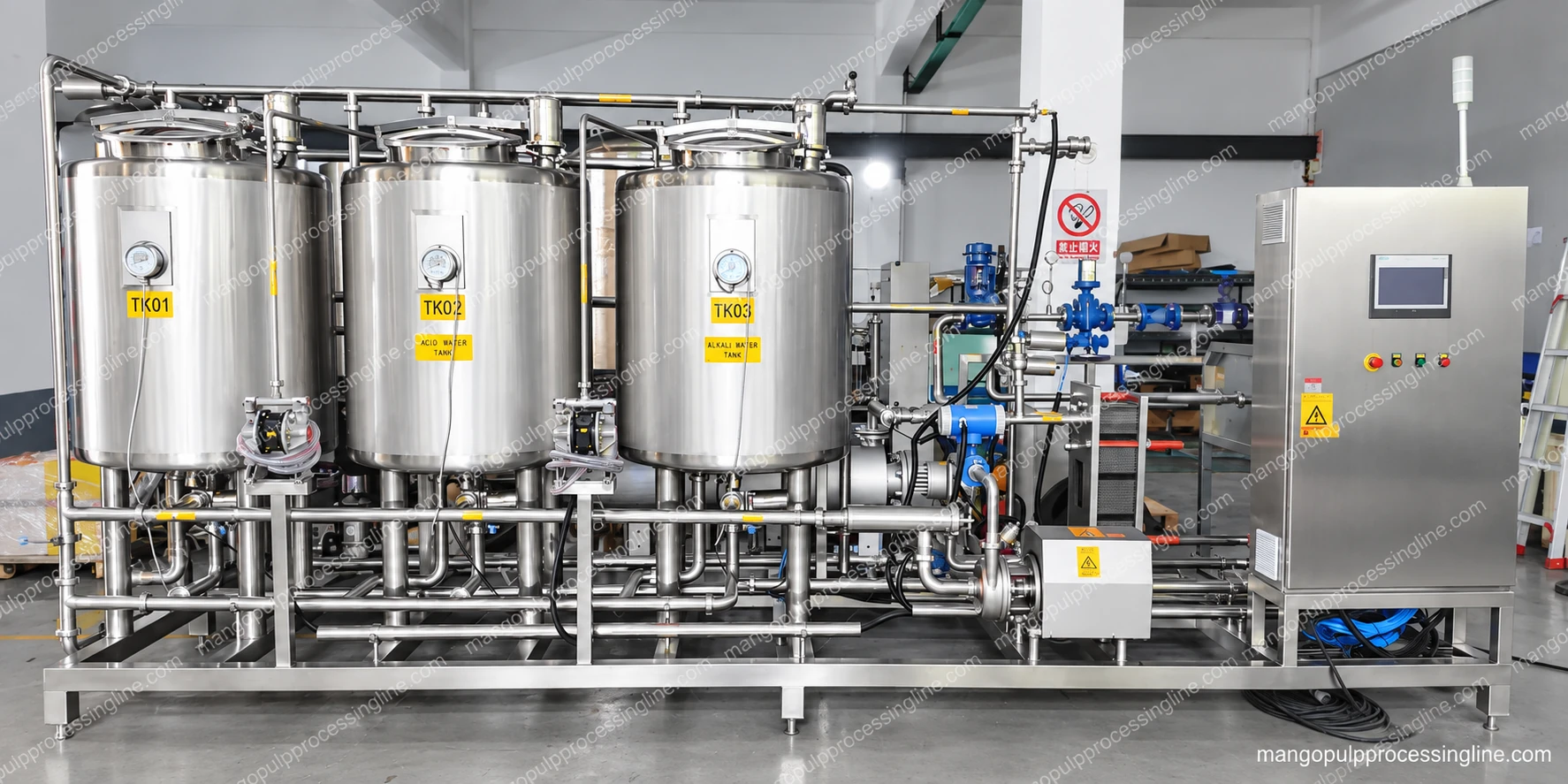
Product residues in an evaporation circuit differ from dirt on whole-fruit handling equipment. Cleaning circuits must cover the circulation loop, heat-transfer surfaces, separator and discharge path, with adequate supply, return and drainage. Catalogue CIP compatibility does not replace a product-specific cleaning programme.
Add concentration to a new or existing pulp line
For an extension, the existing pulp specification and available utilities are more useful than the fresh-fruit nameplate alone. Share the present feed, the intended concentrate and any space restrictions; the upstream extraction line can remain outside the new equipment scope.