Separate arrival condition from ripeness
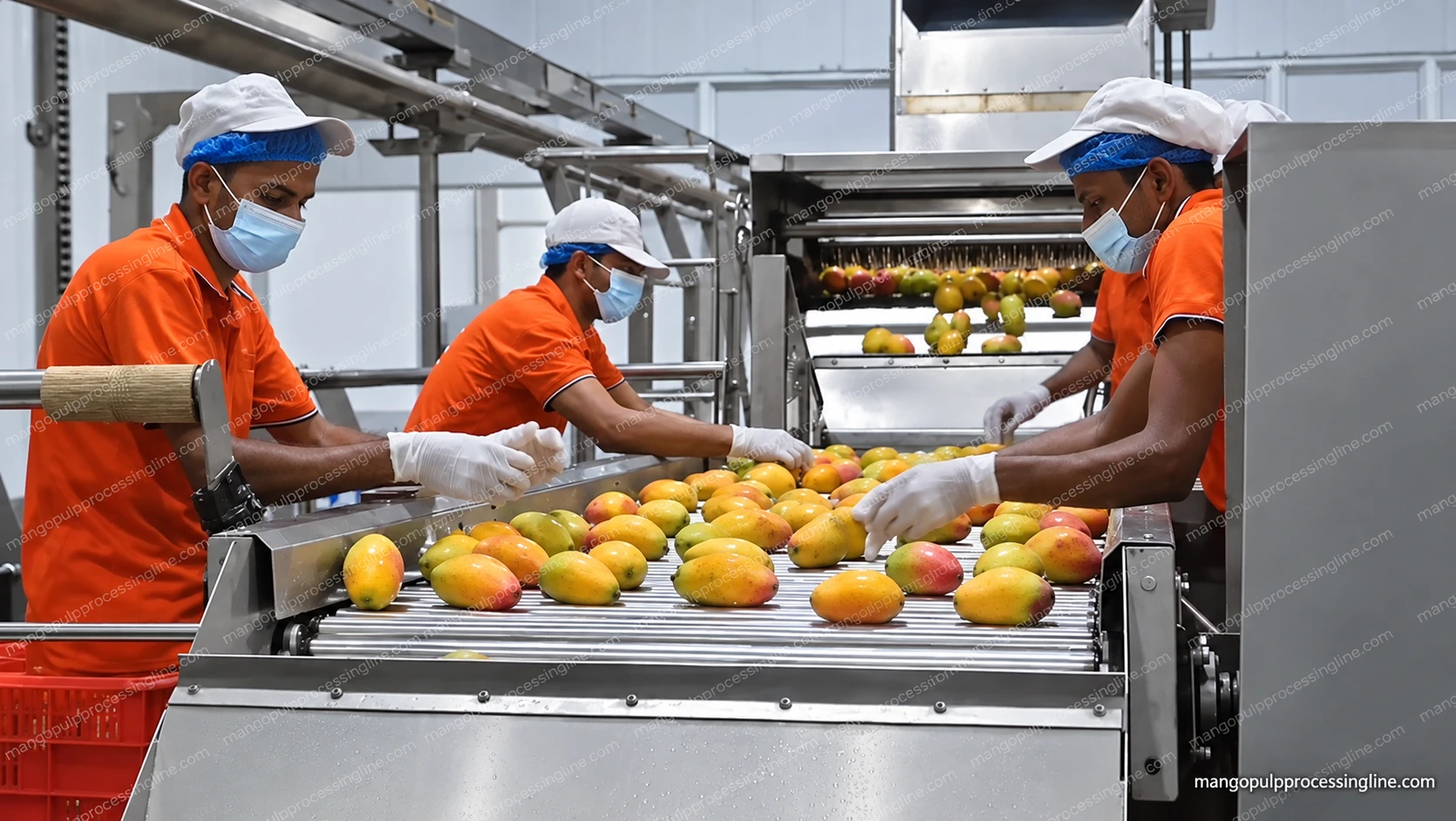
A delivery can be sound but immature, mature but damaged, or ripe enough for puree while carrying fruit that should never enter the line. Those are different observations. Arrival condition describes temperature, wetness, crushing, splits, mould, insects, foreign matter, off-odours and delays between harvest and receipt. Ripeness describes where the fruit sits in its own maturation and softening sequence.
UC Davis Produce Facts treats mango maturity and quality as cultivar-dependent, which is a warning against turning one visual descriptor into a plant-wide acceptance rule. FAO processing guidance is equally direct: mangoes for puree should be fully mature, even soft, but not overripe. That is a direction for selection, not a universal laboratory threshold.
The receiving record should therefore have two decisions, not one. First, can this lot be handled hygienically and safely? Second, is its condition suitable for the intended pulp product? A lot can pass the first question and fail the second. Record who made each decision and where the rejected fruit or container went.
Keep the record short enough to be completed at the receiving point. A form that takes longer than the inspection itself will be filled in later from memory. Use the same lot identifier on the receiving sheet, the sample label and the trial record so that a later question can be traced without reconstructing the day from messages.
- Identify the lot, supplier, cultivar or seedling material, harvest window and receiving time.
- Record transport and holding conditions, including any delay that could change fruit condition.
- Separate hygiene and suitability decisions; do not describe defective fruit as acceptable feed.
Compare cultivar and fibre observations
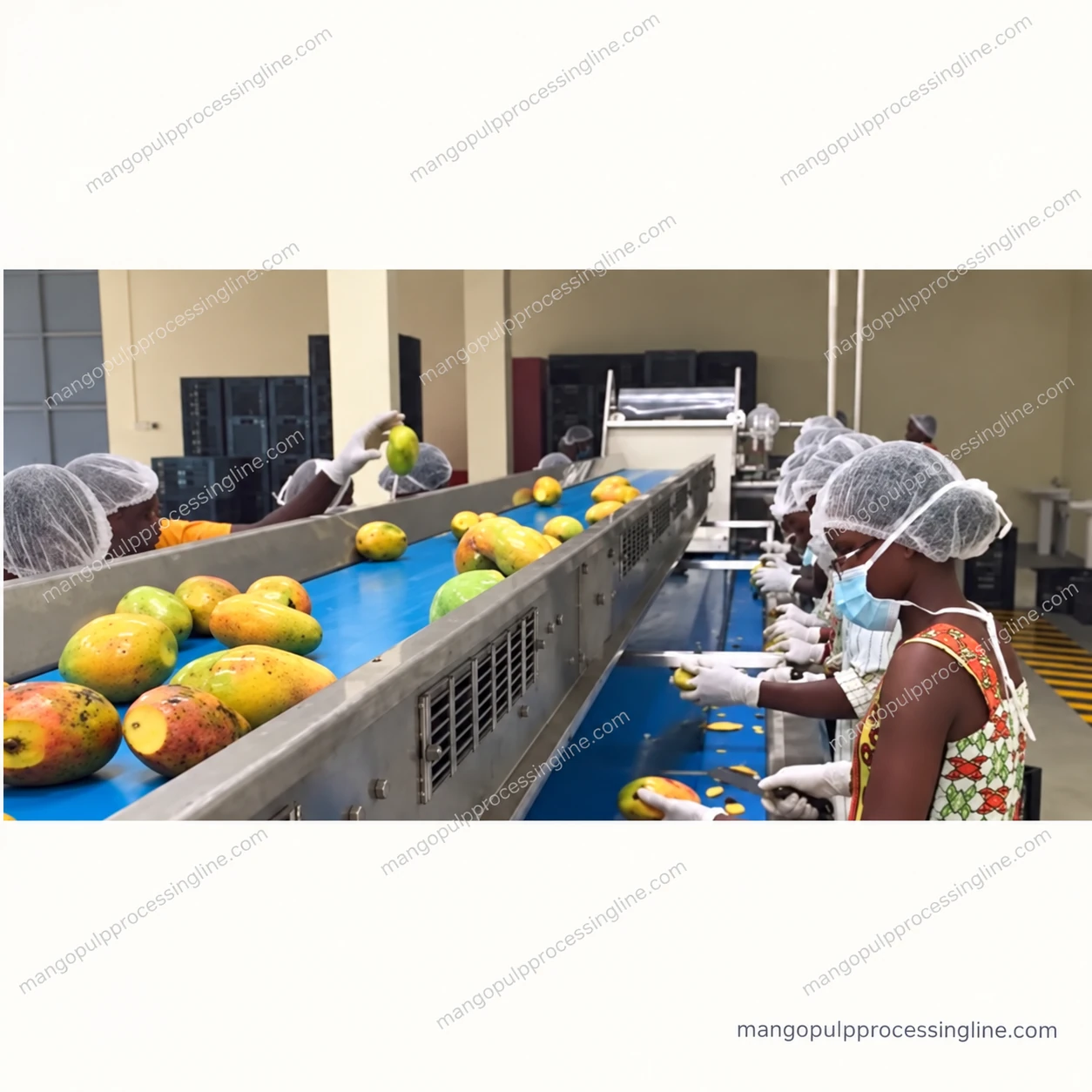
Mango is not a single raw material. Cultivars differ in peel, flesh colour, fibre, stone size and how easily the flesh separates. FAO notes that some fibrous, flavourful seedlings are poorly suited to fresh-market display but can have beverage value; that does not make every fibrous lot suitable. The point is to record the material rather than hide it under the word “mango”.
Take the sample across the load, not from the most accessible crate. A sample drawn only from the top layer or from one grower can miss the fruit that will actually dominate the run. Keep a simple, consistent vocabulary for peel thickness, flesh colour, visible fibre, stone adherence, softness and obvious damage. The exact descriptors matter less than using the same ones from lot to lot.
If the cultivar is unknown, say so and record the supplier and orchard block instead of inventing a name. A trial that cannot distinguish a cultivar effect from a machine effect will be difficult to repeat when the next delivery arrives.
Take the sample before the fruit is tipped into a common receiving pit if the site allows it. Once several growers’ fruit are mixed, the original lot boundary is gone. If mixing is unavoidable, record which lots contributed and treat the combined feed as its own identified batch.
| Observation | Why the pulp trial needs it |
|---|---|
| Cultivar or seedling identity; supplier block | Separates raw-material effects from machine settings |
| Peel and flesh appearance; visible fibre | Helps explain preparation and refining behaviour |
| Stone size and flesh adherence | Flags feed conditions that may challenge separation |
| Softness, damage and delay | Shows whether the lot is suitable for the intended product |
Record representative cut-fruit and pulp checks
Cut-fruit checks should come from a defined sample pattern and a defined number of fruit. There is no responsible universal count to copy from a template: the number depends on lot size, variability and the confidence the buyer needs. Write the rule down before sampling so that a difficult result cannot be dismissed by changing the method afterwards.
Use clean knives, boards and containers, and keep the sample cool and identified. Record the sample time, the fruit condition at cutting, and whether the sample represents the whole lot or one delivery vehicle. For a pulp sample, record the stage it came from, the time since extraction, the container and the temperature at measurement. A photograph is useful for orientation, but it is not a substitute for a measured record.
Do not present a visual or hand-feel check as a microbiological or safety result. If laboratory analysis is required, use an accredited method and a properly collected sample. The factory record can connect the lot to the laboratory result without pretending that the production team performed the test.
Connect lot records to subsequent process trials
Give the lot an identifier that survives receiving, sorting, extraction and finishing. Put that identifier on the trial sheet, the sample labels and the reject-collection record. When the finisher behaves differently, the first question is whether the feed changed; the lot record is how that question gets answered.
Record the accepted fruit mass at the chosen boundary, the pre-finished pulp mass or flow, the reject streams and the sample times. Keep stone inspection separate from fibre reject. A short trial can appear to gain or lose material while equipment is filling or draining, so note the start and end condition of the line.
The output is a traceable batch record, not a promise of yield. Its value is that a later product, texture or residue question can be referred back to the fruit that produced it. That is also the right basis for deciding whether a result belongs to the lot, the machine setting or the sampling method.
- Use one lot identifier across receiving, extraction, refining and samples.
- Record the measured boundary and collection period; avoid mixing whole-fruit and pulp quantities.
- State the disposition and the reason, including fruit removed before processing.
Sources and scope
The article uses the following published sources for context. It does not turn their general or grouped material into a project-specific guarantee.