Whole-fruit extraction and pulp screening are different jobs
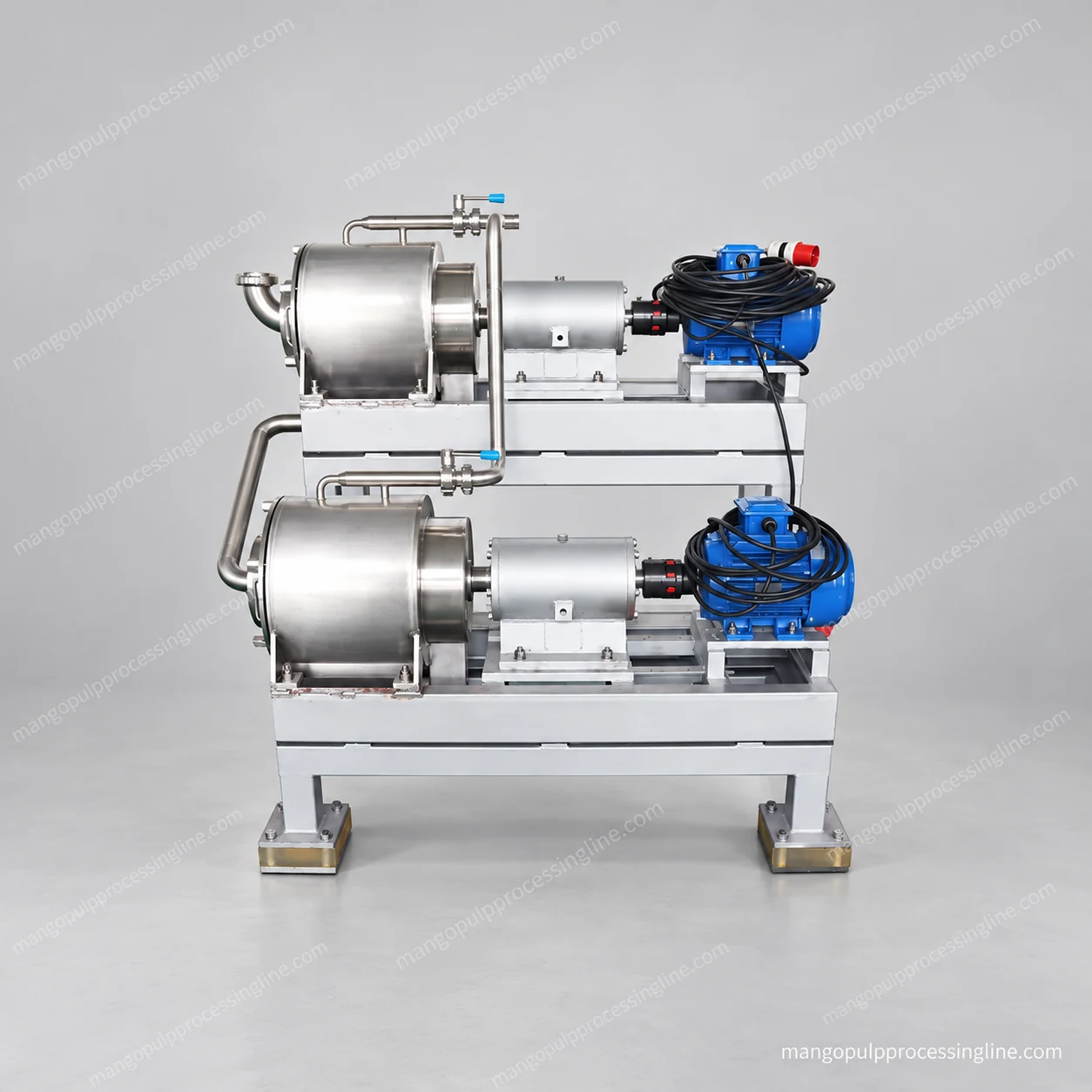
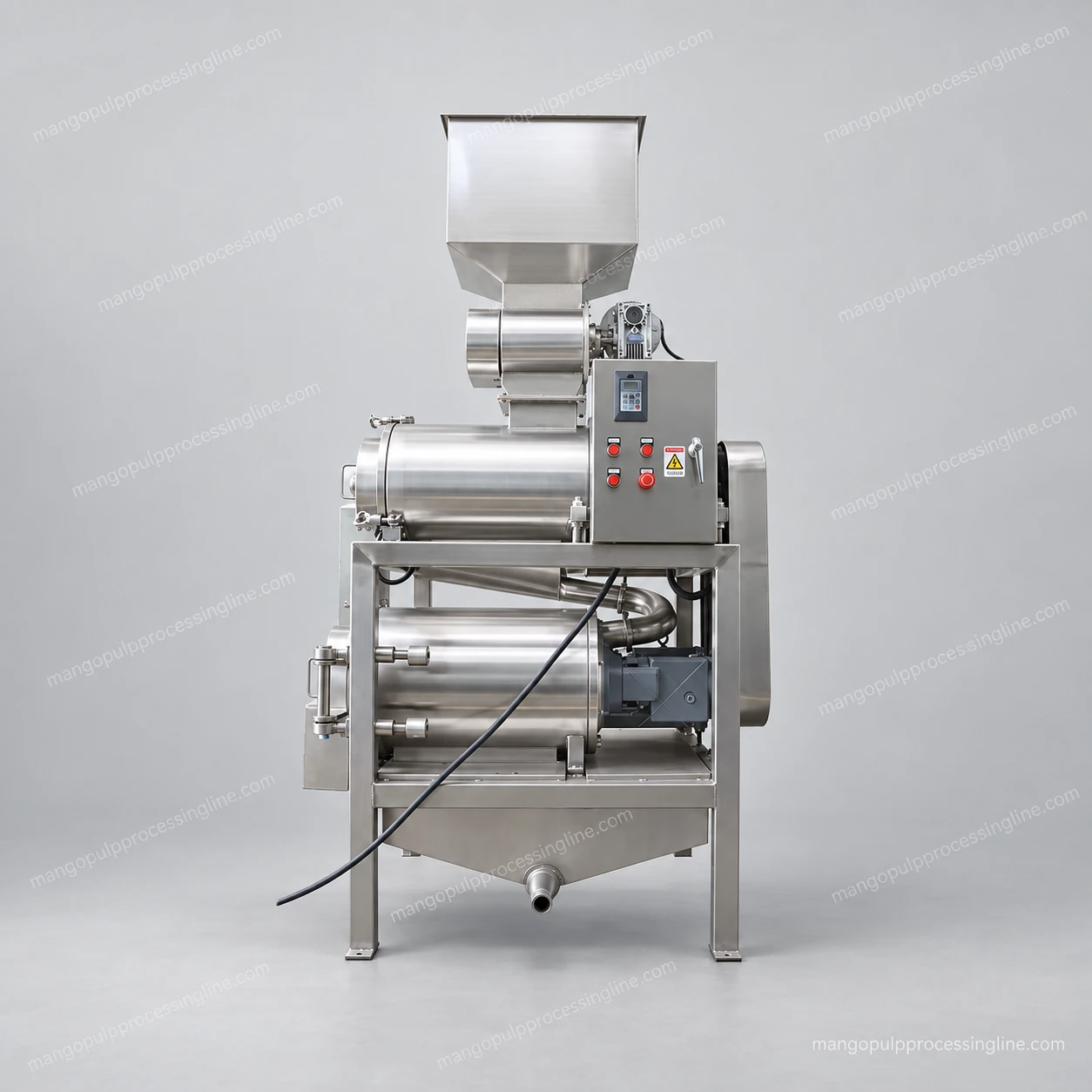
The combined mango destoner receives accepted whole fruit and separates recoverable flesh from peel and stones. The finisher receives extracted material and screens it to separate remaining coarse fibre and residue. They are complementary stages. A machine labelled pulper should be assessed by what it receives and separates, rather than by the name alone.
| Selection point | Combined destoner | Two-stage finisher |
|---|---|---|
| Incoming material | Whole mangoes after preparation | Extracted pulp |
| Main separation | Peel and stones from recoverable flesh | Coarse residue and fibre by screening |
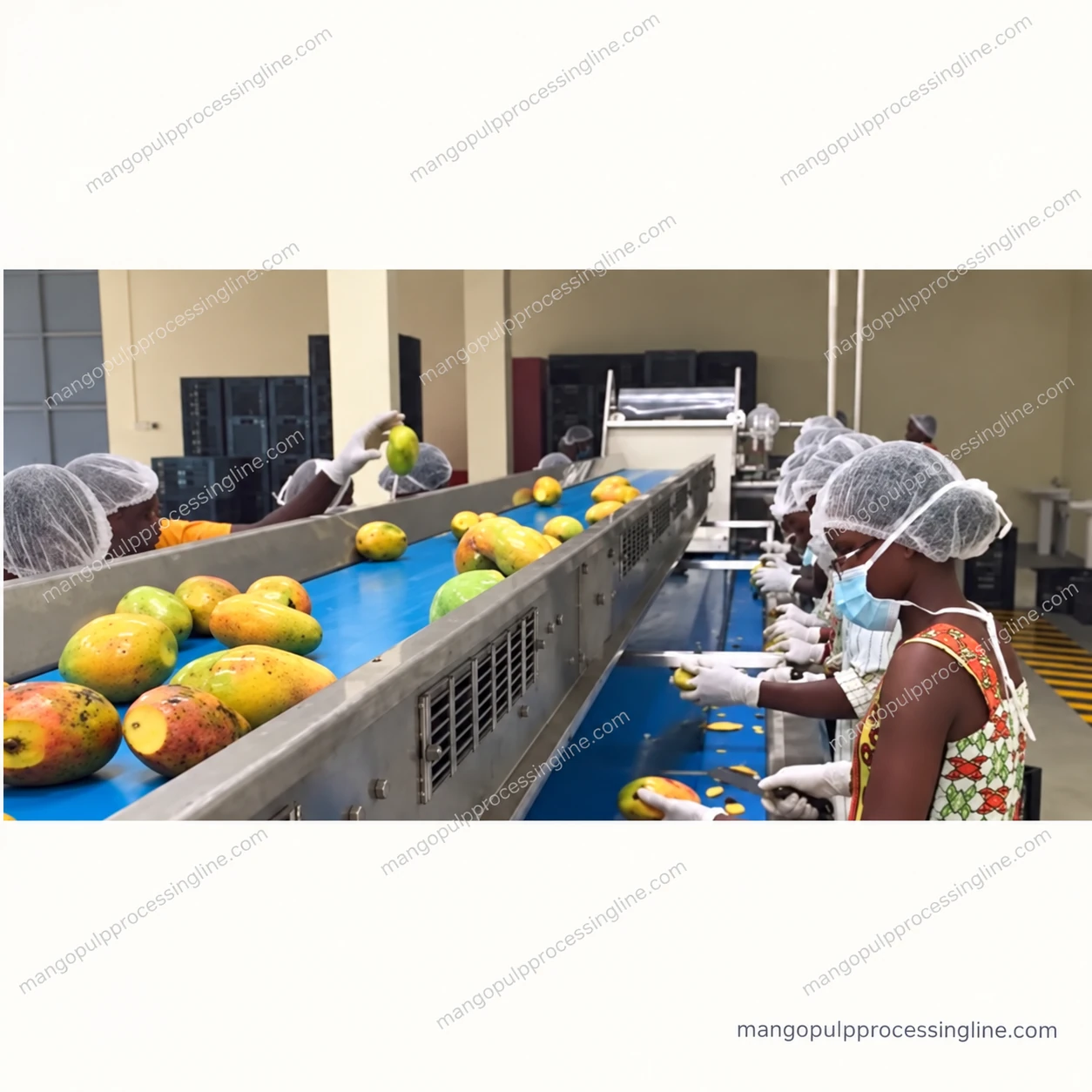
| Line position | After washing and sorting | After primary extraction |
Match the purchase to the problem in your line
If your process starts with whole mangoes, inspect the extraction assembly and both pulp and waste outlets. If extraction is already in place but texture needs improvement, discuss the existing pulp and the refining cut. Adding a finisher cannot repair an unsuitable whole-fruit reception system, and an extraction rating does not specify the final pulp texture.
Compare capacities on their actual feed basis
The MQ family and DJ refining family have separate reference tables on their product pages. Their ratings are not interchangeable. Confirm variety, ripeness and screen selection, and identify whether the proposed capacity describes incoming fruit or pulp. For a combined supply, coordinate the two duties and the receiving buffer instead of assigning one flow number to every machine.